

The Evolution of Real Estate Technology

Real estate software refers to specialized digital tools and platforms designed to help real estate professionals manage properties, leads, transactions, marketing, and business operations more efficiently.
Common types of real estate software:
- Property Management Systems – For managing rental properties and tenant relationships
- CRM (Customer Relationship Management) – For tracking leads and client communications
- Transaction Management – For handling contracts and closing processes
- Marketing Automation – For generating and nurturing leads
- Analytics Dashboards – For tracking performance metrics and ROI
The real estate industry has undergone a dramatic digital change in recent years. Where agents once relied on sticky notes, spreadsheets, and manual processes, today’s successful professionals leverage powerful software platforms that automate workflows, centralize data, and drive business growth.
As one broker quoted in our research put it: “100% of our residents are signed up for online services so we can do business in any circumstances.” This sentiment reflects how deeply technology has become embedded in modern real estate operations.
The right software doesn’t just save time—it fundamentally changes how real estate professionals work. Teams that adopt comprehensive digital solutions report significant gains in lead conversion, transaction efficiency, and overall revenue growth.
I’m Preston Guyton, with over 20 years in real estate leadership and extensive experience implementing real estate software solutions that drive growth for teams across North America through my work at Digital Maverick, where we focus on optimizing CRM usage and database management to help real estate teams close more deals.

Understanding Real Estate Software: Types and Core Capabilities
Let’s face it – today’s real estate world demands more than just hustle and handshakes. Success requires smart systems that grow alongside your business. Real estate software has come a long way from the digital rolodexes of yesterday. Now, these powerful platforms serve as the backbone for thriving teams and brokerages everywhere.
What is Real Estate Software and Why It Matters
At its heart, real estate software is any digital solution crafted specifically for the unique challenges real estate professionals face daily. These tools transform what used to be manual, paper-heavy processes into smooth digital workflows that make both your operation and your client experience significantly better.
I recently spoke with one of our clients who told me, “Knowing how close leads are to moving in has been great.” This kind of visibility – impossible without proper software – highlights exactly why these tools matter so much. They bring clarity, accountability, and structure to processes that would otherwise feel chaotic and overwhelming.
The return on investment goes far beyond just saving time (though that alone is valuable!). Our research shows some teams experience an average ROI of 600% when using comprehensive platforms that connect their lead generation to transaction management. This isn’t just working smarter – it’s fundamentally expanding what your business can achieve.
Main Categories of Real Estate Software
The real estate software world includes several key categories, each addressing specific aspects of your business:
Property Management Systems handle everything from maintenance requests to rent collection. These comprehensive solutions serve diverse property types from commercial and multifamily to single family housing, self storage, student housing, senior housing, coworking, and affordable housing.
Customer Relationship Management (CRM) solutions keep your leads, contacts, and communications organized. These platforms prevent leads from slipping through the cracks – they’re essentially the lifeblood of relationship management in today’s digital-first market.
Lead Generation Tools focus on finding fresh business opportunities. The best platforms give you access to impressive property records, deeds/sales, and mortgage information nationwide.
Marketing Automation platforms help create, distribute, and track your marketing materials across multiple channels. These often integrate seamlessly with your CRM to nurture leads through personalized communication flows.
Transaction Management solutions digitize the entire contract-to-close process, ensuring compliance while reducing errors and paperwork headaches.
Analytics Dashboards provide crucial insights into your business performance, typically pulling data from multiple systems to give you a comprehensive view of what’s working and what needs attention.
The most successful real estate professionals understand that these categories work best not as separate tools but as connected parts of a cohesive ecosystem. Many leading platforms offer “hyper-connected ecosystems” that far outperform “siloed solutions.”
When properly implemented, these tools don’t just organize your business – they transform it. They centralize your data, improve productivity, ensure compliance, improve security, and enable true scalability. Most importantly, they free you up to focus on what computers can’t do: building genuine relationships with your clients.
Key Features & Emerging Tech: AI, Automation, Mobility
The real estate software landscape is evolving at lightning speed, with game-changing technologies reshaping how the industry operates. Gone are the days when a simple contact database was enough—today’s agents need intelligent tools that work as hard as they do.

AI and Machine Learning
Remember when you had to personally respond to every single lead? Those days are fading fast. AI has brought some incredible capabilities to real estate software that feel almost magical:
AI assistants now engage with new leads around the clock, having natural conversations that qualify prospects before your morning coffee. Modern AI solutions handle initial conversations so convincingly that many leads can’t tell they’re chatting with a computer.
What excites me most is how predictive analytics is changing the game. These smart systems analyze your historical data to forecast which leads are most likely to convert—almost like having a crystal ball for your business. One agent told me, “It’s like having an assistant who knows which leads deserve my immediate attention before I even look at them.”
At Digital Maverick, we’ve seen how our 24/7 AI assistant complements our human ISA team. The AI handles initial contact and basic qualification, while our human team steps in for the nuanced conversations that build real relationships. It’s the perfect partnership of technology and human touch.
Fraud detection is another area where AI shines. Modern systems can spot suspicious applications and protect property managers from potential problems—something that used to require years of experience and a skeptical eye.
Workflow Automation
If you’ve ever felt buried under repetitive tasks, real estate software automation feels like hiring a personal assistant who never sleeps:
The days of manually sending follow-up emails are over. Today’s drip campaigns intelligently nurture leads over weeks or months with personalized content. As one of our clients put it, “My system is working for me while I’m showing properties or sleeping—it’s like cloning myself.”
Task management has been revolutionized too. When a lead takes a specific action, your system automatically creates the right follow-up task and assigns it to the appropriate team member. No more sticky notes or forgotten follow-ups.
Document generation might be the biggest time-saver of all. Modern platforms automatically populate contracts and disclosures with the right information, eliminating hours of tedious paperwork. One agent told me she saved nearly 10 hours a week just from this feature alone.
I’m particularly impressed by systems that can detect specific behaviors—like when a lead views the same property multiple times—and automatically reach out with a perfectly timed text message. It’s like having a sixth sense for sales opportunities.
Mobile Accessibility
Remember when leaving the office meant leaving your business behind? Mobile-first real estate software has changed everything about how and where we work:
Today’s mobile apps put your entire business operation in your pocket. As many providers aptly describe it, you now have “your office in your pocket.” Whether you’re at a showing, grabbing lunch, or sitting on your couch, you have full access to your data and tools.
Cloud access means your information stays synchronized across all your devices. Update a contact on your phone, and it’s instantly reflected on your desktop and tablet. This seamless experience eliminates the frustration of outdated information.
The best mobile solutions even work when connectivity fails. You can capture lead details at that rural property showing with no cell service, and everything syncs automatically when you’re back in range.
I love how modern mobile platforms let agents identify new leads, run comps, and even launch marketing campaigns right from the field. This kind of mobile capability doesn’t just make work more convenient—it fundamentally expands what’s possible in a day.
At Digital Maverick, we’ve seen teams double their productivity by embracing these technologies in the right combination. The sweet spot is finding tools that automate the routine while enhancing—not replacing—the human relationships that drive this business.
More info about conversion systems
Choosing the Right Platform: Pricing, Support & Compliance
Finding your perfect real estate software match is a bit like house hunting—you need to look beyond the curb appeal and check the foundation, systems, and neighborhood too. Let’s walk through what really matters when evaluating platforms for your business.
Pricing Models and Budget Considerations
When it comes to paying for real estate software, you’ll encounter several common approaches:
Most platforms offer subscription models that grow with your team. Many providers offer individual plans starting around $69/month with team options scaling up to $499/month, while others keep things simpler with flat rates around $32/month regardless of team size.
For growing teams, tiered plans starting at around $750/month let you access more powerful features as your needs evolve. Some platforms prefer transaction-based pricing instead, where you pay based on your volume—perfect for seasonal businesses.
I’ve also seen many teams start with freemium options that offer core functionality at no cost, letting you test-drive before fully committing.
Remember though, the sticker price isn’t everything. What you’re looking for is a positive ROI considering all of the costs. As one of our clients at Digital Maverick found, “We were so focused on the monthly fee that we missed the implementation costs that ended up being twice our annual subscription.” Always factor in those hidden expenses—data migration, training time, and add-on features that might suddenly feel “essential” once you’re in the system.
The good news? Well-implemented real estate software typically pays for itself quickly. When we help teams evaluate options, we focus on expected return rather than just upfront costs. One of our partner teams saw their lead conversion jump 37% within three months of implementing a properly configured CRM—a return that made their subscription feel like a bargain.

Onboarding, Training and Support
The difference between software success and frustration often comes down to implementation and support quality. Think of it like this: even the fanciest car won’t get you anywhere if nobody shows you where the ignition is.
Good vendors understand this. Quality providers can get basic systems running “as fast as one day,” while more complex deployments might take months—but either way, they guide you through the journey. The best providers offer a buffet of learning options: in-person workshops, online tutorials, on-demand videos, and detailed documentation that meets different learning styles.
Support accessibility matters tremendously. As one broker told me, “I don’t care how pretty the software is if I can’t get help when something breaks on Saturday during an open house.” Look for platforms offering multiple support channels with transparent response times. The best solutions include a “dedicated onboarding team” approach that ensures someone always knows your specific setup.
User communities can be goldmines too. Active mastermind communities with thousands of members share workarounds and best practices you’d never find on your own. One of our Digital Maverick clients found a custom workflow through their software’s community forum that saved their transaction coordinator nearly 10 hours weekly—something no official training had covered.
Remember what one satisfied user shared: “It’s not just logins in 24 hours; they prepare our entire staff for long-term success.” That’s the difference between a vendor and a partner.
Data Privacy and Compliance
In today’s digital landscape, compliance isn’t optional—it’s essential. Your real estate software needs to keep you on the right side of increasingly complex regulations.
Start by verifying the platform’s security credentials. SOC-2 compliance means they follow rigorous data protection standards, while robust encryption keeps sensitive client information safe. One team learned this lesson the hard way after a data breach exposed client financial information—a nightmare that proper security could have prevented.
Privacy regulations like GDPR, CCPA, TCPA, and DNC (do not call) affect how you can store and use client data. The best platforms build compliance tools directly into their workflows, ensuring you’re following the rules even if you don’t know all the details yourself. For property managers, look for features supporting fair housing laws and other industry-specific requirements.
Transaction platforms should maintain detailed audit trails of all activities. Quality solutions highlight their “real-time audit trails and compliance management across multiple agents,” as these records become invaluable if questions arise later.
At Digital Maverick, we’ve seen how proper compliance features save teams from costly mistakes. Our regular CRM audits help ensure that teams not only adopt best practices but maintain them consistently.
You can also add on ezVerify.ai to know who on your list is on the Do Not Call list and when they signed up to be contacted.
As one team leader shared, “The accountability metrics literally saved us from a lawsuit when we could prove exactly when disclosures were sent and acknowledged.”
Productivity enthusiasts might appreciate how compliance-friendly software aligns with research-backed frameworks like the Pomodoro Technique, helping teams stay focused while ensuring all regulatory boxes are checked during each work session.
Choosing the right real estate software is ultimately about finding the balance between features, cost, support, and compliance that works for your specific business needs. If you’re looking for guidance on making that choice, our team at Digital Maverick offers personalized services to help you steer these decisions with confidence.
Integrated Suites vs. Specialized Point Solutions
When it comes to choosing real estate software, one of the biggest decisions you’ll face is whether to go all-in with a comprehensive platform or build your tech stack piece by piece. It’s like deciding between buying a Swiss Army knife or assembling your own toolkit of specialized instruments—both approaches have their merits.
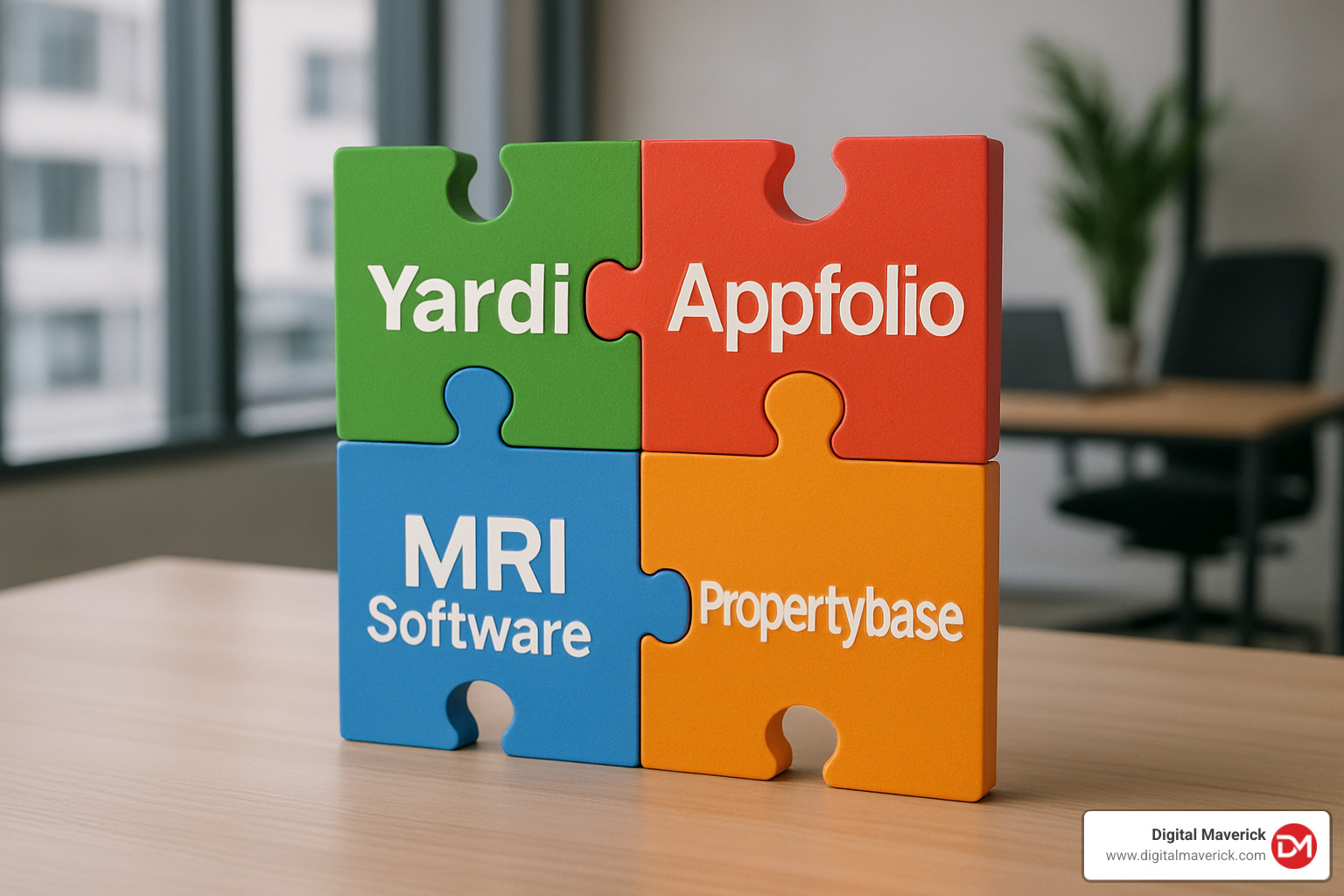
The Case for All-in-One Platforms
Think of integrated suites as the real estate equivalent of a luxury resort—everything you need under one roof. Leading industry providers have built their reputations on this comprehensive approach.
The beauty of these platforms lies in their seamless connectivity. As many providers aptly put it, “centralizing all property management data in one platform opens up automation and AI-driven productivity gains.” When your lead generation talks directly to your CRM, which connects smoothly with your transaction management system, magic happens—data flows naturally without the headaches of making different systems play nice together.
Your team also benefits from learning just one interface rather than juggling multiple logins and designs. Many vendors emphasize this unified experience as allowing users to “reap the efficiency, security and cost rewards of a truly integrated platform.” There’s something wonderfully simple about training your team on a single system.
From a management perspective, all-in-one platforms mean one support number to call, one bill to pay, and one relationship to nurture. And when it comes to seeing the big picture, these integrated suites shine with their unified reporting capabilities. The best solutions describe their offering as “an open, hyper-connected real estate technology platform” specifically designed to eliminate those frustrating data silos that can keep you from seeing the complete story of your business.
Of course, there are trade-offs. Sometimes these platforms follow the “jack-of-all-trades, master of none” principle—offering adequate functionality across the board without necessarily excelling in every area. And once you’ve committed to an ecosystem, switching becomes more complicated and potentially expensive. There’s also the risk of becoming overly dependent on a single vendor for all your critical business functions.
The Case for Specialized Point Solutions
On the flip side, the specialized approach is like assembling an all-star team where each player brings elite skills in their particular position.
When you choose best-of-breed tools for each function, you’re prioritizing excellence in specific areas. Quality lead generation tools don’t try to be everything to everyone—instead, they focus exclusively on property data and marketing, providing access to millions of property records and specialized marketing tools that general platforms simply can’t match.
The flexibility to mix and match technologies means you can select exactly what works for your unique business model. Need the best lead generation tool but a different CRM? No problem. This approach also allows for gradual adoption—you can implement one solution at a time as your needs evolve and your budget allows.
Perhaps most importantly, using specialized solutions means you’re never completely dependent on a single technology provider. If one tool isn’t meeting your needs, you can replace it without overhauling your entire tech stack.
The challenges, however, are significant. Getting different systems to share data smoothly requires careful planning and sometimes custom integration work. Your team needs to learn and toggle between multiple interfaces, which can slow them down. When problems arise, you might find yourself caught between vendors pointing fingers at each other. And despite your best efforts, information doesn’t always synchronize perfectly across platforms, potentially leading to inconsistencies.
Finding the Right Balance
In my years working with real estate teams at Digital Maverick, I’ve found that many successful operations take a thoughtful hybrid approach. They select a robust core platform for their primary functions while strategically integrating specialized tools for specific needs where excellence is critical.
For example, a growing brokerage might use a comprehensive CRM and transaction platform while integrating specialized tools for lead generation and transaction management—getting the best of both worlds.
The key is building what we call “scalable growth systems”—technology frameworks that support what you need today while leaving room to grow tomorrow. The ideal solution balances immediate functionality with long-term flexibility, much like buying a home with “good bones” that you can improve over time.
As you evaluate your options, be honest about your team’s technical proficiency and available IT support. Look closely at the integration capabilities of your preferred platforms. And most importantly, consider your growth projections—will this solution still serve you when you’ve doubled in size?
Technology should serve your business strategy, not dictate it. The best real estate software configuration is simply the one that aligns with your specific operational model and growth objectives. At Digital Maverick, we’ve seen teams thrive with various approaches—the common factor isn’t which path they chose, but how intentionally they chose it.
Real-World Success Metrics & Best Practices
The true value of real estate software shines through when we look at what happens in the real world. It’s not just about having fancy tech—it’s about how that technology transforms everyday operations into measurable business wins.

Measurable Impact Stories
When I talk with real estate teams about their software journeys, the excitement in their voices is unmistakable. The numbers tell compelling stories:
Speed matters more than almost anything else in real estate. Teams using AI-powered engagement tools have slashed their lead response times dramatically. One Real Geeks user told me, “The system now identifies our hottest leads based on their website behavior and reaches out before I even know they exist!”
Conversion improvements are where the magic really happens. I recently spoke with a broker who doubled their website traffic in just four months after implementing their new platform. But the traffic wasn’t just for show—their lead-to-client conversion rate jumped right along with it.
Time savings might be the most precious benefit of all. Rex Mobile users report saving about five hours per week for each sales agent through automated prospecting. Imagine what your team could do with an extra day each month to focus on high-value activities!
At Digital Maverick, we’ve seen how the right systems can transform performance. One team we coached increased their GCI by over 30% after implementing proper lead conversion systems backed by thoughtful real estate software configuration. Another doubled their lead-to-appointment conversion rate in just 90 days by optimizing their CRM workflows and response protocols.
Implementation Best Practices
Success with real estate software isn’t accidental—it follows clear patterns that you can replicate:
Start with strategy, not features. I can’t stress this enough. The shiniest new tool won’t help if it doesn’t align with your business goals. As one wise provider puts it, “CRM selection should align with specific lead sources and team structures rather than a one-size-fits-all approach.”
User adoption makes or breaks your investment. The most powerful software becomes instantly worthless if your team avoids using it. One AppFolio client shared, “The difference wasn’t the technology—it was how thoroughly our team acceptd it after the expert coaching sessions.”
Consistent workflows create consistent results. When everyone on your team follows the same process within your software, magic happens. PropertyRadar recommends building automation that ensures you “never miss new opportunities” regardless of who’s handling the lead.
Connected systems amplify results. Your CRM talking to your transaction management platform talking to your marketing automation creates a seamless experience that clients notice. As one ClickUp user told me, “Once we connected our thousand-piece puzzle of apps, everything just flowed.”
Measure, adjust, repeat. The teams seeing the best results are obsessive about tracking their KPIs and continuously refining their processes. Soleox provides “dynamic dashboards for owners, agents, and office displays” specifically to keep everyone aligned on what’s working.
At Digital Maverick, we’ve developed what we call the “operating rhythm”—a structured daily, weekly, and monthly cadence of activities within your real estate software that ensures consistent lead nurturing. Teams following this rhythm in their CRM consistently outperform those with random, reactive approaches.
Mobile Productivity Gains
The smartphone revolution has fundamentally changed how real estate professionals leverage their software:
When you’re driving through a neighborhood and spot a potential listing opportunity, PropertyRadar’s mobile app lets you pull property details instantly and initiate contact on the spot. No more scribbling addresses to research later when the moment has passed.
Field documentation has been transformed by mobile capabilities. I recently watched an agent capture detailed property notes, photos, and even voice memos during a showing—all organized automatically in their CRM for follow-up.
Push notifications have practically eliminated the concept of “missing” an important lead. As one agent told me, “My watch buzzes within seconds of a hot lead hitting our system, and I can respond before they’ve even left our website.”
Remote transaction management might be the biggest game-changer of all. Cloud-based tools now let agents review and sign documents from their phones, dramatically accelerating closing timelines. One client shared, “I finalized a contract poolside during my family vacation—the buyers never knew I wasn’t in the office!”
These real-world examples show that successful real estate software implementation isn’t just about having the right tools—it’s about weaving those tools into your daily workflows in ways that create measurable business impact. When technology, strategy, and consistent execution come together, the results can transform your business.
Want to see how the right operating rhythm could boost your team’s performance? Learn more about Digital Maverick coaching and how we help teams make the most of their technology investments.
Frequently Asked Questions about Real Estate Software
How much does real estate software cost?
When it comes to investing in real estate software, I find my clients often want a clear picture of what to expect cost-wise. The truth is, pricing varies considerably depending on what you need and the size of your operation.
For solo agents or those just getting started, entry-level CRMs offer budget-friendly options at around $32 per month flat rate. As your needs grow, mid-range platforms scale from $69 monthly for individuals up to $499 monthly for teams.
If you’re running a larger operation with complex needs, enterprise solutions start around $750 per month and can climb into the thousands for comprehensive functionality. Specialized tools have their own pricing structures too—targeted expired and FSBO lead generation capabilities might cost around $299 monthly.
Most providers structure their pricing based on factors that directly impact value: number of users, feature access, lead volume, and for property management software, the number of properties you’re handling.
When budgeting for your real estate software, remember to look beyond the monthly subscription. Consider implementation fees, data migration costs, training expenses, and any add-on modules you might need. As one of our vendor partners puts it, “ROI often offsets costs quickly” when you implement the right solution properly.
At Digital Maverick, I’ve seen how the right software investment can transform a business—it’s not just an expense, it’s a growth catalyst when chosen wisely.
What onboarding and training should I expect?
The difference between struggling with new software and mastering it often comes down to the quality of onboarding and training you receive. Quality real estate software providers understand this and offer comprehensive support to get you up and running.
Data migration is typically the first step. Your new provider should help transfer your existing contacts, listings, and historical data into their system. The best solutions highlight their “dedicated onboarding team for secure data migration”—a critical service that prevents losing valuable information during the transition.
The best training programs offer multiple formats to accommodate different learning styles. Look for a combination of live webinars, on-demand videos, written documentation, and personalized coaching. Some teams learn best together in virtual classrooms, while others prefer self-paced tutorials they can revisit when needed.
Implementation timelines vary significantly. Basic setups can be ready “as fast as one day,” while more complex deployments might take “months” to fully implement. Be wary of any provider promising instant results without a proper implementation plan.
I love what one of our clients said about their experience: “It’s not just logins in 24 hours; they prepare our entire staff for long-term success.” That ongoing support—through regular webinars, user communities, knowledge bases, and dedicated success managers—is what transforms a software purchase into a true business partnership.
In our work at Digital Maverick, we’ve found that teams who invest in thorough training see adoption rates 3-4 times higher than those who rush through implementation. That translates directly to ROI, as software only delivers value when your team actually uses it.
How does mobile real estate software boost productivity?
The days of being chained to your desk are long gone. Today’s real estate software puts incredible power in your pocket, changing how agents work in fundamental ways.
Any-device access is the foundation of this mobility revolution. Cloud-based platforms let you seamlessly switch between your desktop, tablet, and phone without missing a beat. As many mobile solutions aptly put it, you now have “your office in your pocket.”
Push notifications have dramatically improved response times. When a hot lead comes in, you get an instant alert—whether you’re at lunch, between showings, or at your kid’s soccer game. This immediate awareness means you can respond in minutes rather than hours, often making the difference between winning and losing business.
The field capabilities of today’s mobile apps are particularly impressive. Imagine pulling up to a potential listing and instantly accessing all comparable properties in the neighborhood, or capturing high-quality photos during a showing and adding them directly to your CRM with notes. Quality mobile apps support “on-the-go lead identification, comps creation, and direct marketing campaigns” right from the field.
Even when you’re in areas with spotty service, advanced mobile apps offer offline functionality, allowing you to capture data without connectivity and syncing automatically when your connection returns.

One of our partner agents summed it up perfectly: “Knowing I can respond to leads within minutes rather than hours has completely changed my business. I’ve closed deals sitting in coffee shops that would have gone to competitors in the past.”
The productivity gains are remarkable. Mobile real estate software doesn’t just make your existing processes more convenient—it fundamentally expands what’s possible, letting you create value from anywhere at any time. In today’s competitive market, that flexibility isn’t just nice to have—it’s essential for staying ahead.
Conclusion
The landscape of real estate software continues to evolve at a rapid pace, with AI, automation, and integrated platforms reshaping how successful teams operate. But as we’ve explored throughout this guide, the right technology isn’t just about having the shiniest new tools—it’s about implementing systems that drive real, measurable results in your business.
I’ve seen it time and again: the most successful real estate professionals understand that software is meant to improve their human capabilities, not replace them. As one industry leader beautifully put it: “Technology will never replace the value of real estate agents.” Rather, great technology amplifies what you already do well, handling the routine tasks so you can focus on what truly matters—building relationships and delivering exceptional service.
At Digital Maverick, we’ve witnessed how the right operator-built systems transform struggling teams into thriving ones. Our approach combines powerful real estate software with the practical training, accountability frameworks, and ongoing support needed to turn that technology into a genuine growth engine.
After working with hundreds of teams, we’ve identified several key principles that make the difference:
Integration is absolutely essential. Whether you choose an all-in-one platform or a collection of specialized tools, your systems must talk to each other. Data silos are the enemy of efficiency.
Adoption drives ROI more than any feature set. Even the most sophisticated software becomes worthless if your team doesn’t use it consistently. The teams that invest in proper training and build accountability systems always see better results.
Mobile capabilities have moved from nice-to-have to non-negotiable. The freedom to manage your business from anywhere isn’t just convenient—it’s a competitive advantage in today’s market.
AI improves human performance rather than replacing it. The most effective teams use artificial intelligence and automation to handle routine tasks while focusing their human creativity and emotional intelligence where it matters most.
Success requires systematic approaches beyond the software itself. The teams that document their workflows and maintain consistent operating rhythms are the ones who actually deliver on the promise of their technology investments.
As you evaluate your current technology stack or consider new investments, the goal isn’t having the most features—it’s creating a system that eliminates lead waste, builds scalable growth, and consistently turns leads into conversations and conversations into closings.
We’d love to help you optimize your real estate software implementation and build the systems needed for sustainable growth. Whether you’re looking to boost speed-to-lead, re-engage aged database contacts, or build a high-performance conversion culture, Digital Maverick provides the structure, support, and services to make it happen.
The future belongs to teams that effectively harness technology while maintaining the human touch that defines great real estate service. With the right software and systems in place, your team can thrive in any market conditions—not just survive.
More info about scalable growth systems

Preston Guyton is a co-founder at Digital Maverick and a seasoned real estate operator who’s spent over two decades helping agents build smarter, more scalable businesses. He’s passionate about helping teams avoid the missteps that cost time, money, and momentum. At Digital Maverick, Preston leads strategy across ISA support, CRM systems, and coaching programs—bringing together the tools, accountability, and rhythm that turn leads into consistent closings.