Real Estate Business Growth Archives - Page 3 of 4 - Digital Maverick

05.19.2025

Lead Generation for New Real Estate Agents: An Essential Guide

Lead Generation Tips for New Agents | Digital Maverick

Why Lead Generation is Crucial for Real Estate Success

Lead generation for new real estate agents is the foundation of a successful career in this competitive industry. Without a steady pipeline of potential clients, even the most talented agents will struggle to build momentum.

Quick Guide to Lead Generation for New Agents:

  1. Leverage your sphere of influence – Tell friends, family, and social circles about your new career
  2. Create a strong online presence – Optimize your Google Business Profile and build a lead-capturing website
  3. Host memorable open houses – Turn them into community events that generate buyer leads
  4. Develop strategic partnerships – Form referral relationships with local businesses and professionals
  5. Use social media effectively – Create valuable content that positions you as a local expert

According to the National Association of REALTORS®, 3 out of 4 homeowners choose the first agent they talk to when deciding to list their home for sale. That’s why speed-to-lead and building your pipeline quickly are essential for new agents.

Building a sustainable real estate business requires consistent lead generation across multiple channels. While digital strategies like SEO, social media, and email marketing provide scalability, don’t overlook traditional methods like networking, open houses, and community involvement that can yield high-quality leads, especially when you’re just starting out.

I’m Preston Guyton, founder of Digital Maverick where I help real estate teams with conversion and lead generation for new real estate agents through proven systems that turn prospects into clients consistently. My 20+ years in real estate have shown me that successful agents don’t leave lead generation to chance—they build systematic approaches that create predictable results.

Lead Generation Funnel for New Real Estate Agents showing sphere of influence at top, followed by digital marketing, community engagement, and partnerships flowing into lead capture, nurture stages, and conversion with approximate conversion rates at each stage - lead generation for new real estate agents infographic

Understanding Lead Generation for New Real Estate Agents

Let’s talk about what lead generation for new real estate agents really means. At its heart, it’s the art of turning strangers into curious prospects who raise their hands and say, “Tell me more about how you can help me buy or sell a home.” It’s not just a nice-to-have—it’s the oxygen your new business needs to survive and thrive.

Unlike selling gadgets or subscriptions, real estate lead generation has unique challenges. You’re not just marketing a product; you’re marketing yourself and your ability to guide people through what might be the biggest financial decision of their lives. That’s a tall order when you’re just starting out and haven’t built a track record yet.

As Jon Cheplak puts it: “Real estate is fundamentally a lead generation business. Your primary job isn’t just selling homes—it’s finding people who want to buy or sell homes. That requires work.”

Here’s something that might surprise you: speed matters more than almost anything else. Research shows that connecting with a lead within the first five minutes makes you 80 to 100 times more likely to reach them compared to waiting just 30 minutes. Think about that! This is why having an ISA call your leads fundamentally scales your business—agents using these automated response systems are seeing up to 4X more closed transactions because they never miss that critical window.

Why early momentum matters in lead generation for new real estate agents

There’s a phenomenon in real estate I like to call the “first agent advantage.” Simply put, the agent who connects first often wins the business. This is especially true with sellers—being that first agent creates an incredible edge.

For rookies, those early wins create a beautiful snowball effect:

First, you get a confidence boost that’s worth its weight in gold. Each successful lead conversion validates your approach and strengthens your skills.

Second, you start collecting social proof. Those initial happy clients become your most powerful marketing tool, offering testimonials and referrals that attract more business.

Third, you create financial runway. Those first commission checks give you the capital to invest in more sophisticated lead generation strategies that can scale your business.

Take Will Sawyer’s story—this Keller Williams agent generated over 50 new customer leads in a single month just from his YouTube channel. “When I started, I had no listings, no sales history, and no reputation,” he shares. “But by consistently creating valuable content, I built momentum that eventually contributed to $612,000 in gross commission income in one year.”

Perhaps most importantly, those early client interactions help you find what makes you different from the thousands of other agents out there. As you work with your first clients, you’ll naturally uncover your unique strengths and selling points—essential knowledge that will shape all your future marketing efforts.

The truth is, lead generation for new real estate agents doesn’t have to be complicated, but it does require intention, consistency, and a willingness to put yourself out there even when it feels uncomfortable. The agents who accept this challenge from day one are the ones still thriving five years later.

Digital & Social Strategies That Scale

Digital strategies offer new agents the ability to reach large audiences without the budget of established competitors. The key is to start with fundamentals and expand as you grow.

Start with these digital foundations:

  1. Professional website with IDX integration: This allows visitors to search listings directly on your site while capturing their contact information. Remember, if you do not have a website that has a search of clients will actually use, I can guarantee you that a competitor from a national real estate portal will be calling your client.
  2. Lead capture landing pages: Create specific pages for different offerings (buyer guides, home valuations, neighborhood reports).
  3. Automated follow-up: Implement chatbots and email sequences that respond instantly when leads engage.
  4. Content marketing: Blog posts, videos, and social media content that showcase your expertise.

One of the agents ran a Mother’s Day giveaway campaign that demonstrates the power of digital lead generation. Her five-day campaign generated 533 registrations, resulting in 34 CMA requests, 20 referrals, 110 newsletter signups, and about 100 class signups. Three months later, this single campaign had produced 8 appointments, 5 property showings, 1 listing and sale, and 116 new leads added to her database.

SMS marketing deserves special attention for new agents. According to research, text messages have a 98% open rate compared to just 20% for email, and 95% of texts are read and responded to within three minutes. This makes text messaging one of the most effective channels for lead nurturing. For more detailed statistics on business texting, check out this comprehensive overview from Text Request.

Master local SEO & PPC for lead generation for new real estate agents

For new agents, local search engine optimization (SEO) is a goldmine of organic leads. When someone searches “homes for sale in [your city]” or “real estate agent near me,” you want your name to appear.

Start by optimizing your Google Business Profile:

  • Claim and verify your listing
  • Ensure NAP (Name, Address, Phone) consistency across all platforms
  • Add high-quality photos of yourself and properties you’ve sold
  • Collect and respond to reviews regularly
  • Post updates about market conditions, new listings, and closed sales

Creating community pages on your website is another powerful SEO tactic. These pages should include:

  • Neighborhood statistics and trends
  • School information
  • Local amenities and attractions
  • Recent sales data
  • Community events and lifestyle information

According to HubSpot, businesses with 10-15 landing pages increase lead generation by 55% compared to those with fewer pages. Each neighborhood page serves as a landing page targeting specific geographic keywords.

For paid search campaigns, focus on high-intent keywords like:

  • “homes for sale in [neighborhood]”
  • “sell my house fast in [city]”
  • “[city] real estate agent”

Start with a modest daily budget ($10-20) and carefully track your cost per lead. New agents should aim for a 5:1 return on ad spend, meaning you generate $5 in commission for every $1 spent on advertising.

Video & social storytelling that converts

Video marketing has become essential for real estate lead generation. Will Sawyer’s success with YouTube demonstrates how powerful this medium can be for new agents.

Here’s how to leverage video effectively:

  1. Create a YouTube channel focused on local real estate: Publish consistent, professional videos (8-13 minutes) targeting a specific audience
  2. Include early calls to action: Place your contact information and call to action within the first 45 seconds
  3. Repurpose content: Turn long-form videos into 30-60 second clips for Instagram Reels, TikTok, and Facebook
  4. Host live Q&A sessions: Use Facebook Live or Instagram Live to answer common real estate questions

The key is consistency. Commit to a regular publishing schedule, even if it’s just once a week. Over time, your content library becomes a lead-generating asset that works 24/7.

Social media platforms also offer targeted advertising opportunities. Facebook and Instagram ads allow you to:

  • Target specific demographics, interests, and behaviors
  • Retarget website visitors who didn’t convert
  • Create lookalike audiences based on your current clients
  • Test different ad formats (carousel, video, lead forms)

“I’ve found that ads that feel like advice perform better than flashy sales pitches,” notes one top-performing agent. “People want to learn, not be sold to.”

Offline, Sphere & Budget-Friendly Tactics

While digital strategies are essential, traditional offline methods remain highly effective, especially for new agents building their local presence.

Here’s a comparison of free vs. paid lead generation tactics for new agents:

Free TacticsPaid Tactics
Sphere of influence outreachZillow Premier Agent
Open housesFacebook/Instagram Ads
FSBO/Expired outreachGoogle PPC
Community involvementDirect mail campaigns
Local business partnershipsLead buying services
Content creationPredictive analytics tools

The most successful new agents combine both approaches, using free methods to build momentum while strategically investing in paid tactics as their business grows.

Leveraging your sphere of influence for lead generation for new real estate agents

Your sphere of influence (SOI)—friends, family, former colleagues, and acquaintances—is the most cost-effective lead source for new agents. According to NAR, 41% of buyers and 63% of sellers find their agents through referrals from friends or family.

Here’s how to maximize your SOI:

  1. Announce your new career: Send a personal announcement to everyone in your contact list
  2. Create a referral program: Offer incentives for referrals that result in closed transactions
  3. Host client appreciation events: Quarterly events create opportunities for clients to bring friends
  4. Send “raving fan” gift boxes: One top-producing agent sends branded gift boxes quarterly to past clients who refer business, sourcing items from local businesses during slow seasons

As one Keller Williams agent puts it: “A referral shows a level of trust, and we want to say more than just ‘thank you.'” Their team sends 150 quarterly gift boxes that cost $20-25 each to referrers and reviewers, generating a consistent stream of new business.

Community involvement is another powerful SOI-building strategy. Sponsor local sports teams, volunteer for charity events, or host educational workshops. These activities position you as a community-minded professional while creating natural opportunities to discuss real estate.

Low-cost hacks every rookie should test

New agents often have more time than money. Here are budget-friendly lead generation tactics that leverage your time investment:

  1. Door knocking with a service approach: Rather than a hard sales pitch, offer a neighborhood market update or home valuation
  2. Open house domination: Blanket an area with directional signs and host memorable events that stand out
  3. Cost-sharing with lenders: Split the cost of lead generation with mortgage partners who benefit from the same clients
  4. Local print advertising: While digital dominates, some demographics (especially seniors) still respond to newspaper ads

One agent shared this success story: “I partnered with a lender to split a $1,200 Realtor.com exclusive lead purchase over six months. This $600 investment yielded three deals and $14,000 in net commission.”

Creative open houses can be particularly effective. Instead of the standard cheese plate and property flyers, consider:

  • Themed events (movie nights, wine tastings)
  • Local vendor partnerships (showcase local businesses)
  • Architectural scavenger hunts highlighting unique home features
  • Neighborhood-wide invitations to build your farm area presence

For FSBO and expired listings, a systematic approach works best. Create a follow-up sequence that includes:

  • Initial contact offering assistance
  • Market analysis showing comparable sales
  • Regular check-ins without being pushy
  • Value-added information about the selling process

Persistence and consistency are key with these tactics. As one successful agent noted, “I door-knocked in a 1,200-home farm area, and even drove an elderly homeowner to the salon every Wednesday for four years before she referred her family to me.”

Tools, Tech & Metrics: Turning Leads Into Closings

Let’s face it – all the leads in the world won’t help if you don’t have a system to manage them. I’ve seen this scenario play out countless times with new agents: they work tirelessly to generate leads, only to watch them slip through the cracks because they lack the right tools to follow up effectively.

At Digital Maverick, we’ve consistently found that agents who use integrated lead management systems close up to 4× more transactions than those juggling disconnected tools. It’s not magic – it’s just good systems.

A great CRM with a well managed database will tell you exactly what to do and when. Follow the operating rhythm and you will find success.

Think of your tech stack as the engine that powers your lead conversion machine. When all parts work together seamlessly, you respond faster, nurture more effectively, and can actually see what’s working (and what’s not).

The foundation of any good lead management system includes a robust CRM to organize your contacts, automation tools that respond instantly to inquiries, nurture campaigns that keep you top-of-mind, and analytics that show you exactly where your business is coming from.

As we like to say at Digital Maverick: “Don’t just generate leads—close deals.” Because honestly, what’s the point of filling your pipeline if you can’t turn those prospects into clients?

Must-have tech stack for first-year agents

If you’re just starting out, don’t overwhelm yourself with every shiny tool on the market. Focus on these essentials:

Real estate-specific CRM: Not all CRMs are created equal. Choose one designed specifically for real estate that includes property search integration, automated follow-up sequences, mobile access, and task management. We’ve been huge fans of Follow Up Boss (FUB) for years but there are other good ones as well. Just remember that generic CRMs often miss crucial real estate workflows that keep deals moving forward.

Website chatbot or live chat: This is your 24/7 digital assistant. While you’re showing properties or sleeping, your chatbot is collecting contact information, answering basic questions, and scheduling appointments. The best part? It’s qualifying leads based on timeframe and budget before you even speak to them.

SMS automation platform: When email inboxes are overflowing, text messaging cuts through the noise. With 90% of texts read within three minutes, this is your secret weapon for speed-to-lead. Look for a platform that allows automated initial responses but also supports natural two-way conversations.

Scheduling tools: Make it ridiculously easy for prospects to book time with you. Calendar integration, automated reminders, intake questionnaires, and video meeting links eliminate the back-and-forth that can derail potential appointments.

The good news? You don’t need a massive budget to get started. Many solid CRMs begin around $25-50 monthly, and you can add other tools as your commission checks start rolling in. The key is making sure all your systems communicate with each other – isolated data is useless data.

Tracking, nurturing, and avoiding common mistakes

I always tell new agents: “What gets measured gets improved.” Without clear metrics, you’re essentially flying blind. At Digital Maverick, we help agents focus on these critical KPIs:

Speed-to-lead: How quickly are you responding to new inquiries? Aim for under 5 minutes – seriously. The difference between a 5-minute and 30-minute response time is dramatic in conversion rates.

Contact rate: What percentage of leads are you actually connecting with? This metric reveals whether your contact methods are working.

Appointment rate: How many conversations turn into appointments? If this number is low, your qualification or value proposition might need work.

Conversion rate: The ultimate metric – what percentage of leads eventually close? This helps you calculate the true value of each lead source.

Cost per acquisition: How much are you spending to get each closed deal? This reveals which lead sources deserve more of your marketing budget.

Conversion metrics showing improvement after implementing proper lead tracking systems - lead generation for new real estate agents infographic

The biggest mistake I see new agents make is inconsistent follow-up.

The statistics are shocking:

  • 48% of agents never follow up with leads,
  • 25% make just one follow-up attempt,
  • only 10% make more than three contact attempts, and
  • 80% of sales require at least five follow-ups to close.

At Digital Maverick, we implement action plans that maintain contact for 12+ months because real estate decisions often happen on long timelines. That listing appointment you go on today might be with someone who first visited your website a year ago.

I recently spoke with an agent who quadrupled her business after implementing proper lead tracking. “I used to think I was doing a good job following up,” she told me. “But when I actually started tracking my activities, I realized I was only reaching out to the easiest leads and letting the rest slip away.”

Other common mistakes to avoid include spreading yourself too thin across too many lead sources (master 3-4 instead), inconsistent daily execution, poor lead qualification, neglecting your existing database, and failing to track your return on investment.

As one of our successful clients reflected: “By trying to do everything, I did nothing well. Once I focused on just four core lead generation for new real estate agents pillars and tracked everything in my CRM, my business took off.”

This is often why I see agents scale their business when they begin working our ISA team. It allows the agent to finally focus on the part of their business that they do best and that adds the most value to their clients.

The tools are just that – tools. They’re only as effective as the habits and systems you build around them. The most sophisticated CRM won’t help if you check it once a month. But with the right tech stack and consistent follow-up, you’ll be amazed at how many more leads turn into closings.

More info about our scalable systems

Conclusion

The journey of lead generation for new real estate agents doesn’t have to feel like climbing Mount Everest. With the right mix of strategies and consistent effort, you can build a thriving pipeline that sustains your business for years to come.

I’ve seen countless new agents transform their businesses by embracing these fundamental principles:

Consistency beats perfection every time. Those daily lead generation activities—even when they’re not perfect—create momentum that sporadic bursts of effort simply can’t match. One phone call each morning to a past client or sphere contact might feel small, but these regular touchpoints compound over time.

Your unique approach matters. The most successful new agents find their distinctive angle, whether it’s becoming the go-to expert for a specific neighborhood, specializing in a particular property type, or creating a client experience that people can’t stop talking about. In a sea of real estate agents, your personal story and approach help you stand out.

Real estate remains fundamentally about relationships. While technology has transformed how we generate and nurture leads, it should improve—not replace—the personal connections that drive this business. The best tech tools simply create more opportunities for meaningful human interaction.

What gets measured improves. Tracking your lead sources, response times, conversion rates, and ROI isn’t just about numbers—it’s about understanding what’s working and what needs adjustment. When you know your numbers, you can make informed decisions rather than guessing.

The best leads often take time to mature. That buyer who’s “just looking” today might be ready to make a move in six months. The homeowner who’s “not ready to sell” might call you next year when circumstances change. Playing the long game means nurturing relationships without expecting immediate results.

At Digital Maverick, we’ve helped countless new agents replace chaos and unpredictability with systems and reliability. Our growth frameworks combine expert conversion services, hands-on coaching, and operational systems that deliver consistent results month after month.

Whether you’re struggling with responding to leads quickly enough, need help reconnecting with your database contacts, or want to optimize your CRM workflows, we provide the structure and support to make it happen. Our clients gain the systems, training, and people to consistently turn leads into conversations—and those conversations into closings.

Building a successful real estate career starts with a solid foundation of lead generation practices. By implementing the strategies we’ve discussed and creating systems that support consistent execution, you’ll be well on your way to building a thriving business that stands the test of time.

Ready to take your lead generation to the next level? Talk with our Digital Maverick team today to learn how our scalable systems can help you eliminate lead waste, increase your gross commission income, and open up higher ROI from your existing database, ad spend, and CRM investments.
05.19.2025

An Essential Guide to Lead Management Systems for Real Estate

Lead Management System for Real Estate | Digital Maverick

Why Every Real Estate Team Needs a Lead Management System

A lead management system for real estate is a specialized platform that helps agents capture, organize, nurture, and convert leads through their sales pipeline. It combines CRM capabilities with automation tools specifically designed for property sales workflows.

What is a Lead Management System for Real Estate?

  • A centralized platform for managing all prospect interactions
  • Automates lead capture from websites, social media, and listing portals
  • Streamlines follow-up with automated email, text, and call sequences
  • Provides visibility into pipeline status and conversion metrics
  • Integrates with property data sources and marketing platforms

These systems have become essential as 96% of homebuyers now use the internet in their home search according to the National Association of Realtors. And even for that remaining 4%, you still need a lead management system to effectively serve them. The difference between thriving and merely surviving in real estate often comes down to how effectively teams manage their leads.

Real estate is fundamentally a relationship business, with 82% of new property sales coming from referrals from existing contacts, previous clients, and personal networks. A proper lead management system doesn’t just organize data—it creates a framework for consistent follow-up and meaningful conversations.

“I’ve called tens of thousands of neighborhood leads in the last 11 years and never have I seen so many motivated sellers within one list.” – said one of the agents we work with who is a veteran listing specialist

The most effective systems combine human touch with powerful automation. Top performers have seen dramatic improvements after implementing comprehensive lead management: a 300% increase in lead conversion rates, 41% revenue growth per salesperson, and 47% higher customer satisfaction.

My name is Preston Guyton, and over my 20+ years in real estate leadership, I’ve helped countless teams implement effective lead management systems for real estate that transform their businesses from reactive to proactive, creating predictable growth and consistent client experiences.

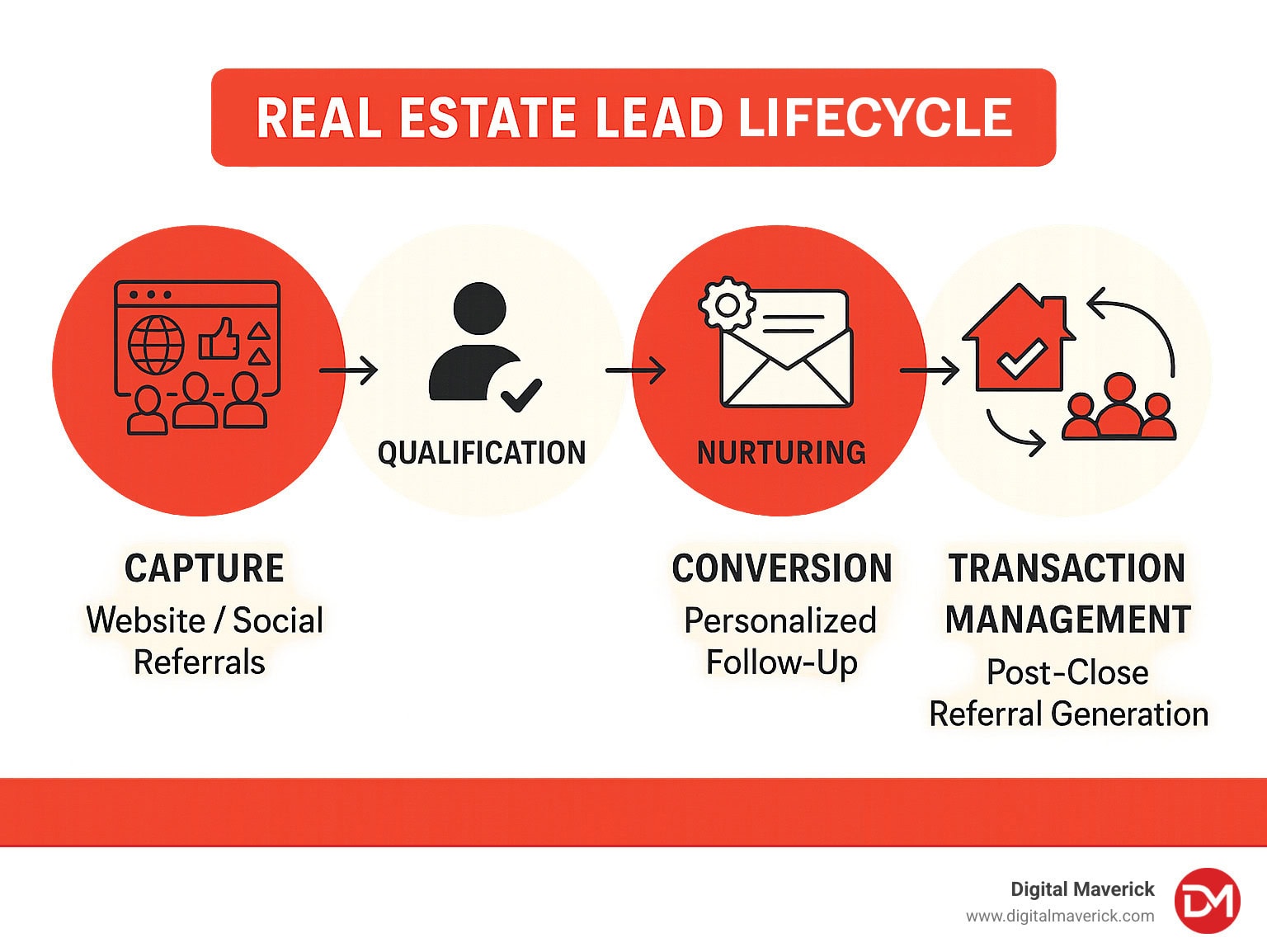
Comprehensive diagram showing the real estate lead lifecycle from capture through website/social/referrals to qualification, nurturing with automated sequences, conversion through personalized follow-up, to transaction management and post-close referral generation - lead management system for real estate infographic

Understanding a Lead Management System for Real Estate

Let’s face it – keeping up with today’s tech-savvy homebuyers is challenging. With research showing that 96% of buyers start their journey online, having a system that captures and nurtures these digital leads isn’t just nice to have – it’s essential.

A lead management system for real estate does exactly what the name suggests – it helps you manage your leads from first click to closing day. But there’s so much more beneath the surface that makes these systems game-changers for growing teams.

What is a Lead Management System for Real Estate?

Think of a lead management system for real estate as your team’s digital command center. It’s where potential clients first enter your world and where you guide them through their buying or selling journey.

These systems work around the clock to make sure no opportunity slips through the cracks. They automatically capture leads from your website, social media, and listing portals. Then they tag and organize these prospects based on their interests and behaviors.

The magic happens when the system routes these leads to the right team member and kicks off personalized follow-up sequences. Some leads need immediate attention (like that buyer who wants to see a property today), while others need nurturing over months (like the family planning to move next year).

Research from the National Association of Realtors shows that different generations have vastly different home-search behaviors – a good lead management system helps you tailor your approach to each.

As one of our clients puts it: “My system doesn’t just store contacts – it reminds me who needs attention, suggests what to say, and tracks everything so I can focus on having real conversations instead of wondering who I should call next. I just have to follow the action plan.”

Lead Management System for Real Estate vs Traditional CRM

“But I already have a CRM!” I hear this all the time from agents. While there’s overlap, a specialized lead management system for real estate offers distinct advantages over general-purpose CRMs:

FeatureTraditional CRMReal Estate Lead Management System
Property dataLimited or manual entryAutomated IDX/MLS integration
Workflow focusGeneral sales pipelineProperty-specific buying/selling stages
Marketing toolsBasic email templatesProperty alerts, valuation tools, listing updates
Automation depthGeneric follow-upTime-sensitive transaction workflows
ReportingGeneral sales metricsReal estate KPIs (e.g., price per square foot, days on market)
Mobile capabilitiesBasic contact accessOn-the-go showing scheduling, property notes
ComplianceGeneral business rulesReal estate-specific disclosure tracking

The difference is like comparing a Swiss Army knife to a professional chef’s kitchen. Both can cut things, but one is specifically designed for preparing gourmet meals.

A proper real estate lead system understands the nuances of property transactions. It knows that a buyer looking at $500K homes in the suburbs needs different nurturing than an investor exploring multi-family properties downtown.

These systems centralize your data so everyone on your team sees the same information. No more awkward moments where two agents on your team call the same lead, or worse – nobody calls at all. You get complete pipeline visibility from new leads to pending deals, with the speed-to-lead capabilities (ideally under 5 minutes) that today’s impatient consumers expect.

As your business grows, the right system grows with you – turning what would be chaos into clarity, and converting more of those hard-earned leads into happy homeowners.

Core Features That Drive Capture & Conversion

What makes a lead management system for real estate truly effective? It’s not just about collecting contact information—it’s about changing those contacts into relationships and closed deals. Let’s explore the features that actually move the needle for real estate teams.

Multi-Channel Lead Capture

Today’s homebuyers and sellers don’t follow a single path to find you. They’re browsing listings at midnight, scrolling Instagram during lunch breaks, and driving by your signs on weekends. Your lead system needs to be everywhere they are.

The best systems seamlessly gather prospects from your IDX website, social media inquiries, portal leads, open house sign-ins, and even traditional sources like direct mail and cold calls. This comprehensive approach ensures no opportunity falls through the cracks.

Effective lead capture systems help real estate professionals “find deals fast and connect with homeowners first”—exactly what you need when competition for listings is fierce. With thousands of real estate investors trusting these platforms, the proof is in the results.

Intelligent Lead Scoring and Prioritization

Let’s be honest—some leads deserve your immediate attention while others can wait. But how do you know which is which? Smart lead management doesn’t just collect leads; it helps you prioritize them.

Modern systems analyze behavior like website browsing patterns, email engagement, and showing request urgency to automatically flag your hottest prospects. AI-driven platforms help agents “predict and prioritize homeowners most likely to sell within the next 90 to 180 days,” allowing you to focus your energy where it matters most.

This intelligent sorting means your morning starts with clarity about who needs attention first—not with panic about who might slip away.

Automated Nurture Campaigns

The truth about real estate leads? Most aren’t ready to transact immediately.

“Think about it, if people in your area move on average every five (5) years (shorter than the national average), that means that 95% of the contacts in your database are not actively buying/selling. Your GSC fundamentally changes when your follow up segments your database, and meets your clients where they are”, said Kurt Uhlir, Chief Marketing Officer at ez Home Search.

Your system needs to maintain relationships over time without requiring you to manually remember to follow up with every contact.

Effective nurture campaigns include timely drip emails customized for buyer and seller stages, text message follow-ups at critical decision points, and content delivery aligned with property interests. When a lead goes quiet, re-engagement sequences automatically kick in to rekindle the conversation.

One agent using a comprehensive platform saw “a 33% increase in tour-to-lease conversion and a 15% increase in resident retention year-over-year” thanks to consistent, automated communication. These aren’t just convenience features—they’re revenue generators.

AI-Powered Assistance

The newest frontier in lead management is artificial intelligence, and it’s changing everything. AI assistants now provide 24/7 response to initial inquiries, qualify leads through natural-sounding chatbots, and even suggest the best times to reach out based on past interactions.

One enthusiastic real estate professional described their AI assistant as “not a game-changer, it totally has us playing a different game than everyone else.” That’s because AI doesn’t just make existing processes faster—it creates entirely new possibilities for connecting with prospects.

Automated workflow showing lead moving through capture, nurture, and conversion stages - lead management system for real estate infographic

Automation & AI Inside Modern Systems

Remember when “following up” meant setting calendar reminders and manually sending emails? Those days are gone. Today’s lead management systems for real estate use automation and AI to handle repetitive tasks while making your outreach more effective.

Predictive analytics now anticipate client needs before they even express them. Advanced AI assistants analyze contact patterns to suggest the best days and times to reach each prospect—dramatically improving connection rates without any guesswork on your part.

Voice assistants have become game-changers for busy agents. Imagine updating records, scheduling follow-ups, and retrieving prospect information while driving between showings. This hands-free capability ensures you capture details in real-time rather than trying to remember everything at the end of a hectic day.

Smart notifications have replaced the old “check everything” approach. When a prospect who previously viewed a $500,000 property suddenly starts looking at $700,000 homes, your system flags this change in buying power for immediate follow-up. These behavioral triggers help you respond to what clients are actually doing, not just what they initially told you.

As one property manager using a modern lead management system noted, “Data entry is becoming a thing of the past.” The system handles the administrative burden so you can focus on what you do best—building relationships.

Integrations That Matter

A lead management system for real estate is only as good as its connections to your other tools. The most valuable integrations create a seamless ecosystem where information flows automatically—no duplicate entry, no missed opportunities.

IDX Website Integration creates a direct pipeline from your website visitors to your lead nurture sequences. When someone registers to view properties or saves a search, their information and preferences flow directly into your system. Effective IDX integration creates a continuous flow of qualified leads without any manual steps.

Marketing Platform Connections tie your advertising directly to results. When your lead system connects with Facebook Ads, Google Ads, and email platforms, you’ll know exactly which marketing dollars generate actual transactions. The best platforms provide closed-loop reporting so you can double down on what works.

Property Data Sources enrich your leads automatically. Instead of manually researching property details, advanced systems offer “300+ real estate filters to refine lead lists,” giving you deep insights the moment a lead enters your system.

Transaction Management integration ensures that when leads become clients, their information moves seamlessly into your transaction process. Top brokerages use these integrations partly because these workflows eliminate redundant data entry.

At Digital Maverick, we help teams create a unified tech ecosystem where data flows freely between systems, automatically assigns meaningful tags to segment your clients, creating a single source of truth for all client information. The right integrations don’t just save time—they transform how your entire business operates.

Implementation & Best Practices

Successfully implementing a lead management system for real estate requires more than just purchasing software. It demands strategic planning and consistent execution of best practices.

Speed-to-Lead: The 60-Second Rule

Research consistently shows that contacting leads within the first minute dramatically increases conversion rates. Your system should be configured to:

  • Immediately notify agents of new leads via mobile push notifications
  • Provide one-click calling directly from the notification
  • Deploy an AI assistant for instant response when agents aren’t available
  • Auto-assign leads based on agent availability and response time history

As one agent reported, “I instantly followed up and converted 4 out of 5 new buyers into listings” by leveraging automated text alerts.

Structured Nurture Cadence

Consistency is key to conversion. Implement a structured communication schedule:

  • Day 0: Immediate response (under 60 seconds)

  • Day 1: Personalized follow-up call and email

  • Day 2-3: Value-add content related to their search criteria

  • Day 5: Check-in text or video message

  • Day 7: Market update or property alert

  • Day 10: Final “break-up” message

  • Day 30+: Long-term nurture campaign

This approach aligns with industry best-practice recommendations to “follow up with every new lead within 60 seconds to beat the competition.”

Segmentation and Personalization

Generic messaging yields generic results. Effective lead management requires:

  • Segmenting leads by buyer/seller status, price point, timeline, and neighborhood
  • Personalizing communications with relevant property data and market insights
  • Adapting nurture sequences based on engagement metrics
  • Creating distinct workflows for different lead sources

Agents who implement this level of personalization often “manage and close more deals” by delivering the right message at the right time.

Team Accountability and Performance Tracking

The best system is only as good as its implementation. Establish:

  • Daily lead follow-up metrics for each team member
  • Weekly conversion rate reviews
  • Monthly pipeline velocity assessments
  • Quarterly ROI analysis by lead source

At Digital Maverick, we emphasize “clear daily reporting, CRM audits, and accountability metrics built into every plan” because we know that what gets measured gets improved.

Metrics to Track for Success

To maximize the value of your lead management system for real estate, focus on these key performance indicators:

Lead Response Time

  • Average time to first contact
  • Percentage of leads contacted within 5 minutes
  • Response rates by time of day

Conversion Metrics

  • Lead-to-appointment ratio
  • Appointment-to-client conversion rate
  • Client-to-closing percentage
  • Average days in pipeline by stage

ROI Measurements

  • Cost per lead by source
  • Cost per acquisition
  • Lifetime value of clients
  • Referral generation rate

Teams tracking these metrics have reported “a 300% improvement in lead conversion rates, a 41% revenue increase per salesperson, a 26% improvement in customer retention rates, and a 47% increase in customer satisfaction rates.”

Lead Management System for Real Estate Nurture Playbook

Beyond basic follow-up, a comprehensive nurture strategy should include:

The 10-Day New Lead Plan

  1. Immediate intro email, call, and text
  2. Day 1-2: Information gathering and preference check
  3. Day 3-8: Daily value-adding drip emails
  4. Day 10: Final reconnection attempt

Multi-Channel Approach

  • Email for detailed information and resources
  • SMS for quick updates and time-sensitive opportunities
  • Phone calls for relationship building and complex questions
  • Video messages for personal connection (81% more effective than traditional email)

Educational Content Strategy

  • Market reports custom to their search areas
  • Buyer/seller guides based on their stage
  • Neighborhood spotlights for areas of interest
  • Process explainers to reduce anxiety

Re-Engagement Loops

  • 30/60/90 day check-ins for dormant leads
  • Seasonal market updates
  • Life event triggers (birthdays, purchase anniversaries)
  • New listing alerts matching original criteria

As one agent noted, “It’s like before we were just shooting blindly hoping to hit something; now we can reach numerous sellers with a much higher guarantee of getting a closing.”

Common Challenges & Tech Solutions

Let’s face it – even the best lead management systems for real estate come with their fair share of headaches. But understanding these common roadblocks (and how to overcome them) can help your team get the most from your technology investment.

Lead Overload and Quality Issues

When leads pour in by the hundreds, it can quickly become overwhelming. Many teams find themselves drowning in quantity while starving for quality, leaving agents burned out from chasing dead-end prospects.

This is where AI-driven lead scoring becomes your best friend. Rather than treating every lead equally, modern systems can automatically prioritize prospects based on their actual behavior and intent signals. As one user put it, their “propensity to sell score helps us narrow down our search to specific criteria and remove less likely sellers, saving us time and money.”

Instead of making 100 calls to unqualified leads, your team can focus their energy on the 10 most likely to convert. That’s not just efficiency—it’s sanity preservation!

Data Silos and Integration Gaps

Nothing frustrates agents more than bouncing between multiple platforms to piece together a complete picture of their client. When your property data lives in one system, contact details in another, and communication history somewhere else entirely, critical information inevitably falls through the cracks.

The solution? Choose a lead management system for real estate with robust API capabilities and pre-built integrations. Some platforms shine here, offering “a single login integration” that creates “a centralized hub for leads and listings.” When your systems talk to each other, your data tells a complete story.

Inconsistent Follow-Up Execution

We’ve all been there—setting up beautiful automation sequences only to find months later that agents have been ignoring alerts or skipping crucial follow-up steps. Even the best technology can’t overcome human inconsistency.

Smart teams tackle this challenge with accountability dashboards and a touch of friendly competition. Some lead management platforms include performance tracking that “substantially increases wins” by making follow-up metrics visible to the entire team. When everyone can see who’s following through (and who isn’t), consistency tends to improve dramatically.

Compliance and Documentation Concerns

Real estate transactions involve serious legal requirements and paperwork. Without proper systems, important documents get lost, compliance steps get missed, and risk increases.

Dedicated transaction-management tools have become industry standards because they ensure “all documents are stored securely and compliantly,” giving both agents and brokers peace of mind.

Infographic showing common lead management challenges and their technical solutions - lead management system for real estate infographic

Compliance, Security & Privacy Essentials

With great data comes great responsibility. Today’s real estate professionals need to steer an increasingly complex landscape of privacy regulations:

Data privacy has gone from afterthought to essential business practice. Your lead management system for real estate needs to address GDPR compliance for international clients, CCPA requirements for California residents, TCPA (and do not call) compliance for all US residents, and maintain proper consent records for all marketing communications. Clients expect transparency about how their information will be used—and the law demands it.

Security isn’t optional either. Look for platforms that offer end-to-end encryption for sensitive client details, require multi-factor authentication for system access, and conduct regular security testing. One data breach can destroy years of client trust in an instant.

Smart access controls round out the compliance picture. Your system should offer role-based permissions so team members see only what they need, maintain detailed audit logs of all activities, and provide controlled API access for any third-party connections.

At Digital Maverick, we’ve seen how proper compliance practices can actually improve productivity rather than hinder it—when implemented thoughtfully. Think about it this way: your clients care what happens with their personal contact and budget information. When they know that you care about it as well, it builds the trust they have with you.

How Teams & Solo Agents Benefit Differently

A lead management system for real estate isn’t one-size-fits-all. The benefits vary dramatically depending on your business structure.

For teams, the magic happens through structured collaboration. Role-based access controls ensure everyone stays in their lane, while lead distribution rules match prospects to the right agent based on strengths and availability. A shared inbox creates seamless client communication even when multiple team members are involved. Perhaps most valuable are the performance dashboards that let leaders compare individual and team metrics, identifying both superstars and those who need additional coaching.

Solo agents, meanwhile, gain an entirely different advantage—the ability to appear larger than they are. An effective system serves as their virtual assistant, automated workflows create the impression of a much bigger operation, and mobile-first design lets them run their business from anywhere. As one independent agent noted after implementing an automated CRM, “I went from catching up on tasks on the weekend to turning my computer off on Friday and I don’t have to worry about it until Monday.”

The right system doesn’t just organize your data—it multiplies your capabilities, whether you’re a team of twenty or a solo practitioner.

How to Choose the Right System

Selecting the optimal lead management system for real estate requires careful consideration of your specific business needs and growth objectives.

Assess Your Current Workflow

Before evaluating systems, document your existing process:

  • How do leads currently enter your business?
  • What is your follow-up sequence?
  • Where do leads commonly fall through cracks?
  • Which manual tasks consume the most time?
  • What metrics matter most to your business model?

Determine Must-Have Features

Based on your workflow analysis, identify non-negotiable capabilities:

  • Multi-channel lead capture from your primary sources
  • Integration with existing tools and platforms
  • Mobile accessibility for your on-the-go team
  • Automation capabilities matching your follow-up strategy
  • Reporting aligned with your key performance indicators

Consider Scalability Needs

Your chosen system should grow with your business:

  • User pricing that accommodates team expansion
  • Customization options for evolving workflows
  • API access for future integration needs
  • Training resources for new team members
  • Storage capacity for growing client databases

Evaluate Support and Training

The best technology fails without proper implementation:

  • Onboarding process and timeline
  • Ongoing technical support availability
  • Training resources for team members
  • User community for peer learning
  • Regular updates and feature improvements

Key Questions to Ask Vendors

When evaluating potential lead management systems for real estate, ask these critical questions:

Integration Capabilities

  • “Does your system integrate directly with [your specific tools]?”
  • “What is the depth of these integrations? Data sync only, or full workflow?”
  • “Can we access your API for custom integrations if needed?”

Customization Options

  • “Can we modify lead stages to match our sales process?”
  • “Are email/text templates customizable with our branding?”
  • “Can we create custom fields for our specific data needs?”

AI and Automation Roadmap

  • “What AI capabilities are currently available in your platform?”
  • “What automation features are on your near-term roadmap?”
  • “How do you train your AI on real estate-specific scenarios?”

Training and Support

  • “What does your onboarding process look like?”
  • “Is support included, or is it an additional cost?”
  • “What are your average response times for support issues?”

Performance and Reliability

  • “What is your guaranteed uptime percentage?”
  • “How often do you release updates and improvements?”
  • “What happens to our data if we decide to switch systems?”

Final Checklist Before Buying

Before making your final decision:

  • Define clear goals for what success looks like after implementation
  • Map your entire workflow to ensure the system accommodates all stages
  • Test with real scenarios during your demo or trial period
  • Create a data migration plan for existing contacts and historical data
  • Establish implementation timelines with specific milestones
  • Develop a training schedule for all team members
  • Set performance benchmarks to measure ROI after launch

At Digital Maverick, we help teams through this entire evaluation process, ensuring they select a system that aligns with their specific business model and growth objectives.

Frequently Asked Questions about Lead Management Systems

Why is lead management important for real estate professionals?

If you’ve ever wondered why some agents consistently outperform others, effective lead management is often the answer. It’s not just about collecting contact information – it’s about nurturing relationships that turn into transactions.

Professionals who implement a solid lead management system for real estate routinely see dramatic improvements in their business. Some users report a remarkable 300% improvement in lead conversion rates after getting serious about systematic follow-up.

Beyond just closing more deals, proper lead management helps you spend your marketing dollars wisely. As one agent put it, “The propensity to sell score helps us narrow down our search to specific criteria and remove less likely sellers, saving us time and money.” In today’s competitive market, you simply can’t afford to waste resources on low-probability prospects.

There’s also the peace-of-mind factor that shouldn’t be underestimated. A user shared, “I sleep better. The peace of mind knowing that we’re providing a great service…has just made life a lot easier.” When your follow-up is systematized, you no longer wake up wondering which opportunities might be slipping through the cracks.

Perhaps most importantly, structured lead management creates the foundation for growth. One property manager wasn’t exaggerating when they said their system is “the process management software that will enable us to grow from 500 to 5,000 units.” Without scalable systems, your business will always be limited by your personal capacity.

Can automation replace human follow-up entirely?

Let’s be honest – technology is amazing, but it hasn’t made real estate agents obsolete, and it won’t replace the human elements of lead follow-up either.

The sweet spot is finding the right balance between automation and personal touch. Automation shines at handling routine tasks like sending immediate responses, scheduling follow-up reminders, collecting basic information, and maintaining consistent contact. It’s your tireless assistant that works 24/7.

But humans remain irreplaceable for building genuine connections. When a prospect has complex questions about neighborhood dynamics, needs emotional reassurance about a major life decision, or presents unique objections, no AI can match a knowledgeable agent’s ability to respond with empathy and local expertise.

As industry experts note, “Technology will never replace the value of real estate agents.” The most successful professionals use automation to handle the routine so they can focus their human energy on meaningful conversations that actually close deals.

What KPIs prove my system is working?

When you invest in a lead management system for real estate, you need to know if it’s actually delivering results. Here are the numbers that truly matter:

First, watch your speed-to-lead time – how quickly are you making first contact after a lead comes in? This should drop dramatically with a good system, ideally getting under that critical five-minute mark where conversion rates peak.

Your lead-to-appointment ratio tells you if your follow-up sequences are actually moving prospects forward. A working system will steadily increase this percentage as more leads turn into face-to-face opportunities.

Keep a close eye on your cost per acquisition – the total investment required to gain a new client. As your conversion efficiency improves, this number should decrease, meaning each marketing dollar generates more revenue.

Pipeline velocity measures how quickly and predictably leads move through your sales funnel. A properly implemented system creates a more consistent flow from initial contact to closing.

Finally, track agent productivity metrics like meaningful conversations per day and administrative time. Your team should be talking more and typing less after implementation.

One team leader summed it up perfectly when they reported that after focusing on these metrics, their team “prioritized data and efficiency to drive higher transaction volume” with measurable results. At the end of the day, the numbers don’t lie – a properly implemented lead management system for real estate will show its value in these concrete measurements.

Conclusion

A well-implemented lead management system for real estate isn’t just a nice-to-have anymore—it’s become essential for teams who want to thrive in today’s competitive market. The right system transforms what was once chaotic lead handling into something structured and scalable, ensuring no opportunity falls through the cracks.

At Digital Maverick, we’ve learned through years of experience that technology alone doesn’t solve problems. The magic happens when powerful systems meet human expertise. That’s why our approach combines both elements to drive consistent results for the real estate teams and brokerages we work with.

We don’t just provide software—we deliver complete solutions that include:

  • Scalable growth systems that virtually eliminate lead waste
  • Expert conversion services, including our full-service ISAs and our always-on 24/7 AI assistant
  • Hands-on coaching that helps your team develop and maintain the right operating rhythm
  • Practical operational frameworks that transform leads into meaningful conversations—and ultimately into closings

One client put it perfectly: “It’s like before we were just shooting blindly hoping to hit something; now we can reach numerous sellers with a much higher guarantee of getting a closing.”

While technology and marketing trends will continue to evolve, one fundamental truth remains constant: the teams that consistently convert leads into clients will dominate their local markets. A comprehensive lead management system for real estate provides the foundation for that consistency.

Are you ready to transform how your team handles leads? Digital Maverick provides the systems, training, and people to help you consistently turn leads into conversations—and those conversations into closings. Learn more about our offerings and find how we can help your team eliminate lead waste, build scalable systems for growth, and open up higher ROI from your existing database, ad spend, and CRM investments.

What makes us different is that we were built by operators—not vendors. We’ve been in your shoes, scaled real businesses, and know exactly what it takes to succeed in today’s real estate landscape. Let us help you write your success story.

05.19.2025

The Complete Guide to Referral-Based Real Estate Leads

Referral Based Real Estate Leads | Digital Maverick

The Value of Referral-Based Lead Generation

Referral based real estate leads are client opportunities that come through recommendations from past clients, other agents, or referral networks—and they’re worth their weight in gold.

“Referrals have the highest conversion rate of any real estate lead strategy.” – The Close

What are referral-based real estate leads?

  • Definition: Prospective clients referred to you by someone who trusts your services
  • Payment model: Often “pay-at-closing” with a 25-35% referral fee (no upfront costs)
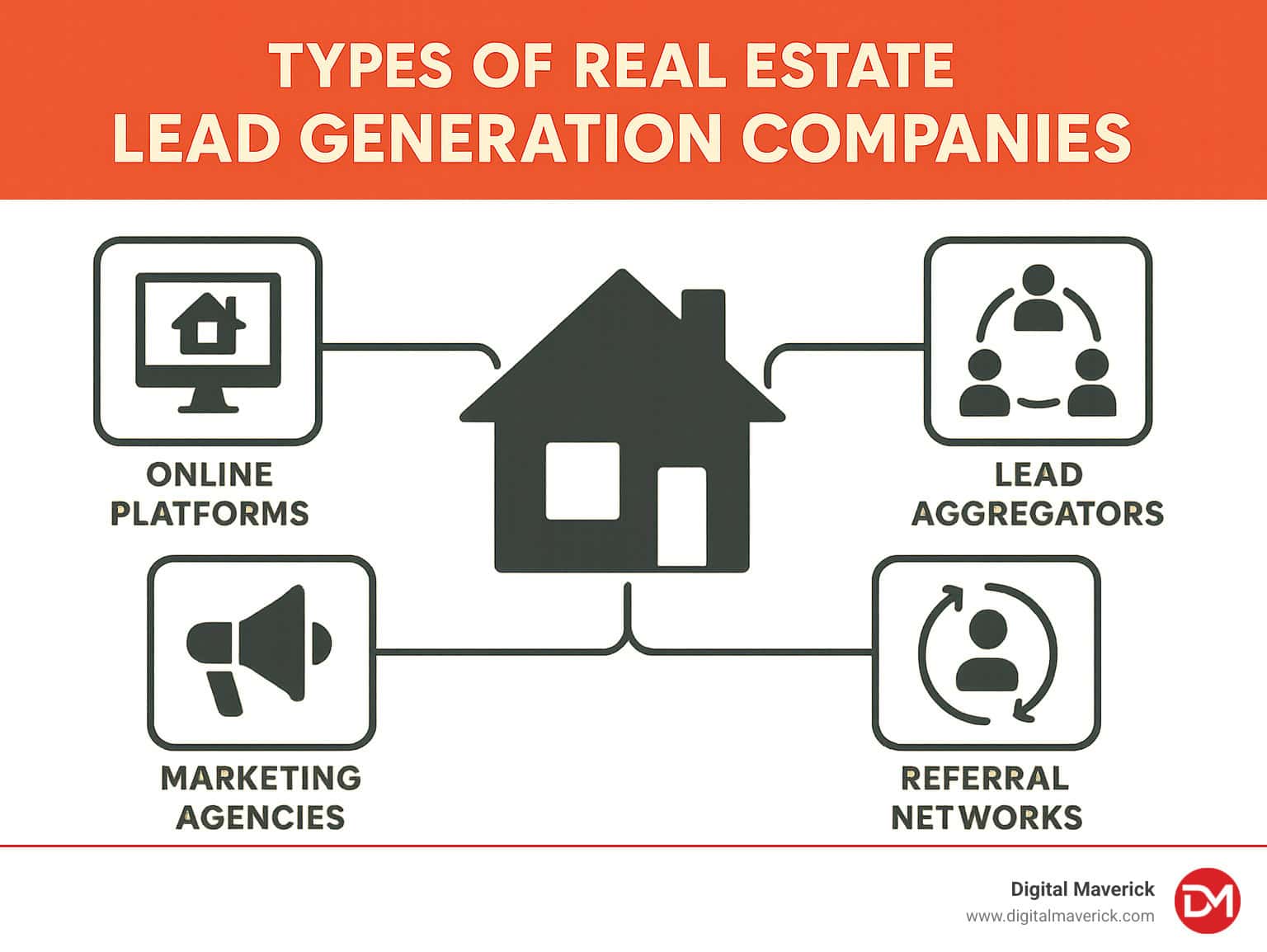
  • Sources: Past clients, other agents, referral networks, and platforms
  • Quality: Typically 3x higher closing rate than standard online leads
  • Trust factor: Pre-established credibility through the referring party

Referral leads solve the biggest challenge in real estate: finding high-quality prospects who are ready to work with an agent they can trust. Unlike cold online leads that convert at roughly 2.4%, referrals come with built-in credibility that dramatically increases conversion rates.

When someone recommends you to a friend or family member, that warm introduction establishes immediate trust. The same applies to professional referral networks that match qualified buyers and sellers with top-performing agents in their area.

The beauty of referral-based lead generation is its alignment of incentives—you only pay when you close a deal, meaning everyone involved is motivated to ensure a successful transaction.

I’m Preston Guyton, with over 20 years of experience helping real estate professionals maximize their referral based real estate leads through my work with Digital Maverick, where we implement proven systems to convert more opportunities into closed transactions.

What Are Referral-Based Real Estate Leads?

When we talk about referral based real estate leads, we’re talking about people, not just data points. These are prospective clients who come to you through a trusted recommendation rather than cold outreach or advertising. It’s like having a friend make an introduction at a party versus walking up to a stranger – the conversation starts on a completely different footing.

These valuable leads typically find their way to your business through four main channels:

Past clients who had such a positive experience working with you that they can’t help but tell their friends, family, and colleagues about you. These warm introductions come with built-in trust that’s nearly impossible to replicate through other means.

Fellow real estate professionals who recognize your expertise or market knowledge and send clients your way when someone is moving to your area or needs your specific skills.

Business partners like mortgage lenders, attorneys, and contractors who’ve seen your work and feel confident recommending you to their clients.

Dedicated referral networks and platforms that specialize in matching qualified buyers and sellers with top-performing agents in exchange for a fee paid only when the transaction closes.

The magic of these leads lies in that warm handoff and pre-established trust. As one industry leader puts it, “We’re talking about people, not leads.” This fundamental distinction explains why referred clients tend to be more serious, more loyal, and significantly more likely to close.

How referral-based real estate leads flow through the pipeline

The journey of a referral based real estate lead follows a distinct pathway that creates a much smoother experience than traditional lead generation:

First, a client need is identified – maybe they’re relocating, looking to upgrade, or ready to sell – by someone in your network. The referring party then typically does some initial qualification, confirming the prospect’s timeline, motivation, and specific needs.

Next comes the warm introduction – that golden moment when your name is shared with a positive endorsement. For platform-based referrals, sophisticated algorithms match prospects with agents based on expertise, location, and performance metrics.

Many referral platforms employ dedicated concierge teams who nurture these leads until they’re truly ready for agent handoff, saving you time and increasing conversion rates.

When you finally connect with the prospect, you’re starting from a position of trust rather than skepticism. The transaction process moves forward with a significantly higher probability of closing, and when it does, you pay the agreed-upon fee to the referring source (typically 25-35% of your commission).

Quality referral platforms reveal their leads close at dramatically higher rates than industry averages precisely because of this careful qualification process. Their systems verify and qualify leads before matching them to agents, ensuring you’re not spinning your wheels with tire-kickers.

Key players in referral-based real estate leads ecosystem

The referral ecosystem works because of several interconnected players who all benefit from successful outcomes:

Referring agents are real estate professionals who send clients outside their service area or specialty, building goodwill and earning passive income.

Consumers are the buyers and sellers seeking trusted guidance through what’s often the largest financial transaction of their lives.

Referral networks create technological infrastructure to match consumers with qualified agents.

Brokers frequently manage and distribute referrals within their organization, creating value for their agents.

Concierge teams qualify, nurture, and prepare leads before agent handoff, increasing conversion rates.

Technology providers offer CRM and tracking solutions that help manage and optimize referral relationships.

This creates what industry experts call a “symbiotic relationship” where everyone wins when transactions close successfully. The referring party earns income, the consumer finds a trusted professional, and you gain a client who arrives with built-in trust and higher closing probability.

Pay-at-Closing vs. Traditional Lead Generation Models

Let’s talk about money—specifically, how you pay for leads. This is where referral based real estate leads truly shine compared to traditional methods.

Agent comparing lead generation models with calculator - referral based real estate leads

Think of it this way: traditional lead generation is like paying for dinner before you know if the food is any good. Pay-at-closing models? You only pay after you’ve enjoyed a delicious meal.

FeaturePay-at-Closing Referral ModelTraditional Lead Generation
Upfront cost$0 (no payment until closing)$500-$5,000+ monthly spend
Payment structure25-35% of commission at closingFixed monthly subscription or per-lead fee
Lead qualityPre-qualified, high intentVaries widely, often low intent
Risk allocationShared risk (platform only earns when you do)Agent bears all risk
Lead volumeGenerally lower, but higher qualityHigher volume, lower quality
Conversion rate3x industry average (per industry data)~2.4% industry average
Cash flow impactPreserves cash flow until closingRequires consistent monthly investment
RelationshipWarm handoff with established trustCold outreach requiring trust-building

This risk-shifting arrangement creates something magical: perfectly aligned incentives. As one industry expert puts it: “When we only make money when our agents close deals, we’re incredibly motivated to send high-quality, transaction-ready clients.”

The beauty of this model is how it preserves your cash flow. Instead of gambling hundreds or thousands each month on leads that might go nowhere, you’re investing in a partnership where everyone succeeds together. Your referral partner doesn’t get paid unless you do—talk about skin in the game!

The numbers tell the story. According to Ruler Analytics’ research, the average lead-to-close rate in real estate hovers around 2.4%. But referral based real estate leads often achieve conversion rates 2-3 times higher. Why? They come pre-qualified, with built-in trust from the referral relationship.

For agents watching their budget or those tired of wasting money on low-quality leads, the pay-at-closing model offers a refreshing alternative. You’re essentially getting premium leads with no upfront investment—just a promise to share in the success when it happens.

And let’s be honest—wouldn’t you rather pay 25-35% of something than 100% of nothing? That’s the peace of mind that comes with knowing you only pay when you actually make money. It’s real estate lead generation that actually aligns with how you run your business.

Pros, Cons & Typical Costs of Referral-Based Leads

Let’s talk about the real deal with referral based real estate leads – the good, the challenging, and what they’ll cost you at closing time.

Pros of Referral-Based Leads

You’ll love that there’s no money leaving your bank account until you’ve got a commission check in hand. This cash flow advantage can be a game-changer, especially during slower market periods.

The quality difference is immediately noticeable too. These aren’t tire-kickers – they’re people who genuinely intend to buy or sell, and they come to you already warmed up. That established trust creates an immediate connection that might otherwise take weeks to build.

I love how the incentives align perfectly with these arrangements. Everyone in the chain – from the referral source to you – only wins when the transaction closes. This creates a beautiful partnership where everyone’s rowing in the same direction.

Many agents I work with appreciate spending less time and money on marketing campaigns when they have a steady stream of referrals. Plus, you’ll know exactly what each lead will cost you – a straightforward percentage at closing, rather than mysterious marketing ROI calculations.

Cons of Referral-Based Leads

That commission split isn’t small – giving up 25-35% of your hard-earned commission can sting a bit, especially on larger transactions.

You’ll also need to get comfortable with some unpredictability. Unlike paid advertising where you can dial up volume, referral flow isn’t something you control directly. Some months might bring multiple opportunities, while others bring none.

Many referral platforms have specific requirements too. They might expect certain production levels, years of experience, or limit you to particular geographic areas. Top platforms often prioritize their highest-converting agents for the best leads, creating a competitive environment.

There’s also a vulnerability factor to consider. Building your business too heavily on any single lead source creates risk – what happens if that referral partner changes their model or goes out of business?

Performance pressure is real too. Most platforms track your response times and conversion rates. If you’re not converting at their expected levels, your referral flow might suddenly slow to a trickle.

Typical Costs of Referral-Based Leads

When it comes to the dollars and cents, referral based real estate leads follow fairly standard industry practices. Traditional agent-to-agent referrals typically run about 25% of your gross commission.

The major platforms each have their own fee structures, generally ranging from 25-35% of your commission. Some platforms charge a flat 25% across all transactions, while others use tiered structures based on property values – often charging 30-35% for higher-priced properties. Some platforms may charge lower percentages (around 25%) for homes under certain price thresholds, and higher percentages (up to 35%) for more expensive properties.

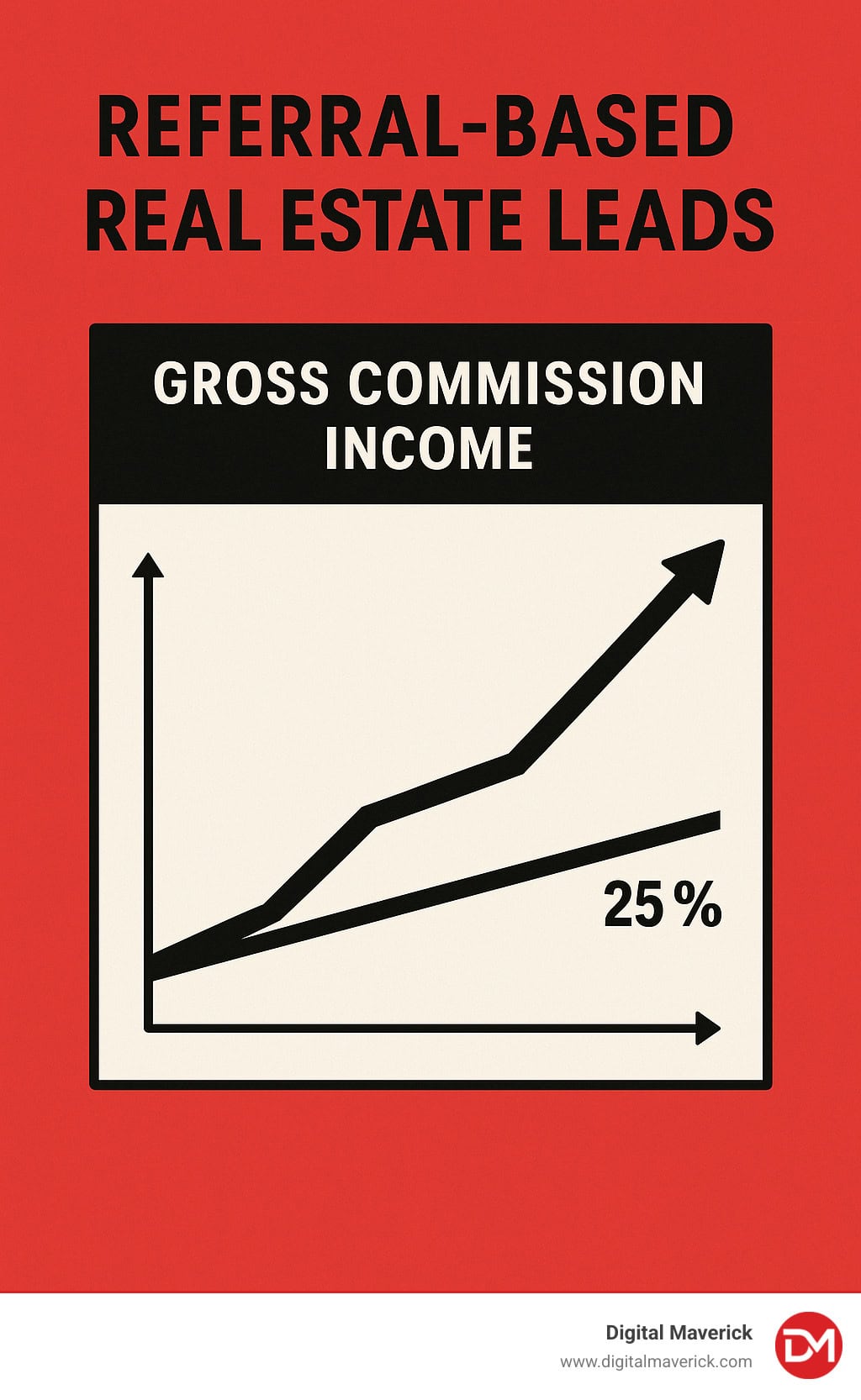
show line chart of "gross commission income" increasing with a second line at 25% of the top line - referral based real estate leads infographic

While these percentages might make you wince at first glance, remember the fundamental value proposition: you only pay when you close. As one successful agent put it, “I’d rather have 70% of something than 100% of nothing.”

For many agents, the math works out beautifully – especially when you factor in the higher conversion rates and the time saved not chasing unqualified leads. The key is finding the right balance for your business model and ensuring you have systems in place to maximize every opportunity that comes your way.

How Referral Lead Platforms Work & What to Look For

Referral platforms operate on a sophisticated matching system that connects qualified leads with appropriate agents. Here’s how the process typically works:

  1. Consumer inquiry: A buyer or seller submits their information on the platform
  2. Lead qualification: The platform’s team verifies the lead’s legitimacy and timeline
  3. Agent matching: An algorithm matches the lead with agents based on expertise, location, and performance
  4. Agent selection: Either the platform assigns the lead directly, or multiple agents compete for the opportunity
  5. Warm handoff: The platform introduces the lead to the selected agent(s)
  6. Transaction support: Many platforms provide ongoing support throughout the process
  7. Closing and payment: When the transaction closes, the agent pays the agreed-upon referral fee

What to look for in a referral platform:

1. Lead Vetting Process

Quality platforms invest heavily in lead qualification. The best platforms employ concierge teams that personally speak with each lead before matching them with an agent. This ensures you’re receiving genuine opportunities rather than tire-kickers.

2. Agent Qualification Requirements

Most platforms have minimum requirements for participating agents:

  • Experience requirements: Minimum of 24 months of experience and at least eight transactions in the past 12 months
  • Production thresholds: At least three years of experience and 20+ transactions in the last 12 months
  • Performance metrics: Strong local market performance and positive client reviews

These requirements ensure that consumers are matched with qualified professionals, maintaining the platform’s reputation and conversion rates.

3. Distribution Methodology

Platforms use different methods to distribute leads:

  • Performance-based: Algorithms that reward agents who respond quickly and close at high rates
  • Competition-based: Systems that invite agents to submit proposals, letting consumers choose their preferred option
  • Exclusive matching: Some platforms match one lead to one agent based on specific criteria

Understanding the distribution model helps you determine if a platform aligns with your business approach.

4. Customization Options

Look for platforms that allow you to customize your profile and preferences. Quality platforms let agents specify:

  • Geographic areas they serve
  • Price points they prefer
  • Property types they specialize in
  • Languages spoken
  • Specific expertise (investors, first-time buyers, luxury, etc.)

This customization ensures you receive leads that match your strengths.

5. Fee Structure Transparency

Reputable platforms are transparent about their fee structure. Before signing up, ensure you understand:

  • Exact referral percentage
  • Any variations based on price point or property type
  • When and how fees are collected
  • Any additional membership or subscription fees

Maximizing Success With Referral-Based Real Estate Leads

Converting referral based real estate leads isn’t just about getting them—it’s about what you do once they land in your lap. At Digital Maverick, we’ve seen what separates agents who close at exceptional rates from those who let these golden opportunities slip away.

Best practices for handling referral-based real estate leads

The moment a referral hits your inbox, the clock starts ticking. Our data consistently shows that speed-to-lead is the single most powerful predictor of success—agents who respond within 5 minutes are literally 400% more likely to convert that lead than those who wait half an hour. That’s not a typo: five minutes versus thirty can triple your business.

Don’t put all your eggs in one communication basket, either. The most successful agents implement what we call a multi-channel approach. When that referral notification comes in, immediately pick up the phone. No answer? Send a quick text. Follow up with an email containing valuable information about their specific situation, maybe a personalized video introduction, and connect on social media if appropriate.

Make it personal from the very first touch. Something as simple as “Hi Sarah, HomeLight just connected us regarding your home sale in Henderson. I helped your friend John with his family’s move last year, and I’d love to do the same for you” creates an immediate bridge of trust. This isn’t just another lead—this is someone connected to your network.

The most successful agents operate with a value-first mindset. Before asking for anything, provide something meaningful: a custom market report for their neighborhood, an insider’s guide to the local school district, or connections to trusted lenders for pre-approval. Give before you ask.

Even warm referrals sometimes need nurturing. Our top-performing clients implement a systematic follow-up sequence that keeps them top-of-mind without becoming annoying. We recommend a carefully calibrated cadence that spans from day one (with multiple touch points) through day 30, eventually transitioning leads into a monthly nurture campaign if they’re not quite ready.

Your CRM should be working for you, not the other way around. Setting up proper automation workflows ensures no referral falls through the cracks, even during your busiest weeks.

For those working with referral platforms like HomeLight, regular profile optimization is essential. Update your stats, add fresh reviews, and refine your specialties. These platforms’ algorithms favor agents who maintain current, complete profiles—meaning more leads for the diligent.

Building long-term relationships to drive repeat referrals

The real magic happens when you transform one referral into an ongoing stream of business. This doesn’t happen by accident—it requires intentional relationship nurturing.

Start by mapping your Sphere of Influence (SOI) with purpose. Not all contacts have equal referral potential. We help our clients categorize their network and develop appropriate touch strategies for each tier, focusing the most energy on those with the highest likelihood of sending business your way.

Nothing beats face-to-face connection. Client appreciation events create natural environments for past clients to introduce you to their friends. One of our clients hosts quarterly “Neighborhood Update” brunches that consistently generate 3-5 new referrals each time—all while enjoying mimosas and creating genuine community.

Between transactions, position yourself as a valuable resource through content that matters. Market updates, home maintenance checklists, and local insider information keep you relevant in clients’ lives even when they’re not actively buying or selling. When their friend mentions needing an agent, guess who comes to mind?

Gratitude matters. A thoughtful referral rewards program (within legal limits, of course) shows appreciation and encourages repeat behavior. While non-licensed individuals can’t receive commission splits, a personalized gift speaks volumes.

Your success stories should work for you. Implement a systematic approach to collecting testimonials and showcasing them strategically. Fresh reviews not only boost your profile on referral platforms but provide social proof to new prospects considering working with you.

Many agents feel uncomfortable asking for referrals. We help them develop a natural referral request script that feels conversational rather than transactional. Something as simple as “I’m so glad we found your perfect home. My business thrives on helping people just like you. Who else in your life might be thinking about a move that I could help?” opens doors without feeling pushy.

Finally, implement annual client reviews where you discuss their home’s current value, market trends, and any real estate needs in their network. These scheduled check-ins create natural opportunities for referral conversations while providing genuine value.

With the right systems in place, referral based real estate leads become not just a source of business but the foundation of a thriving, sustainable practice.

Integrating Referral Leads Into Your Broader Growth Strategy

While referral based real estate leads deliver impressive conversion rates, the most successful real estate professionals don’t rely on them exclusively. Think of referrals as the foundation of a well-built house—essential, but not the entire structure.

Strategy diagram showing how different lead sources work together - referral based real estate leads infographic

It’s about finding the right mix that matches your personal strengths, market conditions, and business goals.

When referral-based real estate leads make sense for new vs. experienced agents

The referral landscape looks quite different depending on where you are in your career journey.

For newer agents, referral leads offer a tempting low-risk entry point since there’s no upfront cost. You’ll benefit from the built-in credibility that comes with a warm introduction, which can be especially valuable when you’re still building your reputation. The downside? Many referral platforms have minimum experience requirements, and those early commission splits can feel painful when you’re just getting established.

At a big brokerage? I recommend new agents partner with experienced team members for internal referrals while building their transaction history. This creates a stepping stone to qualify for larger referral platforms later.

Experienced agents, on the other hand, often find referral platforms actively court them. Your track record works in your favor with algorithmic matching systems that prioritize agents with proven conversion rates. The main consideration becomes opportunity cost—is a 30% referral fee worth it when you have other lead sources flowing? For most top producers, the answer is yes, but as one part of a diversified strategy.

Leveraging referral leads alongside outbound and inbound marketing

Creating a balanced lead generation approach means combining the reliability of referrals with the volume potential of other channels. Most successful agents we work with distribute their business across four main categories:

Referral sources typically account for 25-35% of business for established agents. This includes platform-based referrals, past client recommendations, agent-to-agent referrals, and strategic partnerships with complementary businesses. These leads often represent your highest conversion rates and lowest acquisition costs (though the referral fee impacts the final math).

Database marketing should drive 30-40% of your transactions. This includes nurturing past clients, engaging your sphere of influence, geographic farming, and targeted email/text campaigns. The beauty of database marketing is that it builds on relationships you’ve already established, creating a virtuous cycle of business.

Digital marketing generally contributes 20-30% of business for top performing agents. This encompasses paid search and social ads, content marketing, listing syndication, and social media engagement. While these leads typically convert at lower rates than referrals, they provide consistent volume and reach people outside your existing network.

Traditional marketing still matters, accounting for 10-15% of business for many successful agents. This includes activities like hosting open houses, sending direct mail, maintaining visible signage, and participating in community events. These methods build local brand recognition that supports all your other efforts.

As Jon Cheplak wisely notes, the best lead generation strategy aligns with your natural strengths and communication style. Some agents thrive on in-person networking that generates referrals, while others excel with digital marketing and online leads. Either way, you have to do the work.

The key isn’t just generating leads—it’s creating a reliable system that turns those leads into conversations, and conversations into closings.

By thoughtfully integrating referral based real estate leads into your broader growth strategy, you’ll build a business that’s both profitable and resilient, capable of thriving in any market conditions. Visit our offerings page to learn more about how we can help you create a balanced lead generation approach custom to your business goals.

Frequently Asked Questions About Referral-Based Real Estate Leads

How is the referral fee paid at closing?

When it comes time to collect your commission on a referral-based transaction, the process follows a straightforward path that protects everyone involved.

The referral fee moves through the closing process as part of the normal commission flow. Your seller has already agreed to the total commission (typically that 5-6% we’re all familiar with) in the purchase agreement. At closing, the title company collects this commission from the seller’s proceeds and distributes it according to the agreements in place.

Here’s what makes this process seamless: the commission goes first to the brokerages involved, not directly to agents. Your brokerage receives their portion, pays you according to your split arrangement, and then handles the referral fee payment directly to the referring brokerage or platform.

This brokerage-to-brokerage payment structure isn’t just a preference—it’s essential for legal compliance with real estate licensing laws. The paper trail typically includes a referral agreement (signed before you begin working with the client), commission disbursement authorization at closing, and the necessary IRS Form 1099 for everyone’s tax reporting.

The beauty of this system? You never have to write a check from your personal account or worry about the logistics. The entire process happens within the established closing procedures.

Are referral-based lead services good for new agents?

If you’re new to real estate, referral based real estate leads present both opportunities and challenges worth considering.

On the bright side, these services eliminate those painful upfront marketing costs that can strain a new agent’s budget—you only pay when you actually close a deal. The leads you receive are typically pre-qualified with genuine intent to buy or sell, and many platforms offer supportive systems to help guide you through the process. Some even create opportunities to learn from more experienced agents.

That said, new agents do face some problems. Many of the major referral platforms require 1-3 years of experience and a track record of 8-20 closed transactions in the past year. You’ll also find yourself competing with established agents who have proven conversion rates, and the referral fees mean your commission checks will be smaller at a time when cash flow matters most.

If you’re too new to qualify for the major platforms, don’t worry—there’s a path forward. Start by building relationships with experienced agents in your brokerage who might share internal referrals. Connect with agents in other markets who can send you relocation clients. Focus on your personal sphere of influence to generate your first referrals, and look into platforms with lower experience requirements while you build your transaction history.

As one agent shared with us: “I couldn’t qualify for the big referral platforms my first year, so I focused on building relationships with agents in my office. By my second year, I had enough transactions to join quality referral networks, and those referrals helped me double my business.”

How are leads vetted and matched to agents?

Have you ever wondered what happens behind the scenes when a lead comes through a referral platform? The vetting and matching process is more sophisticated than you might think.

Most platforms start with initial screening questions on their website or app—the basics about what the client is looking for. But the good platforms don’t stop there. Many employ actual humans who call or email leads to verify their information and assess their needs. This person-to-person contact helps determine timeline, price point, location preferences, and specific requirements while gauging how serious the prospect really is about moving forward. Some platforms even verify financial readiness for buyers.

When it comes to matching you with these qualified leads, platforms consider several factors to create the right fit. They look at your geographic coverage to ensure you serve the area, your specializations with certain property types or price points, and often your historical performance metrics. Many platforms prioritize agents who consistently respond quickly to new leads and check your current availability for new clients.

The best referral platforms use data-driven approaches—their algorithms analyze millions of transactions to match clients with agents based on historical performance with similar properties. They continuously refine their matching by factoring in your responsiveness and the feedback you receive from clients.

Many platforms take a hybrid approach, combining technology with human support in what they call “data science for the win” to create optimal matches between clients and agents.

Conclusion

Referral based real estate leads truly stand out as one of the most valuable opportunities in today’s market. Unlike cold internet leads that often leave you playing an expensive numbers game, referrals come with that precious built-in trust factor that dramatically increases your chances of closing.

The beauty of these leads lies in their alignment with your cash flow – you only pay when you succeed. No more throwing money at lead sources month after month hoping something sticks. Instead, you’re building relationships and only sharing a portion of commission on actual closed deals.

Our conversion systems take the guesswork out of follow-up, giving you proven workflows that turn more leads into appointments. When you’re juggling multiple prospects, having clear processes makes all the difference between closing deals and watching them slip away.

The hands-on coaching we provide tackles the real-world challenges you face. Those awkward conversations about commission? That buyer who keeps changing their criteria? We’ve been there and guide you through with practical tactics that work.

Our ISA support ensures no lead falls through the cracks during your busy days showing properties or meeting clients. This professional front line handles initial qualification and nurturing so you can focus on high-value activities.

With our CRM optimization, we transform your database from a digital address book into a relationship machine that works while you sleep. Automated but personalized communication keeps you top-of-mind without requiring your constant attention.

Our accountability frameworks provide the structure many agents secretly crave. Clear metrics and reporting help you understand exactly what’s working and where you can improve – because what gets measured gets managed.

While referral leads are incredibly valuable, they work best as part of a balanced approach. The most successful agents we work with blend referrals with thoughtful database marketing, strategic digital advertising, and authentic community engagement.

By implementing the strategies we’ve outlined throughout this guide, you’ll not only convert more of your current opportunities but also build a foundation for sustainable growth through repeat and referral business for years to come.

Ready to transform your approach to lead conversion? Learn more about how Digital Maverick can help you implement proven systems to turn more leads into closed transactions by visiting our services page.

05.19.2025

A Comprehensive Guide to ISA Calling: What You Need to Know

What Is ISA Calling and Why It’s Changing Ambitious Real Estate Teams

ISA calling is the process where dedicated Inside Sales Agents (ISAs) conduct outbound and inbound phone calls to generate, qualify, and nurture real estate leads. This specialized role focuses on converting prospects into appointments for agents to close deals.

“Prospecting is an easy thing to neglect, and by the time you realize it—hello, empty pipeline!”

What is ISA Calling?Key FunctionsWhen to Consider
Professional phone prospecting by specialized Inside Sales Agents• Lead qualification
• Appointment setting
• Database nurturing
• Follow-up management
• When closing 1-2 deals monthly
• With 500-1000 leads in pipeline
• When agents need to focus on closings

For real estate teams struggling with lead follow-up and conversion, ISA calling provides a systematic approach to ensure no opportunity falls through the cracks. Rather than expecting agents to juggle both prospecting and closing, an ISA takes ownership of the front-end sales process through consistent, skilled phone work.

The real power of ISA calling comes from its ability to transform your lead generation investment into actual appointments. While many teams generate plenty of leads, most fail to implement the disciplined follow-up system needed to convert them effectively.

A properly structured ISA calling program typically delivers:

  • Consistent lead engagement across all sources
  • Faster response times to new inquiries
  • Professional qualification to identify motivation, timing and ability
  • Structured nurturing of long-term prospects
  • Detailed tracking of all contact attempts and conversations

Implementing an effective ISA calling strategy isn’t just about hiring someone to make calls—it requires systems, scripts, training, and ongoing management to deliver results.

I’m Preston Guyton, co-founder of Digital Maverick where I focus on helping real estate teams with conversion and lead generation strategies, including building powerful ISA calling teams that transform databases into appointments and closed deals.

Inside Sales Agent calling workflow showing lead sources, qualification process, appointment setting, and handoff to agents with metrics for success tracking - isa calling infographic

Understanding ISAs & Their Role

An Inside Sales Agent (ISA) is the unsung hero of successful real estate teams—the voice behind the phone who turns cold leads into warm opportunities. Unlike traditional agents who spend their days showing homes and meeting clients face-to-face, ISAs work remotely, building relationships through calls, texts, and emails before any in-person meeting ever happens.

Think of your ISA as your team’s first impression maker. They’re the friendly, professional voice that greets potential clients, asks the right questions, and determines if someone is ready to work with one of your agents. They’re not just answering phones—they’re skilled sales professionals who qualify prospects and keep your pipeline consistently filled.

“An ISA is more than an appointment setter; they are professional salespeople requiring full-time commitment.”

The best ISAs juggle hundreds of relationships simultaneously. They typically manage between 500-1,000 leads at any given time, nurturing each through personalized follow-up until they’re ready to take action. This consistent pipeline management is what keeps your business steady, especially when market conditions get unpredictable.

One of our Digital Maverick clients recently shared a success story that says it all: “Before our ISA program, we were only converting about 2% of our online leads. Now with dedicated ISAs handling initial contact and follow-up, we’re seeing 8-10% conversion rates. It’s completely transformed our business.”

ISA vs Traditional Agents

The differences between ISAs and traditional agents go far deeper than just where they work:

Inside Sales Agents (ISAs)Traditional Agents
Focus on lead generation and qualificationFocus on showings, negotiations and closings
Typically salary + bonus compensationCommission-based compensation
Work with high volume of leads at early stagesWork with fewer clients at later stages
Master phone and digital communicationMaster in-person relationship building
No geographic territory limitationsOften focused on specific geographic areas
Success measured by appointments setSuccess measured by transactions closed

This division of labor creates a powerful efficiency. Your agents can focus entirely on what they do best—showing properties and closing deals—while your ISAs handle the time-consuming work of prospecting, qualifying, and nurturing leads.

As one of our top Las Vegas agents puts it: “Having our ISA team handle all the initial calls was like getting a 20-hour work week back. I can now focus on clients who are ready to buy or sell, while my ISA nurtures everyone else until they’re ready.”

Core Responsibilities of a Real Estate ISA

The daily life of an effective ISA calling professional revolves around several key activities:

Inbound lead management is all about quick response—being the first voice a potential client hears when they submit an inquiry online. Great ISAs know that speed-to-lead can make or break conversion rates.

Outbound prospecting takes a more proactive approach, reaching out to expired listings, FSBOs, past clients, and geographic farming areas to uncover opportunities before competitors do.

Through skilled lead qualification, ISAs assess motivation, timeline, and financial ability—separating the serious buyers and sellers from those who are just browsing.

The ultimate goal is usually appointment setting—scheduling qualified leads for consultations with the right agent based on the prospect’s specific needs and location.

Behind the scenes, database management keeps everything organized. Your ISA maintains detailed records of all interactions and ensures no follow-up opportunity falls through the cracks.

Implementing consistent follow-up sequences might be the most valuable skill of all. The best ISAs know exactly when to reconnect via calls, texts, and emails to nurture leads without becoming annoying.

Daily data entry and lead scrubbing ensures your CRM stays clean and accurate, while regular performance reporting tracks metrics like call volume, contact rates, and appointment conversions.

The magic happens when an ISA masters what we at Digital Maverick call “the art of the follow-up”—finding that perfect balance between persistence and patience. An inside sales agent who excels at this balance can transform your team’s results practically overnight.

ISA on the phone qualifying leads while updating CRM - isa calling

The Mechanics of ISA Calling in Real Estate

ISA calling is much more than dialing numbers and hoping for the best. It’s a strategic blend of timing, technique, and persistence that transforms cold prospects into warm appointments. When done right, it becomes the heartbeat of a thriving real estate business.

At its core, effective ISA calling requires understanding the rhythm and flow of productive phone work. Our most successful Digital Maverick ISAs have mastered this rhythm, creating predictable results even in unpredictable markets.

Talk Time and Call Volume

The magic happens when your ISA reaches the sweet spot of productive phone time. Most high-performing ISAs aim for 6-7 hours of actual conversation each day. This typically means:

“My best ISAs are making 80-100 dials daily, connecting with about 15-20 people, and having meaningful conversations with 10-15 prospects,” shares a team leader whose ISA program we helped build. “It’s not about the number of calls—it’s about the quality of conversations.”

These numbers aren’t arbitrary. They represent the consistent effort needed to keep your pipeline full through both hot and cold market cycles.

Call Cadence and Timing

Timing isn’t everything in ISA calling—but it’s certainly a huge factor. We’ve found that strategic timing dramatically improves contact rates:

Fresh leads deserve special attention—ideally 6-8 contact attempts within their first two weeks in your system. The golden window? The first five minutes after they register. After that, your chances of connection begin to fade.

“Wednesday and Thursday tend to be our magic days,” notes one of our top-performing ISAs. “And mixing up call times throughout the day helps catch people during their available windows.”

Speed-to-Lead Response

If there’s one factor that separates thriving teams from struggling ones, it’s their speed-to-lead response. The data is crystal clear: leads contacted within 5 minutes are 21 times more likely to convert than those reached after 30 minutes. Wait an hour, and you’ve lost 80% of your conversion potential.

One of our Florida clients implemented our strict 5-minute response protocol and saw their appointment conversion rates double within just 60 days. In today’s world of instant gratification, leads expect immediate attention—and they reward the agents who provide it.

Inbound vs Outbound ISA Calling

Your ISA will typically handle two distinct types of calling activities, each with its own rhythm and approach:

Inbound ISA Calling

When someone raises their hand through a website form, property inquiry, or social media engagement, they’ve already shown interest. These “warmer” leads offer higher conversion potential but require lightning-fast response.

The challenge? Most teams are drastically underestimating how quickly these leads cool off. Your inbound ISA becomes your first-response team, ready to engage before competitors even know the lead exists.

Outbound ISA Calling

This is where the true hunting happens. Your outbound ISA proactively reaches out to people who haven’t requested contact, including:

  • Expired listings represent sellers who still need solutions.
  • FSBOs (For Sale By Owner) are already motivated to sell but trying to go solo.
  • Circle prospecting around recent listings or sales can uncover hidden opportunities, while
  • geographic farming systematically builds presence in targeted neighborhoods.

Don’t forget the gold in your existing database—past clients, sphere contacts, and those aged leads who inquired months or even years ago. A skilled ISA can breathe new life into these overlooked opportunities.

“A dedicated cold-calling ISA typically generates 1-2 extra deals monthly,” explains one of our coaching clients. “But patience is key—expect a 3+ month pipeline-building phase before seeing the first closed transaction.”

ISA Calling Scripts & Objection Handling

The backbone of successful ISA calling is a flexible script framework that guides conversations toward qualification and appointments. Think of scripts not as rigid monologues but as conversational roadmaps.

The most effective ISA scripts incorporate these essential elements:

Question-based approach puts your ISA in the driver’s seat. As we tell our teams: “She who asks the questions controls the conversation.” By asking thoughtful questions rather than making statements, ISAs uncover true motivation and needs.

Empathy and active listening transform cold calls into human connections. The best ISAs genuinely care about understanding each prospect’s unique situation.

Finding questions like “What prompted you to start looking at homes in this area?” or “How soon would you ideally like to be moved?” help uncover specific needs, timeline, and motivation.

When objections arise—and they always do—prepared objection handling rebuttals make all the difference. When a prospect says, “I’m just looking,” a skilled ISA might respond: “I understand completely. Many of our clients started just looking too. What prompted you to start looking at this point?”

Finally, natural closing techniques help transition to appointment setting without feeling pushy: “Would Tuesday at 3pm or Wednesday at 5pm work better for you to meet with our agent?”

The real art of productive sales phone calls comes from adapting these frameworks to each unique conversation while maintaining a structure that leads toward qualification and appointment setting.

ISA handling objections with confidence while on a call - isa calling

Hiring, Training, and Managing ISAs

Building an effective ISA team isn’t just about finding someone to make calls—it’s about creating the right foundation for their success. Before you jump into hiring, take a moment to honestly assess if your team is truly ready for this step or if your business would grow more with an outsourced team that does this for you.

We’ve developed a simple readiness checklist that has saved our clients thousands in premature hiring:

  • Lead Volume: Do you have 500-1,000 leads sitting in your pipeline? Your ISA needs people to call!
  • Consistent Deal Flow: Are you already closing at least 1-2 deals monthly? This indicates your business model works.
  • Systems in Place: Is your CRM configured and your calling platform ready to go?
  • Training Resources: Have you prepared scripts, objection handlers, and training materials?
  • Management Capacity: Can you realistically make time to manage, coach, and develop an ISA?

One of our Florida clients learned this lesson the hard way: “I hired an ISA before we had enough leads or systems in place. I basically gave them a CRM login and said ‘find the gold.’ Three months and thousands of dollars later, we had nothing to show for it. Now with proper systems and training, our new ISA is setting 3-5 appointments every week.”

When to Hire an ISA

Timing is everything when it comes to bringing an ISA aboard. Too early, and you’re paying someone to sit idle. Too late, and you’re leaving money on the table.

The sweet spot for hiring an ISA is when your business is humming along but hitting a growth ceiling. Specifically, when:

You’re consistently closing 1-2 deals per month, proving you have a functional business model that can support additional overhead.

Your lead pipeline contains 500-1,000 leads that aren’t being worked effectively. This includes both fresh leads and those dusty database contacts you haven’t called in months.

Your agents are stretched thin between prospecting and serving clients. When your closers start dropping the ball on follow-up because they’re busy with showings and contracts, that’s a clear signal.

You’re ready to scale from 20-30 annual transactions to 50+. An ISA is often the missing piece needed to break through to the next level.

Even the best ISAs typically need about 90 days to hit their stride. During this ramp-up period, they’re learning your business, mastering scripts, and building their pipeline. By month three, a well-trained ISA should be covering their cost, with profitability increasing in months 4-6.

In-House vs Virtual / Outsourced ISAs

One of the biggest decisions you’ll face is whether to hire locally or work with virtual ISAs. Both approaches have their merits:

In-house ISAs become fully immersed in your culture. They can participate in team meetings, absorb your values through daily interaction, and potentially transition to agent roles over time. The downside? They typically cost $50K-$75K annually with benefits, and you’re limited to local talent or figuring out how to hire and manage remote ISAs.

Virtual or outsourced ISAs offer remarkable flexibility. You gain access to a much broader talent pool, often at significant savings (up to 70% compared to local hires). They can provide coverage across time zones and come with professional management and training. Most virtual ISAs cost between $25K-$45K annually.

Many of our clients start with outsourced ISAs to test the model before bringing the role in-house. Others maintain a hybrid approach, using virtual ISAs for specific campaigns while keeping core functions in-house. While, more realize this is a better thing to have a specialized team like ours handling for them.

As one of our Las Vegas clients shared: “We tried hiring local ISAs three times and struggled with turnover and performance. Since switching to Digital Maverick’s virtual ISA team, we’ve had consistent results and saved over $40,000 annually in salary and benefits.”

The key to success with virtual ISAs is integration. They need thorough training on your market, access to your scripts and systems, regular team communication, and the same accountability standards as in-house staff.

Best Practices for Training & Management

Whether you go in-house or virtual, effective training and management make all the difference. Here’s our proven approach:

We’ve found that a structured 30-day ramp-up program sets new ISAs up for success. The first week focuses on market knowledge, CRM training, and script memorization. Week two introduces role-playing, call shadowing, and supervised calls. By week three, they’re making independent calls with frequent feedback, and week four brings them to a full calling schedule with daily coaching.

Daily reporting and accountability keep everyone on track. Successful ISA programs track key metrics daily: number of dials, talk time, conversations completed, appointments set, and nurtures identified. This isn’t about micromanagement—it’s about identifying coaching opportunities early.

Ongoing training and development are non-negotiable. Even veteran ISAs need weekly role-play sessions, regular script reviews, call recording reviews, and objection handling workshops to stay sharp.

Don’t underestimate the importance of motivation and engagement. This role can be emotionally demanding, with rejection as a daily occurrence. Contest-based incentives, personal development resources, team recognition for wins, and regular one-on-one coaching all help keep spirits high.

One particularly effective strategy we’ve implemented at Digital Maverick is a structured call rotation system. This ensures ISAs divide their time appropriately between different lead types and builds the “muscle memory” needed for consistent performance.

After their initial 90-day ramp-up, properly managed ISAs should be producing roughly three listing appointments and generating 5-10 nurtures per week. This typically requires speaking to approximately 250 people weekly—a substantial but achievable target for a focused professional.

More info about conversion services

Systems, Technology, and KPIs for ISA Success

The difference between a struggling ISA program and a highly profitable one often comes down to the systems and technology that support your calling efforts. At Digital Maverick, we’ve seen how the right tech stack can double or even triple an ISA’s productivity and conversion rates.

CRM & Dialer Stack Essentials

Think of your technology foundation as the engine that powers your ISA calling efforts. Without the right tools, even the most talented ISAs will struggle to reach their potential.

Your CRM serves as the central nervous system of your entire operation. It’s where all lead interactions are tracked, follow-up schedules are managed, and performance is measured. The best CRMs for ISA calling include automated lead routing to ensure new leads are instantly assigned, pre-built follow-up sequences for different lead types, and intelligent lead scoring that helps prioritize who to call first.

One Las Vegas team we work with was manually assigning leads to their ISA, creating a 30-45 minute delay in response time. After implementing automated routing, their contact rate jumped by 22% almost overnight.

Your power dialer is equally crucial. It eliminates the tedious process of manual dialing, allowing your ISA to make 80-100 calls in the time it would normally take to dial 40-50. Look for features like call recording (invaluable for training), local caller ID display (which typically increases answer rates by 30%), and one-click voicemail drops that save precious minutes on every call.

The magic happens when these systems talk to each other through integration tools like Zapier. These connections create smooth workflows where information flows automatically between platforms. For example, when an ISA books an appointment in the dialer, it should automatically appear on the agent’s calendar and trigger notification texts to everyone involved.

One of our clients implemented our recommended tech stack and saw their ISA’s daily call volume increase from 45 to 95 calls, while appointment setting improved by 63% in the first month alone. The ISA didn’t work harder—they worked smarter with better tools.

CRM dashboard showing ISA performance metrics and lead management workflow - isa calling infographic

Key Metrics to Track ISA Calling Performance

You can’t improve what you don’t measure. For ISA calling programs, tracking the right metrics makes all the difference between mediocrity and excellence.

Daily activity metrics provide immediate feedback on effort and productivity. A full-time ISA should be making 80-100 dials daily, with 4-6 hours of actual talk time. Their contact rate (the percentage of dials that result in conversations) typically hovers around 15-20%. These are leading indicators that predict future results.

“We used to focus only on appointments set,” shared one of our team leader clients. “But once we started tracking daily talk time, we noticed our ISA was only speaking to people for about 2 hours a day. After coaching and accountability, we got that up to 5 hours, and appointments naturally doubled.”

Conversion metrics tell you how efficiently your ISA turns conversations into opportunities. The contacts-to-appointments ratio reveals how many people your ISA needs to speak with to set one appointment (typically 40-50). Your appointment show rate indicates how well your ISA is qualifying prospects, while appointment-to-client conversion shows how well your agents convert those opportunities.

The most sophisticated teams also track lead source performance to understand which lead types convert best. This helps you allocate your ISA’s time more strategically. For instance, we’ve found that expired listing calls often convert at 3-4 times the rate of online leads, making them priority targets for morning calling blocks when people are more likely to answer.

One client team reviewed their metrics daily with their ISA and made tactical adjustments based on the data. “Once we started tracking contacts-per-appointment ratios by lead source, we realized our expired listing calls were converting at 3x the rate of our online leads. We immediately shifted our ISA’s call time allocation and saw a 40% increase in appointments the following month.”

Compensation & ROI Modeling

Structuring ISA compensation properly balances motivation with financial sustainability. After testing dozens of models across our client teams, we’ve found the most effective approach combines a reasonable base salary with performance incentives.

For in-house ISAs, base salaries typically range from $30,000-$45,000 annually, while virtual ISAs command $20,000-$30,000. The most motivating incentive structures include per-appointment bonuses ($25-$50 for qualified appointments that show) and closed deal bonuses (5-10% of commission or $150-$300 per transaction).

Some teams add tiered commission structures where the percentage increases as the ISA hits higher performance levels. This creates a “video game effect” where ISAs can see themselves leveling up as they improve.

Understanding the typical ROI timeline helps set realistic expectations. The first three months are usually an investment phase where you’ll be net negative as your ISA ramps up. Months 4-6 typically represent the break-even phase where the ISA cost is covered by closed deals. From month 7 onward, you should enter the profit phase with positive ROI.

By month 12, a successful ISA should generate a 3-5x return on your investment. This means if you’re spending $40,000 annually on your ISA program, you should expect $120,000-$200,000 in additional gross commission income.

One Las Vegas team we work with calculated that each qualified appointment their ISA sets is worth approximately $1,250 in expected commission value (factoring in their conversion rates and average commission). This made it easy to justify their $50 per-appointment bonus structure and helped the ISA understand the true value they were creating.

The bottom line: ISA calling programs thrive when supported by the right technology, measured with appropriate metrics, and incentivized with fair compensation. Get these fundamentals right, and you’ll have a scalable system for consistent growth.

Frequently Asked Questions about ISA Calling

How long before an ISA starts producing results?

One question I hear constantly from real estate teams is: “When will we start seeing appointments?” It’s a fair question when you’re investing in an ISA calling program.

The reality is that building a productive ISA operation is more marathon than sprint. Most ISAs follow a predictable growth curve:

During the first 30 days, your ISA is in learning mode—absorbing scripts, mastering systems, and finding their rhythm. Don’t expect much production here; this is foundation-building time.

Between days 30-60, you’ll see initial appointments start to trickle in, though they might not be as consistent or high-quality as you’d hope. Patience is key during this phase.

By days 60-90, things start clicking. Your ISA should be approaching target performance with 1-3 quality appointments flowing in weekly.

After 90+ days, you’ve reached full productivity—expect 3-5 quality appointments weekly and 5-10 nurtures identified consistently.

As one of our Las Vegas clients shared: “Our ISA set only two appointments in her first month, which was frustrating. By month three, she was consistently setting 3-4 quality appointments weekly and had built a nurture pipeline that’s still paying dividends a year later.”

Several factors can speed up or slow down this timeline, including lead quality and quantity, prior experience, training effectiveness, market conditions, and technology proficiency. Teams using Digital Maverick’s services typically see faster ramp-up (60-75 days to full productivity) because our ISAs come pre-trained on real estate fundamentals and calling techniques.

What qualities make a great ISA caller?

After helping hundreds of teams build successful ISA calling programs, I’ve noticed certain traits consistently predict success—and they might surprise you.

Great ISAs possess resilience first and foremost—the ability to handle rejection repeatedly without losing enthusiasm. They’re genuinely curious about people, which translates into better questions and deeper connections with prospects.

The best ISAs are remarkably coachable, eagerly absorbing feedback and continuously refining their approach. They demonstrate discipline to maintain high call volume without constant supervision and genuine empathy that helps them connect with prospects authentically.

A healthy competitive drive keeps top performers pushing to exceed targets, while articulate communication ensures their message resonates clearly. Strong problem-solving abilities help them steer objections creatively, and being tech-savvy allows them to leverage CRM systems effectively. Finally, exceptional organizational skills enable them to juggle follow-up with hundreds of leads simultaneously.

Interestingly, prior real estate experience often matters less than you might think. We’ve found that sales experience from other industries—particularly retail, hospitality, or call centers—often translates better to the ISA role than previous agent experience.

When hiring, don’t just interview—use role-play scenarios and have candidates make live calls during their second interview to see these qualities in action.

How many leads should an ISA work at once?

Finding the right lead volume for your ISA is crucial for sustainable success. Too few leads means wasted capacity; too many leads results in shallow follow-up and missed opportunities.

For new ISAs in their first 90 days, we recommend starting with 300-500 total leads in their pipeline and 30-50 new leads monthly. This allows them to focus on quality conversations and mastering the fundamentals before scaling up.

Experienced ISAs can effectively manage 500-1,000 total leads with 50-100 new leads coming in monthly. They should work with a balanced mix of fresh and aged leads for optimal results.

Lead quality matters tremendously. Working 500 high-quality, exclusive buyer leads will be more productive than 1,000 aged internet leads that have been contacted by multiple agents. At Digital Maverick, we structure our ISA calling programs with specific guidelines:

For new internet leads, we assign 80-100 per month per ISA. With aged database leads, 400-600 per ISA is optimal. For targeted outbound lists like FSBOs or expireds, we recommend 200-300 contacts monthly.

One team leader shared this valuable lesson: “We initially gave our ISA access to our entire database of 3,000 past leads. She was overwhelmed and ineffective. When we restructured to focus on just 500 prioritized leads with a clear calling strategy, her appointment setting tripled within two weeks.”

The sweet spot is having enough leads to keep your ISA productive throughout the day while ensuring they can provide the depth of follow-up needed to convert at high rates. Finding this balance is key to a profitable ISA calling program that delivers consistent results.

More info about our offerings

Conclusion

Implementing an effective ISA calling strategy can transform a plateaued real estate business into one that grows predictably year after year. Throughout this guide, we’ve seen how ISAs serve as the vital bridge between generating leads and closing deals, ensuring valuable opportunities don’t slip through the cracks.

The results are compelling when you look at the data. A properly trained ISA typically brings in 1-2 additional deals monthly after their initial ramp-up period. Teams with dedicated ISAs enjoy 40-60% higher lead conversion rates, while agents supported by ISAs often see their production jump by 30% or more as they focus on high-value activities instead of cold calling.

But success with ISA calling doesn’t happen by accident. I’ve seen countless teams try to shortcut the process only to waste time and money. Real success requires thoughtful implementation:

Proper Timing is essential – make sure you have enough lead volume and consistent deal flow before making this investment. As one of our clients learned, “Hiring too early cost us three months of salary with minimal return.”

Strategic Hiring makes all the difference – the person who thrives making 80-100 calls daily needs a specific temperament and skill set. Look for resilience, curiosity, and natural empathy.

Comprehensive Training can’t be overlooked – even the most talented people need scripts, role-playing opportunities, and continuous development to excel at ISA calling.

Supportive Technology dramatically impacts results – the right CRM, dialer, and tracking systems can double an ISA’s productivity compared to manual methods.

Performance Management keeps everything on track – consistent measurement and accountability prevent slipping back into old habits when motivation wanes.

Ongoing Optimization drives continuous improvement – refining scripts, call strategies, and lead prioritization based on real data leads to ever-improving results.

At Digital Maverick, we’ve helped hundreds of real estate teams implement successful ISA programs, either through our outsourced services or by helping them build in-house teams. Time and again, we see that when done correctly, ISA calling delivers one of the highest returns on investment of any real estate business strategy.

Your Next Steps

If you’re considering implementing or improving an ISA calling program, here’s what I recommend doing next:

First, audit your lead flow to determine if you have the 500-1,000 leads needed to support an ISA. Without sufficient volume, even the best caller will struggle to produce results.

Next, evaluate your current conversion rates to establish a baseline. You can’t improve what you don’t measure, and knowing where you’re starting helps set realistic expectations.

Then, assess your systems to ensure your CRM and calling technology can support an ISA’s workflow. The right tools make a tremendous difference in productivity and accountability.

Don’t forget to develop or acquire scripts that provide frameworks for different call types and objection handling. These aren’t rigid dialogues but conversation guides that help uncover motivation and needs.

Finally, decide between in-house or outsourced based on your budget, management capacity, and growth goals. Both approaches can work wonderfully when implemented correctly.

Whether you build your own ISA team or partner with Digital Maverick, ISA calling is a systematic business process, not just “hiring someone to make calls.” Even the most talented ISA will struggle without proper systems, scripts, and support.

By implementing the strategies outlined in this guide, you’ll create a conversion engine that consistently turns more of your leads into appointments—and more appointments into closed deals. That’s the power of professional ISA calling.

More info about our offerings

Real estate team celebrating success with their ISA program showing growth charts - isa calling


05.19.2025

The Ultimate Guide to Real Estate Leads Providers

Real Estate Leads Provider | Digital Maverick

Why Finding the Right Real Estate Leads Provider Matters

A real estate leads provider is a service that supplies real estate professionals with potential buyer and seller contacts to help grow their business. These providers use various methods to generate leads, from online advertising to predictive analytics.

The right leads provider can transform your business, but finding one that aligns with your goals requires understanding the landscape. According to the National Association of REALTORS®, 3 out of 4 homeowners choose the first agent they talk to when deciding to list their home. This statistic highlights why having a consistent lead flow is critical to business growth.

Modern real estate leads providers offer much more than just contact information. They provide tools for lead nurturing, qualification, and conversion—often using AI and predictive analytics to identify the most promising prospects. Some providers focus on specific lead types (seller, buyer, FSBO, expired listings), while others offer comprehensive solutions that include websites, CRM systems, and marketing automation.

The challenge for most real estate teams isn’t just generating leads but converting them efficiently. Many teams struggle with inconsistent follow-up, agents who don’t fully work their database, and missed opportunities due to slow response times.

I’m Preston Guyton, founder of Digital Maverick where I focus on helping real estate teams with conversion and lead generation strategies using proven systems that have generated over 600% ROI for our clients across North America.

Why Consistent Lead Flow Matters

In real estate, maintaining a healthy pipeline isn’t just about having leads—it’s about having a consistent flow of quality opportunities. Without this consistency, teams experience the dreaded feast-or-famine cycle that plagues many brokerages.

A steady lead flow allows agents to:

  • Maintain predictable income streams
  • Plan their time more effectively
  • Build momentum in their follow-up systems
  • Develop and refine their conversion skills consistently

More importantly, consistent leads help create what we at Digital Maverick call a “conversion culture”—a team environment where tracking metrics, accountability, and continuous improvement become part of your daily operating rhythm.

As one of our Atlanta clients shared, “Before implementing a consistent lead generation system, our team was constantly chasing the next deal. Now, we have a predictable pipeline and can focus on what we do best—building relationships and closing deals.”

Understanding a Real Estate Leads Provider

What is a real estate leads provider?

A real estate leads provider is a specialized service that connects real estate professionals with potential clients who are actively looking to buy or sell property. These providers use various methods to identify and qualify prospects, including:

  • Digital advertising on search engines and social media
  • Predictive analytics to identify likely sellers before they list
  • Database mining to find expired listings and FSBOs
  • Geographic farming and targeted marketing campaigns
  • Lead capture websites and landing pages

The most sophisticated real estate leads providers don’t just deliver contact information—they deliver actionable intelligence about prospects’ motivations, timelines, and preferences.

For example, many providers use predictive analytics with hundreds of data points to forecast which homeowners are likely to sell within the next 6-12 months. Some guarantee a set number of exclusive leads per month in your target ZIP codes. Others specialize in finding contact information for expired listings and FSBOs that other agents struggle to reach.

Each provider typically specializes in different types of leads:

Seller leads include:

  • Homeowners likely to sell based on predictive data
  • Expired listings from the MLS
  • FSBOs from classified ads and websites
  • Pre-foreclosures and distressed properties
  • Inherited properties and probate leads

Buyer leads include:

  • Home search website visitors
  • Open house attendees
  • Ad respondents looking for property information
  • Relocation prospects
  • First-time homebuyer seminar participants

How a real estate leads provider fits into your marketing strategy

A real estate leads provider should complement—not replace—your overall marketing strategy. The most successful teams integrate their lead providers with other marketing channels to create a comprehensive approach.

Speed-to-lead is critical in today’s competitive market. According to research, your chances of connecting with a lead decrease by 10 times if you wait longer than 5 minutes to respond. This is where a sophisticated real estate leads provider can make all the difference, especially when integrated with your CRM and follow-up systems.

At Digital Maverick, we’ve found that an omni-channel approach works best:

  1. Paid lead sources provide immediate opportunities
  2. Organic strategies build long-term sustainable lead flow
  3. Database marketing maximizes the value of past clients and contacts
  4. Referral systems leverage your existing relationships

“The key is not just having multiple lead sources, but having systems to efficiently process and convert leads from all channels,” explains one of our Las Vegas team leaders. “Without the right systems, more leads just means more waste.”

For more insights on building a comprehensive real estate marketing strategy, check out this guide to real estate marketing.

Types of Real Estate Leads & Acquisition Methods

The real estate lead landscape is diverse, with each lead type requiring different acquisition strategies and conversion approaches:

Inbound vs Outbound Lead Streams

Inbound leads come to you through:

  • SEO-optimized websites: When potential clients search for real estate information online, your content appears in their results
  • Social media advertising: Targeted ads on Facebook, Instagram, and other platforms capture leads based on demographics and behavior
  • Content marketing: Valuable blog posts, market reports, and videos that attract prospects
  • Lead capture forms: Home valuation tools, neighborhood guides, and other resources offered in exchange for contact information

These leads tend to be higher quality but lower volume, as they’ve shown initial interest by seeking you out.

Outbound leads require proactive prospecting:

  • Cold calling: Directly contacting potential clients who haven’t expressed interest
  • Direct mail campaigns: Sending physical marketing materials to targeted neighborhoods
  • Door knocking: In-person visits to specific neighborhoods or properties
  • Purchased lead lists: Data sets of potential sellers or buyers based on various criteria

Outbound leads typically provide higher volume but lower conversion rates, requiring more follow-up and nurturing.

As one team that combined inbound and outbound strategies reported, they achieved an average ROI of 600% on their platform investment. The key is matching the right acquisition method to your team’s strengths and resources.

Exclusive vs Shared Leads

Not all leads are created equal when it comes to exclusivity:

Exclusive leads are provided to only one agent or team:

  • Some platforms guarantee a set number of buyer leads within a protected territory
  • Predictive-analytics services often offer exclusive rights to specific ZIP codes
  • Other companies limit distribution to ensure no more than a handful of agents receive the same seller lead

Shared leads are distributed to multiple agents:

  • Large consumer portals often send the same inquiry to several professionals
  • Many pay-per-lead marketplaces resell contacts to multiple subscribers
  • Some referral networks choose recipients based on response time

The exclusivity factor significantly impacts both cost and conversion potential. According to our research, exclusive leads typically convert at 2–3 times the rate of shared leads, justifying their higher cost for many teams.

Territory limitations also play a role in lead exclusivity. Some providers allow you to claim specific ZIP codes, while others will automatically expand your territory if they can’t deliver your guaranteed lead volume.

As one experienced listing specialist noted, “Being the only agent receiving predicted seller leads in my target neighborhoods has been a game-changer. I’m consistently the first agent in the door when homeowners decide to sell.”

Core Features That Set Providers Apart

When you’re evaluating real estate leads providers, it’s not just about who can deliver the most contacts. The technology and features behind these services make all the difference in your conversion success. Let’s explore what truly separates the best from the rest:

Predictive Analytics & AI Lift

Today’s cutting-edge real estate leads providers have moved far beyond simple contact lists. They’re using sophisticated data science to find your next clients before they even know they’re ready to move:

Many providers analyze over 250 different data points about homeowners to predict who’s likely to sell in the near future. Some take it further by examining not just property characteristics, but also life events and historical neighborhood patterns. Others have carved out specialties in identifying inherited properties—a market worth an estimated $69 billion annually. Then, there are others such as ez Home Search that enrich the contact info they send you with additional data to help your relationship.

“Instead of blindly farming entire neighborhoods, I can now focus my marketing dollars on the 5% of homeowners most likely to sell in the next 6-12 months,” shared one of our clients who’s seeing dramatic improvements in their conversion rates.

The AI advantage doesn’t stop at finding leads—it transforms how you nurture them too. AI assistants engage with new leads 24/7, never sleeping and never missing an opportunity. Digital Maverick’s AI assistants draw on training from millions of conversations to sound remarkably human. And smart nurturing systems adapt outreach based on specific behaviors your leads exhibit online.

One team leader put it perfectly: “The difference with AI-powered leads is night and day. We’re seeing 30-40% higher conversion rates compared to traditional lead sources because we’re reaching people at exactly the right moment in their decision process.”

For more insights on how data-driven approaches are changing real estate lead generation, check out this research on predictive analytics in real estate.

Lead Delivery & Management Process

Even the highest-quality leads won’t convert if they fall through the cracks in your process. How your real estate leads provider delivers and helps you manage opportunities is crucial:

Real-time alerts ensure your team can pounce quickly on new opportunities. The best providers offer SMS notifications when fresh leads arrive, mobile app alerts for high-priority prospects, and behavioral triggers that notify you when leads take specific actions showing heightened interest.

CRM synchronization eliminates tedious data entry and keeps everything organized. Look for automatic lead import into your existing CRM, contact enrichment that adds valuable details to basic records, and activity tracking that follows the entire client journey from first click to closing table.

Automated nurture campaigns keep leads warm until they’re ready to act. Effective 27-step drip campaigns maintain consistent touch points, while behavior-triggered email sequences respond intelligently to prospect actions. Reactive responses re-engage website visitors who might otherwise slip away.

At Digital Maverick, we’ve repeatedly seen that successful teams don’t just collect leads—they integrate their providers with comprehensive follow-up systems. As our Nikki Pais explains, “It’s not just about getting the lead; it’s about having a clear, consistent process for turning that lead into a conversation, and that conversation into a closing.”

The most powerful lead providers don’t just sell you contacts—they become an extension of your team’s conversion capabilities, working around the clock to move prospects through your pipeline with perfect timing and personalized engagement.

Comparison of Provider Models

When it comes to real estate leads providers, there’s no one-size-fits-all solution. Each model offers unique advantages that might align perfectly with your business goals—or create frustrating mismatches if chosen incorrectly.

Let’s break down the main provider types and what makes each special:

Provider TypeLead QualityPricing ModelContract TermsBest For
Predictive AnalyticsHigh$500-1,000/monthAnnual commitmentExperienced listing agents
Referral NetworksMedium-High25-35% referral feePay at closingAgents seeking no upfront costs
Data ListsVariable$50-300/monthMonthly subscriptionProspecting-focused agents
All-in-OneMedium$300-1,500/monthAnnual commitmentTech-savvy teams needing websites
Pay-at-ClosingHigh15-40% commissionNo upfront costExperienced agents with strong conversion

Cost Structures & ROI Benchmarks

The way you pay for leads can significantly impact your cash flow and bottom line. Most real estate leads providers fall into one of these payment structures:

Subscription-based models give you predictability in your marketing budget. You’ll know exactly what you’re spending each month, regardless of market fluctuations or lead volume. Users typically start around $500 monthly, with most established teams investing closer to $1,000 for their predictive seller leads.

Pay-per-lead pricing gives you more flexibility but less predictability. Some leads might cost anywhere from $20 in rural markets to $60+ in competitive urban ZIP codes. The benefit? You’re only paying for what you actually receive.

Referral fee models have become increasingly popular because they align the provider’s success with yours. With some services, you’ll pay nothing upfront, but will share a percentage of the home’s value when a transaction closes. This can be perfect for teams with tight cash flow but strong conversion skills.

Hybrid models combine upfront costs with success fees. Some providers offer options to pay either a percentage of the home’s value or a portion of your commission at closing.

I was chatting with one of our customers last week who told me, “The leads weren’t cheap, but the consistency and exclusivity made them worth every penny. We’re seeing a 7x return on our investment after implementing proper follow-up systems.” That’s the kind of ROI story we love to hear!

Maximizing ROI with a real estate leads provider

Here’s a truth that might sting a little: the leads themselves rarely determine your ROI. It’s what you do with them that counts.

Speed-to-lead is your biggest ROI lever. When a new lead comes in, every minute counts. The teams seeing the best results make contact attempts within 5 minutes, using a combination of calls, texts, and emails right from the start. If you can’t personally respond 24/7 (and who can?), consider team coverage systems or AI assistants to bridge the gap.

Your nurture cadence determines whether longer-term leads eventually convert. The most successful teams we work with establish a minimum 12-touch follow-up sequence that varies contact methods across different channels. The secret sauce? Personalizing your outreach based on how leads interact with your previous messages.

KPI tracking keeps everyone honest and focused. Start by monitoring your contact-to-appointment ratios, tracking performance by lead source, and measuring your true cost-per-acquisition across all your marketing channels.

At Digital Maverick, we’ve seen teams transform their results without changing lead sources at all. One client put it perfectly: “The leads didn’t change—our approach to working them did. We’re now converting three times more leads with the same investment.”

This is exactly why we build daily reporting, regular CRM audits, and clear accountability metrics into every growth plan we create. Because in the end, it’s not about having more leads—it’s about doing more with the leads you have.

How to Choose & Maximize ROI

Selecting the right real estate leads provider requires careful evaluation of your business needs, capabilities, and growth objectives:

Key Evaluation Checklist

Before committing to any real estate leads provider, consider these critical factors:

Lead types and targeting:

  • Does the provider specialize in seller leads, buyer leads, or both?
  • Can you target specific neighborhoods, price points, or demographics?
  • How granular is the geographic targeting?

Exclusivity guarantees:

  • Are leads exclusive to you or shared with competitors?
  • What territory restrictions or guarantees are in place?
  • Is there a cap on how many agents receive the same lead?

Technology integrations:

  • Does the platform integrate with your existing CRM?
  • What automation tools are available for lead nurturing?
  • Is mobile access available for on-the-go management?

Support and training:

  • What onboarding and training resources are provided?
  • Is ongoing coaching available for maximizing conversion?
  • How responsive is customer support when issues arise?

As one seasoned prospector advised, “Don’t just look at the cost per lead—look at the support systems around those leads. The cheapest provider isn’t always the most cost-effective in the long run.”

Compliance & Ethical Considerations

Working with real estate leads providers requires careful attention to legal and ethical guidelines:

Do Not Call (DNC) Registry compliance:

  • Ensure your provider scrubs leads against the national DNC list
  • Implement proper disclosure and opt-out mechanisms
  • Document consent for all marketing communications

Data privacy regulations:

  • Understand how lead data is collected and stored
  • Maintain compliance with GDPR, CCPA, and other privacy laws
  • Implement proper data security measures

Fair housing considerations:

  • Avoid targeting that could violate fair housing laws
  • Ensure marketing materials are inclusive and compliant
  • Review all automated messaging for potential issues

Many industry platforms emphasize the importance of ethical skip tracing and DNC compliance and automatically scrub leads against the registry to help agents remain compliant.

Success Stories & Best Practices

The most successful users of real estate leads providers share common approaches:

Consistent daily follow-up rhythm:

  • One agent tripled her income after three years by maintaining daily outreach to predicted seller leads
  • Another team reported closing 38 listings in their second year by implementing a structured daily follow-up system

Team accountability structures:

  • A top-producing brokerage built a team dashboard that tracks outreach metrics daily
  • Another high-performance team implemented a lead rotation system based on response time and conversion metrics

Integrated marketing approaches:

  • A prospecting specialist combines expired listing data with personalized video messages for 3× higher response rates
  • A growth-oriented team supplements automated emails with personalized check-ins at key behavior triggers

As one of our Digital Maverick clients in Las Vegas shared, “The game-changer wasn’t the leads themselves—it was implementing daily accountability metrics that ensured every lead received proper follow-up. Our conversion rate doubled within 60 days.”

Frequently Asked Questions about Real Estate Leads Providers

Are purchased leads better than organic prospecting?

The age-old debate of purchased versus organic leads isn’t really a debate at all. Think of it like your investment portfolio—diversification is key.

The most successful real estate teams I’ve worked with accept both approaches. Purchased leads give you that immediate pipeline boost when you need deals flowing now. They scale quickly and provide predictable volume— but yes, they require consistent financial investment.

Meanwhile, organic prospecting builds those deeper, trust-based relationships that often convert at higher rates. The downside? It’s a slow burn that takes patience to develop.

One of our clients put it perfectly: “I use purchased leads to keep my bills paid while I build my sphere of influence. My purchased leads pay for themselves quickly, but those organic relationships are my retirement plan.”

The smartest strategy combines both approaches—use purchased leads for immediate opportunity while simultaneously building those organic systems that will serve you for years to come.

How quickly should I contact a new lead?

If there’s one thing that separates top producers from everyone else, it’s their obsession with speed-to-lead. The research here is crystal clear—and frankly, a little shocking:

When you contact a lead within the first 5 minutes, you’re 100 times more likely to connect than if you wait half an hour. Let that sink in. Not twice as likely. Not ten times. One hundred times.

Even more compelling: the first agent who speaks with a seller wins that listing 74% of the time. The race isn’t just real—it’s usually over before most agents even put on their running shoes.

At Digital Maverick, one of the things we coach teams to follow what we call the “5-5-5” approach:

  1. Make your first contact attempt within 5 minutes
  2. Try at least 5 different contact attempts that first day
  3. Use at least 5 different methods (phone, text, email, video message, social media)

“The difference between agents who barely convert and those crushing it often comes down to those first few critical minutes,” as our lead conversion specialist likes to say. “Having systems for immediate response isn’t just nice to have—it’s survival.”

What tools help convert leads efficiently?

While your real estate leads provider delivers the opportunities, your conversion tools determine whether those opportunities become commissions.

CRM systems with thoughtful automation form the backbone of any conversion system. Advanced CRMs with engagement co-pilots, robust drip campaigns, and customizable action plans all help ensure no lead falls through the cracks. The key is picking one and actually using it consistently.

Video messaging has transformed lead conversion in recent years. Tools like BombBomb help you stand out in crowded inboxes, while Zoom makes virtual consultations feel personal. Marco Polo lets you send quick video check-ins that feel authentic and unscripted.

Text messaging tools recognize that many prospects prefer texting to calling. Platforms like TextLine help teams manage conversations collaboratively, while Slydial lets you leave voicemails without making phones ring—perfect for those follow-ups that feel less intrusive.

AI assistants are rapidly changing the game by providing 24/7 coverage. Digital Maverick’s AI assistant qualifies leads around the clock, while many website platforms now include AI chat tools to engage visitors when agents can’t. These tools ensure no opportunity goes unaddressed, even at 2 AM.

As one of our clients who achieved a 600% ROI after integrating video into their follow-up told me, “The tools themselves aren’t magical—it’s building the habit of using them consistently that creates the magic.”

The most successful teams don’t just collect shiny new tech tools—they master a few essential ones and build daily habits around them. It’s not about having every tool available; it’s about deeply using the right ones.

Conclusion

Finding the right real estate leads provider is just the first step in your journey to business growth. The true magic happens when you pair quality leads with robust systems that efficiently convert those opportunities into appointments and closings.

At Digital Maverick, we’ve witnessed how the perfect blend of leads, systems, and accountability can completely transform real estate businesses. Our clients don’t just generate more leads—they build sustainable pipelines that deliver consistent results regardless of market conditions.

The most successful teams we work with share a common approach. They’ve built scalable conversion systems that:

  1. Catch every lead through proper routing and follow-up, eliminating the costly waste that plagues most brokerages
  2. Establish clear, measurable accountability metrics that keep every team member focused and productive
  3. Follow daily operating rhythms that prioritize meaningful conversations over busy work
  4. Use performance data to continuously refine their approach and improve results

As one of our Las Vegas clients told us: “We used to think our challenge was getting more leads. What we really needed was to convert the leads we already had. Working with Digital Maverick helped us build systems that increased our conversion rate by 300% without spending an extra dollar on lead generation.”

This change doesn’t happen by accident. It requires intentional systems, consistent training, and the right support structure. Our growth systems combine expert conversion services with hands-on coaching and proven operational frameworks that drive predictable results.

Whether you’re struggling with slow response times, poor database engagement, disorganized CRM workflows, or inconsistent performance, having the right partner makes all the difference. We equip your team with the tools, training, and support needed to turn more leads into meaningful conversations—and more conversations into closings.

The ultimate goal isn’t just filling your pipeline with more names—it’s creating more opportunities for meaningful connections that lead to closed transactions. With the right real estate leads provider and conversion systems working together, your team can achieve the consistent, predictable growth you’ve been searching for.

Ready to transform how your team handles leads? Learn more about our growth systems and find how we can help you build a sustainable pipeline that delivers results month after month.

05.19.2025

The 7 Best Lead Generation Companies Compared

Lead Generation Companies | Digital Maverick

Finding the Right Lead Engine for Your Growth

show different types of real estate lead generation companies - lead generation companies infographic

Lead generation companies provide businesses with qualified prospects and potential customers through various strategies and technologies. If you’re looking for the best lead generation companies, here’s a quick comparison:

Company TypeBest ForAverage Cost
Full-Service AgenciesHands-off lead acquisition$1,000-$10,000/month
Data ProvidersSelf-managed campaigns$20-$100/month
Industry-SpecificNiche market targeting$500-$5,000/month
Hybrid Human+AIScalable personalized outreach$500-$3,000/month
Performance-BasedResults-focused campaignsPay per qualified lead

In today’s competitive market, finding and converting high-quality leads is essential for sustainable business growth. While many companies generate leads, the real challenge lies in efficiently converting those prospects into customers. The best lead generation companies don’t just deliver contacts—they provide qualified prospects who match your ideal customer profile and show genuine interest in your offerings.

Whether you’re struggling with inconsistent follow-up, frustrated by team members who don’t fully work their database, or losing deals due to missed conversations, the right lead generation partner can transform your sales pipeline.

I’m Preston Guyton, founder of Digital Maverick, where I specialize in helping real estate teams and brokerages implement effective systems to grow using proven processes that turn opportunities into closed deals.

Comparison of lead generation company types showing service offerings, pricing models, and ideal customer profiles across different categories including full-service agencies, data providers, industry-specific solutions, hybrid human+AI platforms, and performance-based services - lead generation companies infographic

Understanding Lead Generation Solutions

Let’s talk about lead generation companies and how they can transform your business. The landscape has evolved dramatically in recent years, with specialized providers emerging to meet unique needs across industries and business models.

Platforms vs. Services: What’s the Difference?

When exploring lead generation companies, you’ll typically encounter two main approaches:

Platform providers are essentially the tools that empower your team to find and capture leads independently. Think of them as giving you the fishing equipment so you can catch your own dinner. You maintain control but need to invest time and expertise.

Service providers, on the other hand, handle everything from strategy to execution. They’re fishing for you and delivering the catch ready to cook. Perfect if you want to focus on other aspects of your business while experts handle your lead generation.

Your choice often comes down to your internal resources, budget, and how hands-on you want to be with your lead pipeline.

Inbound vs. Outbound: Two Paths to Prospect Engagement

The methods lead generation companies use fall into two primary categories, each with distinct advantages:

Inbound lead generation draws prospects to you through valuable content, SEO optimization, and social media engagement. It’s like creating a garden that naturally attracts butterflies. According to industry research, content marketing generates three times more leads than traditional outbound marketing while costing 62% less. This approach works beautifully for businesses with longer sales cycles and premium offerings. It just tends to take longer to begin generating leads, and then it will begin building momentum.

Outbound lead generation involves proactively reaching out to potential customers through calls, emails, and direct mail. While traditionally seen as more intrusive, modern outbound techniques have become highly targeted and personalized. When you need to fill your pipeline quickly, a well-executed outbound strategy can deliver rapid results.

B2B vs. B2C: Different Audiences, Different Approaches

The strategies used by lead generation companies vary significantly depending on whether they’re targeting businesses or consumers:

B2B lead generation typically involves longer sales cycles (often 3-12 months), multiple decision-makers, higher price points, and more educational content. These campaigns often use account-based marketing approaches that target entire organizations rather than individuals. For real estate, these fall more into relocation partnerships with companies and working with mid-sized and larger real estate investors.

B2C lead generation usually features shorter sales cycles (sometimes just hours or days), single decision-makers, lower price points, and emotional appeals. These campaigns tend to leverage mass marketing techniques to reach large audiences efficiently. Now, these are not simply active buyers and sellers. It also includes the 90%+ of people that are currently searching for infotainment purposes or planning for the future.

Understanding this distinction is crucial when selecting a lead generation partner – expertise in one area doesn’t automatically translate to the other.

Compliance Considerations: GDPR, CCPA, and Beyond

Any conversation about lead generation companies must address today’s complex regulatory landscape. The General Data Protection Regulation (GDPR) in Europe and the California Consumer Privacy Act (CCPA) in the US have fundamentally changed how leads can be ethically and legally acquired. Let’s not for get about TCPA (Telephone Consumer Protection Act) and within it the Do Not Call list (DNC list).

Reputable lead generation companies now build compliance into their core processes, ensuring explicit consent mechanisms, clear privacy policies, data minimization practices, secure storage, and “right to be forgotten” capabilities. As one industry specialist noted, their platform “provides GDPR and CCPA-aligned data for European B2B leads,” highlighting how critical compliance has become in modern lead generation.

The Power of Predictive Analytics

Today’s leading lead generation companies increasingly leverage predictive analytics to identify prospects before they even express interest. These sophisticated systems analyze thousands of data points to forecast which companies or individuals are likely to need your product or service soon.

For example, in real estate, predictive analytics solutions use data to identify “likely sellers 6-12 months before listing” by analyzing credit card data, MLS information, and demographic patterns. This proactive approach allows you to engage prospects at the earliest stages of their buying journey, positioning you as a trusted advisor rather than just another sales call.

Predictive analytics dashboard showing lead scoring and intent signals - lead generation companies

The most effective lead generation companies don’t just deliver contacts – they provide qualified prospects who match your ideal customer profile and show genuine interest in your offerings. According to research from Hubspot on marketing ROI, businesses that focus on lead quality over quantity consistently achieve higher conversion rates and better customer retention.

The 7 Best Lead Generation Solution Types Compared

Looking for the right lead generation companies can feel like navigating a maze. With so many options out there, how do you know which type will actually deliver results for your specific business? I’ve spent years in the trenches helping real estate teams find their perfect match, and I’ve finded that understanding the fundamental differences between solution types is the critical first step.

Selection Criteria: How We Evaluated These Solutions

When we analyzed these lead generation companies, we didn’t just look at flashy websites or big promises. We dug deep into what really matters:

How well do they actually qualify leads? Can they grow alongside your business? Will they play nice with your existing tech stack? Do they take data protection seriously? Can you trust their reporting? Is their pricing straightforward? And perhaps most importantly—will they be there when you need support?

One eye-opening findy from our research: the cost of acquiring leads varies dramatically by industry. If you’re in IT or finance, expect to pay $150-$500 per B2B lead, while consumer services and retail typically range from $20-$50 per lead. This pricing reality should inform your expectations from the start.

Let’s explore the seven main types of lead generation companies to help you find your perfect match.

All-in-One Lead Generation Solutions

Best for: Mid-sized companies that want the whole package without juggling multiple vendors.

Think of all-in-one solutions as your lead generation command center. They bring everything together—from capturing leads to nurturing them and analyzing results—all under one digital roof.

These platforms shine by creating a seamless workflow from the moment a prospect enters your universe until they become a customer. Teams using comprehensive lead generation platforms report remarkable increases in pipeline generation while saving hours weekly by centralizing their lead activities. These include national portal such as Zillow, Movoto, and ez Home Search – all of which have different ways they work with agents and who they partner with.

What makes these solutions special is their ability to eliminate the communication breakdowns that happen when marketing and sales use separate tools. Everyone works from the same playbook, with the same data.

Unified lead generation dashboard showing lead sources, qualification status, and conversion metrics - lead generation companies

Data-Driven Lead Generation Solutions

Best for: Companies with strong sales teams who just need high-quality prospect data to work their magic.

Data providers are like gold miners who’ve already done the hard work of finding the precious metals—they hand you the refined ore ready for crafting. Their massive databases (often exceeding 100 million records) give you immediate access to precisely targeted prospects.

Many data providers offer millions of contacts with detailed company and technology information, while others provide access to hundreds of millions of profiles with robust filtering options. Users of these platforms often report saving many hours per week by automating list-building—time their team now invests in actual selling.

The beauty of these solutions is how quickly you can identify and reach the right people without spending countless hours on research. You’re essentially buying back time for your sales team to do what they do best: sell.

Full-Service Lead Generation Solutions

Best for: Organizations wanting to completely outsource lead generation and focus solely on closing.

Full-service agencies are your marketing department for hire. They handle everything from crafting the strategy to executing campaigns and qualifying leads—essentially delivering sales-ready opportunities directly to your inbox.

Many full-service providers employ teams of marketing experts across multiple global offices. Their comprehensive approach has helped clients achieve impressive results like significant revenue growth for specialized companies and faster sales cycles for enterprise firms.

The wonderful thing about full-service solutions is their truly hands-off nature. You don’t need to build an internal marketing team or develop specialized expertise—they bring it all to the table. This makes them perfect for organizations that want to scale quickly without the headaches of hiring and training new marketing staff.

Hybrid Human + AI Lead Generation Solutions

Best for: Forward-thinking companies who want the best of both worlds—AI efficiency with human touch.

Hybrid solutions combine artificial intelligence’s tireless efficiency with human judgment’s irreplaceable nuance. AI handles the repetitive work of identifying and initially qualifying leads, while human specialists step in for the complex conversations that build relationships.

At Digital Maverick, we’ve seen remarkable results combining “full-service ISAs and our 24/7 AI assistant” to ensure no lead falls through the cracks. Our AI responds instantly to new inquiries while our human specialists develop the meaningful conversations that complex sales require.

What makes hybrid solutions so powerful is their ability to deliver personalized experiences at scale. The AI never sleeps, never takes a coffee break, and never has a bad day—ensuring consistent engagement around the clock—while human specialists focus their energy where it counts most.

AI assistant responding to prospect inquiries in real-time with suggested follow-up actions - lead generation companies

Industry-Specific Lead Generation Solutions

Best for: Businesses in specialized sectors with unique compliance needs or sales processes.

Industry specialists are the local guides who know every trail and hidden gem in your particular business landscape. Their deep domain expertise means they understand the unique challenges, regulations, and buyer journeys specific to your field.

In real estate, for instance, specialized solutions have been developed that deliver “exclusive buyer & seller leads in your target market every single month.” Their intimate understanding of how people buy and sell homes allows them to create lead capture methods that resonate specifically with that audience.

The magic of industry-specific providers is their ability to speak your prospects’ language fluently. As one client noted, they were able to “connect with more sellers than ever before” thanks to specialized approaches—proof that expertise in your particular field translates to better results

Performance-Based Lead Generation Solutions

Best for: Results-oriented organizations that prefer paying only for successful outcomes.

Performance-based providers operate on a refreshingly simple principle: you only pay when they deliver. This success-fee model means they charge only when predetermined outcomes—like qualified appointments or closed deals—are achieved.

Many companies exemplify this approach with straightforward pricing like “per verified lead.” No more paying for effort or activity—you only pay for actual results.

What makes performance-based solutions so attractive is their perfect alignment of incentives. Your success is literally their success. This dramatically reduces the risk of your lead generation investment and ensures the provider remains laser-focused on quality over quantity.

Self-Service DIY Lead Generation Solutions

Best for: Small businesses and startups with limited budgets but willing to invest time.

Self-service platforms provide the tools and data for you to run your own lead generation campaigns. Think of them as giving you the fishing pole, bait, and a map to the best fishing spots—you just need to do the actual fishing.

Professional networking platforms represent this category beautifully, offering access to massive professional networks for relatively low monthly fees. Users can search for prospects using detailed criteria and reach out directly through the platform.

The greatest advantage of self-service solutions is their accessibility—even the smallest businesses can implement professional lead generation activities without breaking the bank. The trade-off is the time and learning curve required to use these tools effectively, but for hands-on entrepreneurs, the control and cost savings are well worth it.

Business owner configuring lead search filters on a self-service platform - lead generation companies

Evaluating Lead Generation Partners: Costs, Benefits & Risks

Let’s face it—choosing among lead generation companies feels a bit like dating. You’re looking for the right match, worried about commitment, and hoping the relationship delivers more than it costs. I’ve been there, and I want to help you steer these waters with confidence.

Understanding Lead Generation Pricing Models

When it comes to paying for lead generation, there’s no one-size-fits-all approach. Most lead generation companies offer several ways to structure your investment:

Monthly subscriptions give you ongoing access to platforms or services, while pay-per-lead models mean you only pay for what you get. Some providers prefer performance-based arrangements where you pay for concrete outcomes like appointments or sales. Then there are traditional retainer relationships and tiered pricing that lets you choose your level of service.

The price tags vary dramatically. Our research shows self-service platforms might cost you just $20-$100 monthly—perfect for bootstrapping entrepreneurs. But if you’re looking for fully-managed services, expect to invest $1,000-$10,000 monthly for the hands-off convenience.

Your industry matters too. If you’re selling enterprise software, don’t be surprised when B2B leads in tech or finance cost $150-$500 each. Meanwhile, consumer-focused businesses in retail or services might pay just $20-$50 per lead. This difference reflects the complexity and value of each potential sale.

Calculating ROI: The Lead Generation Value Equation

At the end of the day, what matters isn’t what you spend—it’s what you get back. Here’s a straightforward way to think about it:

ROI = (Revenue generated - Cost of lead gen) / Cost of lead gen × 100

So if you invest $5,000 in lead generation and land $25,000 in new business, you’re looking at a healthy 400% return. That’s a wise exchange.

The challenge? You need to track everything carefully. Without clear daily reporting and CRM audits, you’ll never know if your investment is paying off. That’s why we’re sticklers for accountability metrics at Digital Maverick—what gets measured gets improved.

Benefits of Working with Lead Generation Partners

When you find the right partner among lead generation companies, the advantages can transform your business:

You gain instant access to specialized expertise from people who live and breathe lead generation every day. Need to scale quickly? A good partner can ramp up efforts without you hiring more staff. This frees your team to focus on what they do best—closing deals, not hunting for prospects.

Many businesses also appreciate leveraging sophisticated technology without major upfront investments. And perhaps most valuable of all is the predictable pipeline that develops when lead generation becomes systematic rather than sporadic.

The proof is in the results. Many clients see significant revenue growth from their lead generation programs—tangible evidence of what’s possible with the right partnership.

Potential Risks and How to Mitigate Them

I’d be doing you a disservice if I didn’t mention the potential pitfalls of working with lead generation companies. Let’s be honest about what can go wrong and how to prevent it:

Poor lead quality can waste your team’s time and energy. Protect yourself by establishing clear qualification criteria aligned with your ideal customer profile before you start.

Your brand voice matters, and misrepresentation by a third party can damage relationships. Always review messaging and scripts to ensure they sound like you.

In today’s privacy-conscious world, data compliance issues can create serious headaches. Verify that any partner maintains GDPR, CCPA, TCPA, Do Not Call list, and other relevant standards.

Many businesses also struggle with lack of transparency from their providers. Demand clear reporting on activities, costs, and results from day one.

As one industry expert told us, “The biggest challenges are usually misaligned expectations and low-quality leads.” The solution? Define clear goals, KPIs, and deliverables upfront, and maintain regular communication throughout your partnership.

The Digital Maverick Approach to Lead Evaluation

After years in the trenches, we’ve developed a thoughtful process for evaluating potential lead generation partners and coaching agents through that decision. We look at experience within your specific niche(s). We assess their methodology to ensure it aligns with your goals and examine their lead qualification process in detail.

We also dig into the nuts and bolts—how they handle data privacy, whether they can integrate with your existing tech stack, what metrics they track, and how often they report results. And we always consider the human element: what kind of support will you receive, and can they scale as your business grows?

This structured approach helps ensure that whichever lead generation companies you consider will deliver value aligned with your specific business objectives. After all, the right partner doesn’t just send you contacts—they help transform your entire sales operation.

Want to learn more about how we approach conversion services? Check out our offerings for a deeper dive into how we help real estate teams turn leads into closed deals.

Frequently Asked Questions about Lead Generation Solutions

How do lead generation solutions ensure lead quality?

When you’re investing in lead generation companies, quality is everything. After all, what’s the point of getting hundreds of leads if none of them convert?

The best providers take lead quality seriously, using several proven approaches to deliver prospects worth your time.

First, they maintain rigorous data hygiene practices. This isn’t just a buzzword—it means they’re constantly scrubbing their databases to ensure accuracy. Quality providers refresh their massive databases monthly, removing outdated information and adding fresh contacts.

Most quality-focused lead generation companies also implement sophisticated lead scoring systems. These evaluate each prospect based on multiple factors: how well they match your ideal customer profile, their engagement with your content, behavioral signals that suggest buying intent, and even what technologies they’re currently using.

Beyond scoring, many providers apply structured qualification frameworks like BANT (Budget, Authority, Need, Timeline) or CHAMP (Challenges, Authority, Money, Prioritization). These frameworks help filter out tire-kickers from serious buyers.

Perhaps most importantly, top lead generation companies create feedback loops with their clients. When you share which leads converted and which didn’t, they use that information to refine their targeting. As one industry expert put it: “Lead generation companies research and validate leads at each stage using custom scoring models, qualification criteria, and ongoing feedback monitoring to refine targeting and maintain high lead quality.”

What factors affect lead generation pricing?

When you’re shopping for lead generation companies, you’ll notice prices vary dramatically—from $60 to several thousand dollars monthly. Here’s why:

Industry complexity plays a huge role. If you’re selling something straightforward like consumer products, leads typically cost less than for complex B2B solutions with multiple decision-makers and lengthy sales cycles.

The seniority of your target audience significantly impacts pricing too. Want to reach C-suite executives? Expect to pay a premium compared to targeting mid-level managers.

Service depth is another major factor. Full-service solutions that handle everything from strategy to execution naturally cost more than basic data providers or self-service platforms.

The more specific your target audience, the higher the price tends to be. Lead specificity creates additional work for providers—finding “CFOs of manufacturing companies with 500+ employees using SAP” requires more effort than identifying “manufacturing executives.”

Many providers charge more for exclusive leads that aren’t sold to your competitors. This is especially common in competitive industries like real estate, where exclusivity can be the difference between winning and losing a client.

Finally, most lead generation companies offer discounts for volume commitments. Buying 500 leads per month will almost always cost less per lead than purchasing just 50.

What ROI can I expect from outsourcing lead generation?

This is the million-dollar question, and the answer depends on several factors.

Your industry and offering play a major role in potential returns. Companies selling high-ticket items naturally see higher ROI numbers—enterprise software companies might achieve 10-20x returns, while businesses with lower-priced products might see 2-3x.

Even with perfect leads, your sales effectiveness determines whether they turn into revenue. The best lead generation companies in the world can’t help if your sales process is broken.

Strong lead nurturing capabilities also impact ROI significantly. Companies that follow up consistently and maintain engagement throughout the buyer’s journey typically see much better results than those that don’t.

The good news is that ROI typically improves over time as campaign optimization occurs. As you gather data on what’s working, your provider can refine their approach for better results.

The numbers speak for themselves:

  • One client achieved “550% ROI within two quarters”
  • Another company’s “$22,000 investment yielded 341 MQLs, a 33% conversion rate, and $3.8M pipeline value”
  • A third client “nearly doubled the leads in their pipeline after two campaigns”

At Digital Maverick, we focus on maximizing ROI through our comprehensive approach combining lead generation with conversion optimization. We implement structured follow-up processes, accountability systems, and detailed performance tracking to extract maximum value from every lead.

As one of our real estate clients shared after implementing our systems: “We’re not just getting more leads—we’re converting them at nearly twice the rate we were before. The ROI has been incredible.”

By addressing both lead generation and conversion, we help real estate teams turn more opportunities into closed deals—and that’s where the real ROI comes from.

Conclusion

Selecting the right lead generation companies for your business is a critical decision that can dramatically impact your growth trajectory. As we’ve explored throughout this article, the landscape of lead generation solutions is diverse, with options ranging from self-service platforms to full-service agencies, each offering distinct advantages for different business needs.

The key to success lies not just in generating leads, but in creating a comprehensive system for converting those leads into customers. This is where many businesses struggle—they invest heavily in acquiring leads but lack the infrastructure, processes, and skills to effectively nurture and close them.

At Digital Maverick, we understand this challenge intimately. Our approach goes beyond traditional lead generation to implement complete growth systems that combine expert conversion services (including both human ISAs and AI assistants), hands-on coaching to develop your team’s skills, and operational frameworks that drive accountability and results.

For real estate teams and brokerages looking to maximize their lead conversion rates, we offer specialized programs designed to eliminate lead waste through rapid response and consistent follow-up. We help you build scalable systems that support sustainable growth while generating more qualified leads through targeted strategies.

The result? Increased Gross Commission Income (GCI) through higher conversion rates and better ROI from your existing investments in database, ad spend, and CRM.

What sets us apart is our foundation—we’re built by experienced operators who have scaled real estate businesses, not marketing agencies with limited industry knowledge. This operational expertise allows us to implement tactical playbooks and provide real-time coaching that addresses the specific challenges real estate professionals face every day.

As you evaluate potential lead generation companies, the most valuable partner isn’t necessarily the one that delivers the most leads, but the one that helps you convert the highest percentage of those leads into closed business. It’s about quality and conversion, not just quantity.

To learn more about how Digital Maverick can help you implement effective lead generation and conversion systems, visit our offerings page or contact us for a personalized consultation.

The right lead generation solution, paired with effective conversion strategies, can transform your business. Don’t just chase leads—build the systems to turn them into lasting success.

05.19.2025

7 Insider Tips for Success with Getting the Best Real Estate Leads

Best Way to Get Real Estate Leads | Digital Maverick

The Real Estate Lead Generation Challenge in 2025

The best way to get real estate leads today requires a strategic mix of digital and traditional methods, with relationship-based approaches consistently outperforming purchased leads. Here’s what works best:

  1. Sphere of Influence (SOI): Leveraging past clients and personal networks (highest conversion rate)
  2. Local Content Marketing: Creating neighborhood guides and market reports
  3. Geographic Farming: Consistent, targeted outreach to specific neighborhoods
  4. Social Media Presence: Regular, value-driven content on platforms where your audience spends time
  5. Strategic Open Houses: Well-promoted events that capture neighborhood interest

In today’s competitive market, with more than two realtors for every available home, simply throwing money at lead generation platforms isn’t enough. The typical real estate agent converts leads at just 0.4% to 1.2%, making your approach to both generating AND nurturing leads critical to success.

Why most agents struggle with lead generation:

  • Inconsistent follow-up (78% of leads require 5+ touches before converting)
  • Over-reliance on a single lead source
  • Poor lead qualification processes
  • Inadequate tracking of ROI across channels
  • Failure to leverage existing database relationships

As Preston Guyton, founder of Digital Maverick and a real estate leader with over 20 years of experience specializing in lead generation and conversion strategies, I’ve helped countless teams transform their approach to finding the best way to get real estate leads by implementing proven systems that actually convert.

Real estate lead generation funnel showing sources at top (Sphere of Influence, Digital Marketing, Open Houses, Networking, Paid Platforms), qualification steps in middle (Speed to Lead, Follow-up Systems, Nurture Campaigns), and conversion metrics at bottom (0.4-1.2% industry average conversion rate vs 3-5% with proper systems) - best way to get real estate leads infographic

Tip 1: Leverage Your Sphere of Influence — the Best Way to Get Real Estate Leads in Any Market

When it comes to the best way to get real estate leads, nothing beats tapping into your sphere of influence (SOI). These are the people who already know, like, and trust you—and they’re seven times more likely to do business with you than someone who’s never heard your name.

Think about it: your friends, family, past clients, and professional connections already have a relationship with you. This built-in trust is marketing gold! According to research published by Forbes, word-of-mouth recommendations are five times more effective than paid advertising. A whopping 92% of consumers trust recommendations from people they know over any other type of marketing.

As the saying goes, “Your vibe attracts your tribe,” and in real estate, your existing relationships are pure gold. While many agents chase after shiny new lead generation tactics, your existing network quietly remains your most reliable business source.

Why your SOI remains the best way to get real estate leads

Your sphere of influence isn’t just convenient—it’s strategically brilliant for several reasons:

First, you’ve already established relationship equity with these people. The trust is there, which means you don’t have to overcome the skepticism that comes with cold outreach.

Second, your cost per lead is dramatically lower. Think about it—a text message to check in with a past client costs you… what? A few seconds of your time? Compare that to the hundreds you might spend on digital ads for similar results.

Third, these leads convert at 3-5 times the rate of internet leads. When someone from your sphere calls, they’re not shopping around—they’re ready to work with you.

Finally, there’s a beautiful compound effect at play. One happy client doesn’t just bring you one transaction—they can refer multiple friends over years, creating an ever-expanding network of warm leads.

One of our Digital Maverick clients in Memphis is living proof of this approach. She grew from 12 to 43 transactions in a single year not by increasing her ad budget, but by systematically nurturing her existing relationships through consistent, valuable communication.

Scripts & touch-plans to keep SOI engaged with the best way to get real estate leads

Having a list of contacts isn’t enough—you need to nurture those relationships consistently. Here’s a framework we teach our clients that delivers results:

The magic happens with what we call the 33-Touch Annual Plan. This includes 12 monthly market updates via email, 4 quarterly phone calls, 4 seasonal handwritten notes or postcards, 2 client appreciation events, 1 annual client review meeting, and 10 meaningful social media engagements.

These touchpoints aren’t just about selling—they’re about adding value and staying top of mind. For example, another of our Digital Maverick clients hosts a summer BBQ that consistently generates 3-5 referrals. Total cost? About $500 for food and drinks—far less than what they’d spend on digital ads for the same quality leads.

Even simple text check-ins can yield amazing results. Try this: “Hey [Name], it’s [Your Name]. Wanted to see how you felt about all the houses on the market recently on [Street Name]. Any questions I can answer for you? Also, I’m sending over my spring market update later this week—keep an eye out for it!”

The beauty of SOI marketing is its simplicity and authenticity. You’re not trying to convince strangers to trust you—you’re simply maintaining relationships with people who already do. That’s why your sphere of influence remains the best way to get real estate leads in any market condition.

The most valuable leads aren’t always new people—they’re the ones who already know and trust you. Your database isn’t just a list; it’s the foundation of your business.

Tip 2: Build a High-Converting Website & Lead Magnet System

While your sphere of influence is powerful, scaling your business requires a 24/7 lead generation machine. That’s where a strategic website and lead magnet system comes in.

real estate website with lead capture form - best way to get real estate leads

Think of your website as your digital storefront—it’s working even while you’re sleeping. The most successful agents don’t just have pretty websites; they have conversion machines that turn visitors into leads around the clock. At Digital Maverick, we’ve seen that agents with optimized websites typically generate 2-3x more leads than those with basic template sites.

Must-have on-page elements that capture leads 24/7

Your website isn’t just about looking good—it needs to work hard for you. Clear calls-to-action should guide visitors toward becoming leads on every single page. I can’t tell you how many beautiful agent websites I’ve seen that forget this simple but crucial element!

Mobile optimization isn’t optional anymore—it’s essential. With over 60% of real estate searches happening on smartphones, your site needs to load quickly and look fantastic on smaller screens. Nothing drives potential clients away faster than pinching and zooming just to read your content.

Creating dedicated neighborhood pages gives you a double win: they provide valuable information to potential clients while also boosting your local SEO rankings. Meanwhile, IDX integration keeps visitors on your site longer as they browse listings, increasing the chances they’ll reach out to you.

One of my favorite success stories comes from a Digital Maverick client who added a simple chatbot to their website. Their lead capture jumped by 37% literally overnight. As they laughingly told me, “You know 2:00 a.m. is prime time for buyers to scroll listings!”

Free vs. paid traffic sources to feed your site

Even the best-designed website needs visitors. Balancing free and paid traffic sources gives you the best of both worlds.

Free traffic starts with solid local SEO optimization. When someone searches “homes for sale in [your area],” you want your site showing up. Your Google Business Profile works hand-in-hand with this, especially for local “near me” searches. Don’t underestimate the power of consistent content marketing through blogs and videos that answer common buyer and seller questions.

When it comes to paid traffic, targeted search ads can put you in front of people actively looking for real estate services. Retargeting campaigns keep you in front of visitors who’ve already shown interest but weren’t quite ready to commit. The beauty of digital advertising is that you can start small—even $10-20 per day can generate results when targeted correctly.

One of our Digital Maverick clients in Savannah, GA generates 15-20 qualified leads monthly through their website by creating hyperlocal content about neighborhood developments, school districts, and market trends. Their investment? Just their time and about $150 monthly for SEO tools. That’s a bargain compared to what most agents spend on leads that rarely convert.

Lead Magnet Comparison:

Lead Magnet TypeSetup CostLead QualityBest For
Instant Home Value$99-$299MediumPotential sellers
Buyer’s Guide$0-$150HighFirst-time buyers
Neighborhood Report$0-$200Very HighRelocating buyers
New Listing Alerts$0MediumActive buyers
Off-Market Properties$0Very HighInvestors

The best way to get real estate leads through your website is offering something so valuable that visitors happily trade their contact information to get it. A comprehensive buyer’s guide or an exclusive neighborhood report can be created once and generate leads for months. Just remember—the magic happens in the follow-up. Quick, consistent outreach turns these website visitors into actual clients walking through your door.

Tip 3: Dominate Local Search & Content Marketing for Qualified Buyers and Sellers

With more than two realtors for every available home on the market, standing out in your local area isn’t just helpful—it’s essential for survival. When you dominate local search and create content that actually matters to your community, you transform from “just another agent” into the neighborhood expert people trust.

Google map pack showing real estate search results - best way to get real estate leads

That little map at the top of Google’s results? It’s prime real estate. When someone in your area types “real estate agent near me” or “homes for sale in Cedar Hills,” appearing in that coveted “Map Pack” can be the difference between thriving and just surviving in today’s competitive market. Even if Google replaces this with an AI overview, it will still be populated with local agents that have invested in local SEO.

Content ideas that outrank portals in your farm area

The big national portals have massive budgets—but they don’t have your local expertise. This is your superpower.

A Digital Maverick client in Birmingham created neighborhood guides that now rank on Google’s first page for 15 different local search terms. These guides bring in 30-40 qualified leads monthly without spending another dime. The beauty? Once they’re ranking, they continue working for you 24/7.

Your local content can absolutely outshine the big players when you focus on:

Monthly market updates that break down what’s actually happening on your streets, not just citywide trends. Buyers and sellers crave this hyper-specific information that major portals simply don’t provide.

School district guides become incredible lead magnets for families. Parents will exchange contact information in a heartbeat for insights about local schools, programs, and boundaries that affect their children’s futures.

Neighborhood spotlights featuring local businesses, parks, and hidden gems show you’re truly embedded in the community. One of our clients creates “A Day in the Life” videos walking through different neighborhoods, and they’ve become her signature lead generators.

First-time buyer workshops custom specifically to your market conditions build trust while collecting contact information from serious prospects.

Seller checklists customized for your area’s unique requirements give you an edge when homeowners are considering listing.

As one of our most successful clients notes, “Quality always outweighs quantity when it comes to content marketing leads. One well-qualified lead from my neighborhood guide is worth ten random leads from a generic home valuation tool.”

Maximize reviews and social proof to climb local rankings

Reviews aren’t just nice to have—they’re essential fuel for your local search visibility. Google’s algorithm loves businesses with consistent, positive reviews, and so do potential clients.

The best way to get real estate leads through reviews is creating a systematic approach that makes collecting testimonials effortless. One Digital Maverick client implemented what they call their “5-star at closing” program—simply asking clients to complete a Google review during the final walkthrough. This simple system helped them gather over 75 five-star reviews in just one year, dramatically improving their visibility when people search for agents.

Your review strategy should include:

Making review requests at specific transaction milestones when clients are most excited about your service. Capture brief video testimonials at closing—they’re pure gold for social media and your website. Always respond thoughtfully to every review (yes, even negative ones) to demonstrate your professionalism. And prominently feature these testimonials across all your marketing channels.

The best way to get real estate leads through local content is creating resources so valuable that potential clients would happily pay for them—then giving them away in exchange for contact information. When you consistently deliver this level of value, you don’t just generate leads—you build a reputation as the undisputed local expert.

Tip 4: Combine Paid Digital Campaigns & Predictive Analytics Without Blowing Your Budget

Let’s face it—smart advertising can turbocharge your lead generation, but only when you’re strategic about it. The real magic happens when you balance cost with quality, especially in today’s market where buyers are increasingly cautious.

Free vs. paid lead ROI — know your numbers

Before you open your wallet for advertising, you absolutely need to understand what you’re getting for your money:

Your cost per lead might look attractive at first glance, but what really matters is your cost per closing. I’ve watched Digital Maverick clients transform their businesses simply by tracking these numbers religiously.

Take one of our teams who finded something fascinating—their Facebook leads cost just $12 each (seemingly a bargain!), but converted at a measly 0.5%. Meanwhile, their Google search leads cost $35 each but converted at 2.3%. Despite the higher upfront cost, Google delivered triple the ROI.

Your speed-to-lead metrics are equally crucial. The difference between responding in 5 minutes versus 30 minutes can literally double your conversion rate. This is where having systems in place—whether that’s automation or a dedicated person—makes all the difference.

Lead generation ROI metrics dashboard - best way to get real estate leads

Negotiate exclusivity & territories to protect your spend

When it comes to purchased leads, exclusivity is worth fighting for. Here’s the inside scoop:

Exclusive leads typically cost more upfront, but they convert at 2-3 times the rate of shared leads. Think about it—would you rather compete with five other agents for the same prospect, or have them all to yourself?

I love the approach one client takes—they’ve negotiated a “pay-at-closing” model with certain lead providers. While they pay a higher fee when deals close (typically a 25-30% referral fee), they’ve eliminated upfront risk entirely. This arrangement beautifully aligns incentives—the lead provider only gets paid when you do.

AI-powered lead scoring is another game-changer worth exploring. These platforms can identify likely sellers before they even think about listing, with claimed accuracy rates between 40-72% in predicting which homeowners might move within the next 12-18 months. Yes, they’re an investment, but the targeted nature of these leads often justifies the cost for established agents.

The best way to get real estate leads through paid channels isn’t about going big from day one. Start small, test methodically, and scale what works while cutting what doesn’t. Always calculate your true ROI, not just how many leads landed in your inbox.

Remember—the quality of your follow-up system often matters more than the lead source itself. Even the best leads go cold without consistent, value-driven nurturing. That’s where having the right systems in place makes all the difference in your conversion rates.

Tip 5: Win on Social Media & Video (Even If You Hate Dancing on TikTok)

Social media has transformed real estate marketing, but many agents struggle with how to use it effectively. The good news? You don’t need to dance on TikTok to generate quality leads (unless you want to!).

real estate agent filming behind-the-scenes video - best way to get real estate leads

Our research at Digital Maverick reveals something fascinating: 63% of consumers aged 18-34 trust influencers more than brands. This makes your personal connection on social media pure gold for generating real estate leads. Think of yourself as a micro-influencer in your local market – someone who provides genuine value rather than just sales pitches.

80/20 value rule for posts that pull prospects in

The most successful agents I work with follow what I call the “80/20 rule” on social media: spend 80% of your time sharing valuable, educational content, and limit promotional content to just 20% of your posts. This approach builds trust before asking for business.

What exactly counts as valuable content? Market updates with brief, data-driven insights about local trends tend to perform exceptionally well. So do before-and-after renovation photos that showcase dramatic changes. Client success stories (with permission, of course) help prospects envision themselves working with you.

One of our top-performing clients puts it perfectly: “People on social platforms don’t want to be sold to; they want valuable information and genuine connection.” Her most successful post last quarter wasn’t a fancy listing video – it was a simple 2-minute explainer about how recent interest rate changes affect local buyers. That single video generated 17 direct inquiries from qualified prospects.

Neighborhood spotlights highlighting local businesses and amenities show you’re truly embedded in the community. Behind-the-scenes content humanizes your business and builds authentic connections. And FAQ videos that answer common buyer and seller questions position you as the helpful expert people want to work with.

Turn views into conversations with DM & retargeting loops

Views and likes might feed your ego, but conversations lead to closings. The best way to get real estate leads from social media is to move people from passive scrolling to active engagement.

Start with direct message automation – set up thoughtful automated responses that feel personal when someone reaches out. Develop a comment engagement strategy where you respond to every comment and gently guide the conversation toward providing value. When someone engages with your content, that’s an invitation to start a relationship.

Install pixel retargeting on your website so you can show relevant ads to people who’ve already shown interest in your content. This keeps you top-of-mind and gradually nurtures cold prospects into warm leads. And don’t forget to implement a cross-platform strategy – repurpose your best content across multiple platforms to maximize reach without doubling your workload.

Building social media traction takes time, but once established, it provides a steady stream of free leads. The key is consistency, authenticity, and strategic calls-to-action that transform passive viewers into active prospects. No dancing required – unless that’s your thing!

Tip 6: Automate Follow-Up With CRMs, AI Assistants & ISAs

Let’s face it—even the most brilliant lead generation strategy falls flat without proper follow-up. It’s shocking, but 48% of salespeople never make a single follow-up attempt after initial contact. Yet the data doesn’t lie: 80% of sales require at least five follow-ups to close. In real estate, the number is significantly higher.

This is where smart automation becomes your secret weapon. At Digital Maverick, we’ve watched agents transform their businesses after implementing automated follow-up systems, often increasing their conversion rates by 300% or more. It’s not magic—it’s methodology.

Designing a 10-day speed-to-lead playbook

The moment a lead comes in, the clock starts ticking. Our most successful clients live by a structured 10-day approach that turns cold leads into conversations:

Day 1 is all about immediate response. We’re talking within 5 minutes—whether that’s a text or call. No answer? Leave a thoughtful voicemail, send a value-packed email with market insights, then try again 2-3 hours later. This persistence alone puts you ahead of 90% of agents.

Day 2 continues the momentum with a friendly morning text, an afternoon email featuring relevant listings, and an evening call attempt. One client told me, “It’s like dating—you want to show interest without seeming desperate.”

Days 3-5 focus on delivering genuine value. Share neighborhood insights, market updates, and alternate between communication channels. The key is offering specific appointment times rather than vague suggestions.

Days 6-10 is where persistence pays off. Continue value-based outreach, introduce alternative options (different neighborhoods or price points), and finish with a “break-up” message that often triggers a response. As one agent put it, “Sometimes they only call when they think you’re walking away.”

A Digital Maverick client in Florida implemented this exact system and watched their lead-to-appointment ratio jump from a disappointing 12% to an impressive 37% in just two months. You simply have to make the calls – and a great action plan will show you exactly what to do.

Here’s a text template that consistently delivers results: “Hi [Name], it’s [Your Name] with [Company]. I noticed you were interested in properties in [Area]. I have some insider insights about that neighborhood I’d love to share. What’s the best time for a quick 10-minute call today?”

Long-term nurture that converts cold leads after 6-12 months

The best way to get real estate leads to convert often involves patience. Many of your most valuable future clients won’t be ready to act immediately. In fact, the highest-value transactions often come from leads that have been nurtured for 6-12 months or longer.

Smart nurturing starts with segmentation. Buyers need different content than sellers. First-time buyers have different concerns than move-up buyers. Your CRM should reflect these differences with targeted drip campaigns that speak directly to each group’s specific needs.

Behavior-based triggers are game-changers. When a lead views certain properties or visits specific pages on your website, your system should automatically respond with relevant information. One client calls this “digital mind-reading”—it makes prospects feel understood without requiring manual work from you.

Market milestone updates give you natural reasons to reach out. Interest rate changes, inventory shifts, price adjustments—these all provide valuable touchpoints that position you as a knowledgeable resource rather than a pushy salesperson.

Personal touchpoints build genuine connection. Birthday cards, home purchase anniversaries, and seasonal greetings feel special because they are special. As one agent shared, “The personal touches are what turn clients into friends, and friends into referral sources.”

I love the mindset one of our top-performing agents has: “Until they sell or die.” While it sounds intense, it captures the relentless follow-up required for long-term success. This same agent closed a $1.2 million listing from a lead who had been in their database for 22 months before deciding to sell. Patience paid off—literally.

AI assistants and Inside Sales Agents (ISAs) can dramatically scale your follow-up capacity. At Digital Maverick, our ISA team handles initial lead qualification and nurturing, allowing agents to focus exclusively on sales-ready prospects. This specialized approach typically results in 2-3x more appointments from the same lead volume.

The best way to get real estate leads to convert is through systematic, persistent follow-up that provides value at every touchpoint. For more information about our comprehensive growth systems, including ISA services, visit our offerings page.

Tip 7: Diversify Lead Sources & Track ROI Like a CFO

The most successful real estate professionals never rely on a single lead source. They diversify their lead generation strategies and track performance with CFO-level precision.

At Digital Maverick, we’ve seen time and again that a balanced lead portfolio provides the most stability. Think of it like your investment strategy – you wouldn’t put all your retirement savings in a single stock, right? The same principle applies to your leads.

We typically recommend our clients aim for a mix that looks something like this: about 30-40% from your Sphere of Influence and referrals (your highest-converting source), 20-30% from online channels like your website and social media, 15-20% from geographic farming efforts, 10-15% from paid lead sources, and 5-10% from open houses and events.

This kind of diversification does more than just spread risk – it protects your business from the inevitable ups and downs of the market. When Facebook changes its algorithm overnight or Google updates its search rankings, you won’t be left scrambling for business.

Simple spreadsheet & CRM reports to know what’s working

“You can’t improve what you don’t measure” isn’t just a business cliché – it’s the absolute truth when it comes to lead generation. The agents who treat their marketing budget like a serious investment are the ones who consistently outperform their peers.

You don’t need fancy software to start tracking effectively. A basic spreadsheet can work wonders if you’re diligent about recording:

Lead Volume – how many leads each source is generating for you. Appointment Rate – the percentage of those leads that convert to actual appointments. Closing Rate – what percentage ultimately turn into closed deals. Cost Per Lead and Cost Per Closing – understanding exactly what you’re paying to acquire each lead and each closed transaction. And finally, your overall Return on Investment – the revenue generated divided by your marketing costs.

One of our Digital Maverick clients had a revelation during this process. She had been pouring money into Facebook ads because they generated lots of leads, but when she actually tracked the numbers, she finded her open houses were converting at 4× the rate! With that knowledge, she adjusted her strategy and saw immediate improvements in her bottom line.

“I was making decisions based on volume instead of value,” she told us. “Tracking the actual numbers was a game-changer.”

Quarterly review ritual to cut waste and double down on winners

The best way to get real estate leads consistently is to treat your marketing like a garden – it needs regular attention, pruning, and care to flourish. That’s why we recommend a quarterly “lead audit” to all our clients.

Block out a few hours every three months to dive into your numbers. Look at which sources are performing well and which are lagging. Ask yourself: What’s working about my top performers? Can I double down there? What’s not working with my underperformers? Should I tweak my approach or reallocate that budget elsewhere?

This isn’t just about cutting what’s not working – it’s about understanding why certain channels perform better for your specific business. Maybe your personality shines through better on video, making YouTube a stronger channel for you than written content. Or perhaps your deep knowledge of a specific neighborhood makes your geographic farming efforts especially effective.

One Digital Maverick client puts it perfectly: “Marketing decisions based on feelings are usually wrong. The numbers don’t lie.” He runs experiments each quarter, testing new approaches against his established channels, and uses the data to continuously refine his strategy.

Remember to look beyond just lead volume. A source that generates fewer but higher-quality leads is infinitely more valuable than one flooding your pipeline with tire-kickers who waste your time and energy.

Lead source diversification chart showing percentage allocations across different channels - best way to get real estate leads infographic

By treating your lead generation as a diverse portfolio that needs regular rebalancing based on performance data, you’ll reduce risk while maximizing the return on every marketing dollar you invest. This approach creates a sustainable, predictable pipeline that can weather any market conditions – exactly what you need in today’s competitive landscape.

Conclusion

Finding quality real estate leads is about building a sustainable system that works consistently, even when you’re away or sleeping.

After 20+ years in this business, I’ve seen too many agents chase the latest shiny object, only to be disappointed when their pipeline dries up three months later. The best way to get real estate leads is through consistency, diversification, and smart follow-up.

Think of your lead generation strategy like a retirement portfolio—you’d never put all your money in a single stock, right? The same principle applies here.

Let’s quickly recap those seven game-changing strategies we’ve covered:

  1. Leverage Your Sphere of Influence: These people already know and trust you. One client appreciation event can generate more quality leads than thousands spent on random internet leads.

  2. Build a High-Converting Website: Your website should work harder than you do! With the right lead magnets and conversion elements, it becomes your 24/7 salesperson.

  3. Dominate Local Search: Become the neighborhood expert through content that big portals simply can’t match. Those hyperlocal neighborhood guides will still be generating leads years from now.

  4. Combine Paid Campaigns & Analytics: Use data to guide your spending decisions. As one of our clients says, “If you can’t measure it, you can’t improve it.”

  5. Win on Social Media & Video: No, you don’t have to dance on TikTok (unless you want to!). Authentic, valuable content consistently shared builds an audience that trusts you.

  6. Automate Follow-Up: The fortune is in the follow-up. Period. Most agents give up after one or two attempts, but the magic happens at touch five and beyond.

  7. Diversify & Track ROI: Spread your risk across multiple lead sources and measure everything. Your gut feeling about what’s working is often wrong—the numbers don’t lie.

At Digital Maverick, we’ve built our entire approach around these principles. We’re not just another marketing vendor making empty promises—we’re operators who’ve built and scaled real estate businesses ourselves. We know what works because we’ve done it.

Our clients tell us the biggest difference is having a partner who understands both the big picture strategy and the nitty-gritty details of execution. From our expert ISA team handling your lead follow-up to our customized CRM workflows and accountability systems, we’re focused on one thing: turning more of your leads into closed deals.

The market will always change. New platforms will emerge. But these fundamental principles of lead generation and conversion remain constant. Implement them consistently, and you’ll not only generate more leads but convert them at significantly higher rates.

Ready to transform your approach to real estate lead generation? Learn more about our full growth framework and find how Digital Maverick can help you eliminate lead waste, build scalable systems, and dramatically increase your GCI.

After all, the best way to get real estate leads isn’t just about getting more leads—it’s about getting the right leads and converting them at higher rates than your competition.

05.19.2025

7 Quick and Easy Ways to Find Listing Leads for Real Estate Agents

Listing Leads for Real Estate Agents | Digital Maverick

The Listing Lead Challenge: What Every Agent Needs to Know

Listing leads for real estate agents are the lifeblood of a sustainable real estate business. In today’s competitive market, securing seller clients is more challenging—and more valuable—than ever.

Here’s what you need to know about finding listing leads:

  1. Speed matters: 70% of homeowners choose the first agent they meet when deciding to list
  2. Limited opportunity: Only 5% of homeowners are thinking of selling at any point in time
  3. Quality over quantity: Targeted strategies yield better results than mass marketing
  4. Multiple touchpoints: Most leads require 12-20 contacts before converting
  5. Consistent follow-up: Systematic nurturing turns cold leads into clients

The reality is that seller inventory remains tight in most markets, making effective lead generation and conversion systems essential for growth-minded agents and teams.

Most real estate professionals struggle with listing leads not because of a lack of sources, but because of inconsistent follow-up and poor lead qualification. The difference between top producers and average agents often comes down to systems, not effort.

I’m Preston Guyton, and as a real estate leader with over 20 years of experience helping teams generate and convert listing leads for real estate agents, I’ve seen how the right strategies can transform struggling agents into listing machines.

Comprehensive listing lead funnel showing sources, qualification process, follow-up strategies, and conversion metrics for real estate agents - listing leads for real estate agents infographic

Way 1: Tap Your Sphere of Influence & Past Clients

The most overlooked gold mine for listing leads for real estate agents is often right under your nose: your existing database of contacts and past clients. According to the National Association of REALTORS®, approximately 64% of real estate leads come from personal referrals and word-of-mouth.

Your sphere of influence (SOI) consists of everyone you know personally—friends, family, former colleagues, neighbors, and past clients. These people already know, like, and trust you, making them more likely to refer business your way. It doesn’t matter whether you were calling them or you have an ISA reaching out to set up calls. What matters is that you are staying in contact with them and that you know what is going on with them and that you were keeping your database up-to-date.

At Digital Maverick, we’ve found that agents who systematically nurture their database generate 3-5 times more listing opportunities than those who don’t. Here’s how to mine your database effectively:

  1. Organize your contacts: Segment your database by relationship strength, past transaction history, and likelihood to move
  2. Implement regular touchpoints: Create a communication calendar with varied outreach methods
  3. Track engagement: Monitor which contacts open emails, respond to calls, or engage with your social content
  4. Provide value first: Share market updates, home maintenance tips, and local insights before asking for business

“I was struggling to find new listings until I really focused on my past clients,” shares Tom, a Digital Maverick client. “After implementing a systematic follow-up plan, I generated three listing appointments in just two weeks from people I already knew.”

How to request referrals without sounding salesy

The key to generating listing leads for real estate agents from your sphere is asking for referrals in a way that feels natural and helpful rather than pushy. Try these approaches:

The value-first script: “I just helped the Johnsons sell their home for 5% above asking price. I’m looking to help more homeowners in the area achieve similar results. Do you know anyone who might be considering a move in the next 6-12 months?”

The specific-need approach: “I have a buyer looking for a 3-bedroom ranch in Oakwood. Do you know anyone in that neighborhood who might be thinking about selling?”

The gratitude method: Send a handwritten note after providing value: “I enjoyed catching up and sharing those market stats with you. My business thrives on referrals from people I trust. If you know someone who could use my help, I’d be grateful for an introduction.”

Pro tip: Follow up referral business with thoughtful thank-you gifts. One Digital Maverick client sends personalized cutting boards to contacts who refer business, creating a visible reminder of their relationship in the referrer’s home.

Way 2: Leverage Predictive Analytics & AI Platforms

Remember when finding potential sellers felt like searching for a needle in a haystack? Those days are quickly becoming history thanks to the power of predictive analytics and AI. These sophisticated tools have transformed how savvy agents identify listing leads for real estate agents before properties ever hit the market.

Advanced analytics platforms have revolutionized lead generation by analyzing hundreds of homeowner data points that signal selling intent. Instead of guessing who might move next, these systems examine:

The length of time someone has owned their home, significant life events (like marriages, new babies, divorces, or deaths in the family), financial indicators that suggest a move might be coming, online behavior patterns, specific property characteristics, and current market conditions.

The results are impressive. Industry research shows predictive analytics can identify over 70% of listings before they appear on the MLS. Modern AI platforms leverage more than 250 data points to accurately predict which homeowners are most likely to sell in the upcoming 6-12 months.

“I was skeptical at first,” shares one of our Digital Maverick clients. “But predictive analytics helped me close 38 listings in my second year using the program. I stopped wasting marketing dollars on the entire neighborhood and focused exclusively on homeowners most likely to sell.”

This first-mover advantage is crucial in markets where inventory remains tight. Being the first agent to connect with a potential seller dramatically increases your chances of securing the listing.

Why predictive analytics boosts listing leads for real estate agents

The magic of AI-driven lead generation happens in three powerful ways:

First, micro-targeting transforms your approach. Rather than blanketing entire neighborhoods with generic marketing, you can focus your efforts exclusively on the 5-10% of homeowners analytics show are most likely to sell soon. This precision targeting means more meaningful conversations with genuinely motivated sellers.

Second, your cost per lead drops dramatically when you’re only marketing to high-probability sellers. Our clients typically see their marketing ROI improve by 30-40% after implementing these targeted strategies.

Third, prioritized follow-up becomes possible when AI helps you rank leads by likelihood to convert. Instead of treating all leads equally, you can invest more time with those showing the strongest selling signals.

“By integrating predictive analytics with our CRM workflows, we’ve seen teams increase their listing appointments by 40% while reducing marketing spend by 25%,” notes our head of database conversion at Digital Maverick.

The truth is, most agents who struggle with predictive analytics aren’t failing because the leads are poor quality. They’re failing because they lack consistent follow-up systems. The data alone isn’t enough—you need disciplined action plans to convert these high-potential leads into listings.

That’s why at Digital Maverick, we don’t just help you access these powerful AI tools—we help you build the accountability systems and follow-up workflows that turn data insights into signed listing agreements. The combination of knowing who to target and exactly how to reach them creates a powerful advantage in capturing more listing leads for real estate agents.

For more information on the latest in real estate technology, check out the Best of PropTech Awards which highlights the most innovative solutions in the industry.

Way 3: Master Geographic Farming — The Ultimate Engine for listing leads for real estate agents

There’s something incredibly powerful about becoming “the agent” for a specific neighborhood. Geographic farming isn’t just an old-school technique that still works—it’s a relationship-building strategy that creates a consistent pipeline of listing leads for real estate agents when done right.

Think of farming like tending a garden—you plant seeds through consistent marketing, nurture relationships over time, and eventually harvest listings when homeowners are ready to sell. The beauty of this approach is its predictability when you follow the system.

I’ve seen the remarkable results firsthand. In one of the most comprehensive studies ever conducted in real estate lead generation, 2,500 agents collectively generated an astounding 20,000 listing appointments and closed $7.5 billion in transaction volume through strategic geographic farming. These aren’t random results—they’re the product of consistency and presence.

Choosing and sizing your farm for maximum impact

Not every neighborhood will yield a bountiful harvest. Before investing your time and marketing dollars, you need to analyze a few critical metrics to ensure your farming efforts will pay off.

First, examine the turnover rate—the percentage of homes that sell annually in your potential farm area. Calculate this by dividing homes sold in the past 12 months by the total number of homes, then multiply by 100. Aim for areas with at least 6-8% turnover. Anything below 5% might not generate enough listing opportunities to justify your investment.

Next, consider the absorption rate, which tells you how quickly homes are selling. When you divide homes sold in the past year by homes currently available and multiply by 100, you’ll get a percentage that indicates market demand. Rates above 20% signal a strong seller’s market—fertile ground for your farming efforts.

Don’t forget to scope out the competition. If one agent already handles more than 20% of the listings in an area, you’ll face an uphill battle establishing yourself as the new neighborhood expert.

“When I started farming, I made the mistake of choosing too large an area,” shares Maria, who works with Digital Maverick. “I scaled back to just 300 homes in a neighborhood with an 8% turnover rate. The more focused approach made all the difference—after 12 months of consistent marketing, I captured 5 listings worth over $60,000 in commission.”

For most agents, a farm of 250-500 homes strikes the right balance between manageable costs and sufficient opportunity. Your success depends less on farm size and more on your consistency and multi-channel approach:

Create a neighborhood presence through direct mail newsletters and postcards every 4-6 weeks, but don’t stop there. Follow up with personal door-knocking visits to high-probability sellers. Host community events that position you as a neighborhood advocate. Develop neighborhood-specific social media content that showcases your local expertise. And always leverage your successes with Just Listed/Just Sold announcements that demonstrate your results.

At Digital Maverick, we’ve helped countless teams build farming systems with clear accountability metrics. The agents who succeed aren’t necessarily the most charismatic or experienced—they’re the ones who follow the system consistently, month after month. Geographic farming isn’t about quick wins; it’s about building a sustainable engine for listing leads for real estate agents that compounds over time.

Way 4: Dominate Online Search with Home-Valuation Landing Pages

When homeowners start thinking about selling, their journey often begins with a simple question: “What’s my home worth?” This curiosity creates the perfect opportunity to capture listing leads for real estate agents at exactly the right moment.

Home valuation landing pages work like digital magnets, attracting potential sellers by offering something they genuinely want—insight into their property’s value—in exchange for their contact information. When done right, these pages don’t just generate leads; they generate high-intent leads who are actively considering a move.

“Our valuation pages have become our most consistent source of seller leads,” shares Jamie, a Digital Maverick client who implemented this strategy last year. “The quality is noticeably better because these homeowners are coming to us with a specific need.”

The magic happens when these pages are properly optimized for search engines and supported with targeted ads. Homeowners searching phrases like “what’s my home worth in [neighborhood]” land on your page instead of your competitor’s.

What makes a valuation page convert? Our highest-performing clients include:

  • Benefit-focused headlines that speak to seller concerns (“Find Your Home’s True Market Value in Today’s Shifting Market”)
  • Simple, step-by-step forms that gather information gradually rather than all at once
  • Local market statistics that establish your expertise in their specific area
  • Mobile-friendly designs (because more than 60% of these searches happen on phones)
  • Real testimonials from homeowners you’ve helped
  • Crystal-clear next steps that guide the homeowner’s journey

At Digital Maverick, we’ve seen teams achieve conversion rates of 12-18% with optimized valuation pages—nearly triple the industry average. The difference lies in the details and the follow-up strategy.

Converting clicks into conversations

Capturing listing leads for real estate agents is just the beginning. The real art lies in nurturing these digital hand-raisers into face-to-face appointments.

Speed matters tremendously. Our data shows that responding within 5 minutes makes you 21 times more likely to have a meaningful conversation than waiting even 30 minutes. This is where automation becomes your best friend.

We recommend setting up an immediate SMS response that acknowledges their inquiry: “Hi [Name], thanks for requesting a home valuation! I’m putting together your custom report and will have it to you shortly. In the meantime, do you have any specific questions about the market in [Neighborhood]?”

Modern chatbot technology can then help qualify these leads by asking about their timeline, motivation, and property condition—all while feeling surprisingly human.

The follow-up sequence is where most agents drop the ball. Your valuation leads need a carefully crafted nurture campaign that delivers incremental value while building trust. A winning sequence might include:

Day 1: Their automated CMA with a personalized video introduction from you
Day 3: A neighborhood-specific market update relevant to their property
Day 5: A helpful “Preparing to Sell” checklist of small improvements that boost value
Day 7: A case study of a similar home you’ve recently sold above asking price
Day 10: A warm invitation to schedule a no-pressure consultation

“The key is balancing automation with authentic human connection,” explains our conversion coach at Digital Maverick. “Technology handles the immediate response and consistent follow-up, but your personal touch is what ultimately earns their trust.”

Don’t forget the power of retargeting ads that follow homeowners who visited your valuation page but didn’t convert. These gentle reminders keep you top-of-mind as they continue their research.

Comparison of instant vs custom CMA conversion funnels showing engagement metrics - listing leads for real estate agents infographic

Way 5: Pursue High-Intent Niches (Expired, FSBO, Probate, Pre-Foreclosure)

When you’re hunting for seller opportunities, sometimes the most motivated leads come from specific situations where homeowners have already shown their hand. These high-intent niches are absolute gold mines for listing leads for real estate agents who know how to approach them with the right touch.

Think about it – these aren’t cold prospects who might sell someday. These are people who have already decided to sell or who face circumstances making a sale likely. They’re essentially raising their hands in the marketplace.

The four most valuable high-intent niches include:

Expired Listings: These homeowners are often frustrated but still motivated. Their listing period ended without a sale, leaving them wondering what went wrong. Their disappointment creates your opportunity.

For Sale By Owner (FSBO): These ambitious homeowners thought they could handle it themselves. Many quickly find they’ve underestimated the complexity, time commitment, and marketing reach needed to sell effectively.

Probate Properties: When someone passes away, their home often needs to be sold as part of settling the estate. This represents a massive opportunity – industry data shows probate leads account for roughly $69 billion in annual property sales across the U.S.

Pre-Foreclosure: These homeowners face the stress of falling behind on payments. While they haven’t lost their homes yet, they’re often searching for solutions during a difficult time.

Each of these situations requires a custom approach that respects their circumstances while positioning you as the solution.

For Expired Listings, focus on differentiation: “I noticed your home at 123 Maple Street is no longer active. I’ve studied what happened and have specific ideas about why it didn’t sell and what we could do differently.” These sellers need to hear how you’ll succeed where others failed.

With FSBOs, acknowledge their goals first: “I respect your decision to sell independently. I’ve prepared a market analysis that might help you price more effectively – no strings attached.” Show respect for their choice while demonstrating your expertise.

For Probate situations, lead with empathy: “I understand this is an incredibly difficult time. When you’re ready to discuss the property, I specialize in helping families steer probate sales with minimal stress.” They’re dealing with loss first, real estate second.

With Pre-Foreclosure leads, position yourself as a problem-solver: “I’ve helped several homeowners in similar situations explore their options, including alternatives to foreclosure you might not be aware of.” Your approach should offer solutions, not opportunism.

Listing leads for real estate agents who hate cold calling

“But I hate cold calling!” I hear this all the time from agents who avoid these niches. Good news – you don’t need to be a cold-calling machine to succeed with high-intent leads. Here are proven alternatives that actually work better for many agents:

Value-first direct mail creates connections without the awkward cold call. For FSBOs, send a helpful guide like “Top 10 Mistakes FSBO Sellers Make” or offer free professional photography before asking for their business. These tangible value offerings open doors naturally.

The 5-touch mailer sequence works wonders for expired listings. Instead of one desperate contact, build credibility through a strategic series:

  • Mailer 1: “Why didn’t your home sell? 3 common reasons”
  • Mailer 2: “How professional photography increases offers by 7%”
  • Mailer 3: “The pricing strategy that sold 28 homes last year”
  • Mailer 4: “What past clients say about working with me” (testimonials)
  • Mailer 5: “I’m still here when you’re ready” (with a specific offer)

Social proof stories demonstrate your ability to solve similar problems. “After 82 days with another agent, the Johnsons listed with me. We made strategic updates, repriced their home, and sold in just 7 days for $15,000 more than the previous list price.” Real results speak volumes.

At Digital Maverick, we’ve helped countless teams build complete workflows for these niches – from lead acquisition and compliance management to conversion scripts that work in real-world situations. Our clients consistently report conversion rates 2-3 times higher with these targeted approaches than with general cold leads. And, if you really just do not want to do the initial calls, we have ISAs with proven workflows to handle that for you, so you can focus on other parts of your business.

The secret isn’t just finding these leads (though that matters) – it’s having a systematic, respectful approach that positions you as the solution to their specific challenge. When you nail that combination, these high-intent niches become your most reliable source of listing leads for real estate agents.

Way 6: Use Social Media & Video to Become the Local Expert

Social media has transformed how listing leads for real estate agents are generated, offering unprecedented opportunities to demonstrate expertise, showcase personality, and connect with potential sellers before they need an agent.

The key is positioning yourself as the local market expert through consistent, valuable content that addresses homeowners’ questions and concerns.

Effective platforms for real estate listing lead generation include:

Facebook: Ideal for community-focused content, market updates, and targeted advertising

Instagram: Perfect for visual content like property photos, neighborhood highlights, and day-in-the-life stories

LinkedIn: Excellent for connecting with high-net-worth individuals and establishing professional credibility

YouTube: Powerful for longer-form content like market updates, property tours, and educational videos

“I was skeptical about social media marketing until I committed to a consistent strategy,” shares Carlos, a Digital Maverick client. “After six months of weekly market updates and neighborhood spotlights, I started receiving direct messages from homeowners asking for valuations. Social media now generates 40% of my listing appointments.”

Content pillars that generate listing leads for real estate agents

The most effective social media strategies for generating listing leads for real estate agents focus on four content pillars:

  1. Educational Content: Explain the selling process and address common concerns

    • Market update videos with local data and trends
    • “Selling Mistakes to Avoid” posts
    • Home preparation checklists
    • Explanation of forms and contracts
  2. Proof of Success: Demonstrate your track record without bragging

    • Just Sold announcements with permission
    • Client testimonial videos
    • Before/after staging changes
    • Days-on-market comparisons
  3. Community Spotlights: Showcase your local knowledge

    • Neighborhood guides
    • Local business features
    • School information
    • Community event coverage
  4. Interactive Elements: Encourage engagement

    • Polls asking “Thinking of selling in the next 12 months?”
    • “Ask me anything” sessions about the market
    • Home value quizzes
    • “This or that” renovation choices

Each post should include a clear call-to-action, such as “Message me for a free home valuation” or “Comment below if you’d like more information about selling in today’s market.”

At Digital Maverick, we help teams build content calendars with pre-approved templates and messaging that maintains brand consistency while saving time.

“The key is consistency,” notes our team. “Posting sporadically yields minimal results. Agents who commit to at least 3 weekly posts see exponentially better engagement and lead generation.”. It needs to be part of your weekly operating rhythm.

Way 7: Partner With Local Businesses & Events for Hyper-Local Exposure

There’s something magical about local partnerships that online marketing just can’t replicate. Building strategic relationships with businesses and organizations in your community creates powerful opportunities to generate listing leads for real estate agents through shared audiences and the credibility that comes from local connections.

When homeowners see you collaborating with businesses they already trust, they’re more likely to trust you with their biggest asset—their home. These partnerships position you as someone who’s genuinely invested in the community, not just another agent looking for a quick commission.

I’ve seen agents transform their businesses through smart local partnerships. Take Jennifer, one of our Digital Maverick clients, who created a “Pre-Listing Home Improvement Package” with three local service providers—a painter, a landscaper, and a handyman.

“We co-host quarterly workshops for homeowners thinking about selling,” Jennifer explains. “Not only do we share the marketing costs, but each workshop generates 3-5 serious seller leads. The best part? These leads already trust me because I’m associated with service providers they respect.”

The beauty of local partnerships is the variety of opportunities available:

Local Businesses connections can include home improvement stores, interior designers, landscapers, moving companies, stagers, mortgage lenders, and title companies—all businesses that intersect with the home selling journey.

Community Organizations like schools, PTAs, chambers of commerce, homeowners associations, and charitable groups can put you in front of homeowners in meaningful contexts.

Events and Sponsorships at farmers markets, festivals, charity runs, school fundraisers, and holiday celebrations give you visibility while demonstrating your community commitment.

Creating win-win co-marketing packages

The most successful partnerships deliver clear value to everyone involved. Here’s how to structure arrangements that benefit both you and your partners:

Create service bundles that combine your expertise with complementary businesses. A free staging consultation with every listing not only adds value for your clients but gives your stager partner access to potential customers.

Exchange special offers with local businesses. Provide moving company discount cards to your sellers while they distribute your business cards to their customers. One Digital Maverick client partnered with a high-end furniture store to offer a “New Home Furnishing Package” discount to buyers, and in return, the store displays the agent’s listings on digital screens in their showroom.

Develop co-branded content that showcases both your expertise. A “Complete Guide to Downsizing” created with a mortgage lender can attract pre-retirees considering their next move.

Establish formal referral arrangements with contractors and home service providers who often hear homeowners say, “We’re thinking about selling.” Our clients who implement structured referral programs report that contractor-sourced leads convert at nearly twice the rate of online leads.

Co-sponsor community events that put you face-to-face with homeowners in a non-sales environment. A “neighborhood appreciation night” at a local restaurant builds goodwill while giving you quality time with potential sellers.

Cross-promote on each other’s platforms by featuring a “Local Business of the Month” in your newsletter or social media. This gives you fresh content while helping your partners reach new audiences.

To measure effectiveness, use custom QR codes or dedicated landing pages for each partnership. This tracking allows you to focus on relationships that generate the most listing leads for real estate agents and adjust your approach for those that don’t.

“The Local Business Alliance system we implement for our clients takes the guesswork out of community partnerships,” explains our community outreach specialist at Digital Maverick. “With tracking tools, co-marketing templates, and accountability metrics built in, teams using this approach see a 30% increase in community-sourced listing leads.”

The most powerful aspect of local partnerships is that they create opportunities for authentic connection—something increasingly rare and valuable in today’s digital-first world. When you’re genuinely engaged in your community, listings don’t just come from marketing tactics; they come from real relationships.

Frequently Asked Questions about Quick Listing Lead Generation

How fast can I expect to convert a seller lead?

When it comes to listing leads for real estate agents, one question I hear constantly is about conversion timelines. The truth is, it varies widely depending on where the lead came from and what’s motivating them to sell.

If you’re working with high-intent leads like expired listings or FSBOs, you might see conversions in as little as 2-4 weeks with consistent follow-up. These sellers already have their minds set on moving—they just need the right agent to help them.

Warm sphere referrals typically take a bit longer, usually 1-3 months, as they often trust you but may not be in a rush. Predictive analytics leads might need 3-6 months of nurturing before they’re ready to list.

Your geographic farming efforts require patience, with most leads taking 6-12 months to mature. Similarly, social media and content marketing leads generally need 3-12 months of relationship building before they’re ready to sign a listing agreement.

“The key is understanding where each lead is in their seller journey,” our Digital Maverick conversion coach often reminds clients. “Some leads need immediate solutions, while others are just beginning to consider selling. Your follow-up strategy should match their timeline.”

Think of your seller lead pipeline as having four distinct stages:

  1. Awareness: When homeowners first realize they might sell eventually
  2. Consideration: When they’re actively researching the process and local market
  3. Decision: When they’re ready to interview agents and list their home
  4. Action: When they’re signing a listing agreement

At Digital Maverick, we help teams organize their CRM around these pipeline stages, with specific nurture campaigns designed for each one. This structured approach ensures no lead falls through the cracks, regardless of their timeline.

What’s the ideal follow-up cadence?

Here’s a sobering reality: industry research shows most real estate leads need 12-20 touches before converting. We’ve seen it take at least 20 touches to properly qualify and convert leads. Yet the average agent gives up after just 2-3 attempts—leaving business on the table for more persistent competitors.

I’ve found that an effective follow-up system for listing leads for real estate agents follows a carefully orchestrated rhythm:

In the first 3 days, you want to create a strong first impression with immediate response (ideally within 5 minutes), a phone call, value-focused email, text message, and even a social media connection request.

Days 4-14 should include a second call, a value-add email (perhaps a market report specific to their neighborhood), a personalized video message, and a direct mail piece.

Between days 15-30, make a third call, share educational content relevant to their situation, send a casual check-in text, and engage with them on social media.

For the longer nurture period (days 31-90), implement monthly check-in calls, a consistent drip email campaign, quarterly direct mail pieces, and invitations to your events.

“The most successful agents understand that lead conversion is a marathon, not a sprint,” our operations director likes to say. This is why at Digital Maverick, we’ve developed what we call “The 90-Day Nurture” for every new lead, ensuring consistent follow-up that matches the typical seller’s decision timeline.

Are paid leads or organic strategies better for ROI?

This question always sparks lively debate among our clients. The truth is, both paid and organic strategies can be effective for generating listing leads for real estate agents, but they offer different ROI profiles.

Paid leads deliver faster results with predictable volume and are easily scalable when you need to grow quickly. The downside? Higher upfront costs (typically $20-60 per lead), potentially lower conversion rates (usually 1-3%), and often intense competition from other agents targeting the same leads.

Organic strategies, on the other hand, build higher trust and deliver better conversion rates (often 5-10%) with lower long-term costs. The tradeoff is slower initial results, the need for consistent effort, and challenges scaling quickly when you want to grow.

In my experience, the most successful agents don’t choose one or the other—they thoughtfully combine both approaches:

  1. Use paid leads when you need to build your pipeline quickly
  2. Simultaneously invest in organic strategies for sustainable, long-term growth
  3. Put 60-70% of your budget toward what’s already working well for you
  4. Set aside 10-15% to experiment with new approaches
  5. Carefully track both cost-per-appointment and cost-per-closing for all lead sources

“We recommend a 70/30 split between proven channels and experimental approaches,” our Digital Maverick marketing strategist often advises clients. “And regardless of where your leads come from, having a robust conversion system is what ultimately determines ROI.”

Comparison of paid vs organic lead generation ROI metrics for real estate agents - listing leads for real estate agents infographic pillar-5-steps

Conclusion

Finding listing leads for real estate agents doesn’t need to feel like searching for buried treasure. With the right approach, you can build a consistent pipeline of seller opportunities that keeps your business thriving year-round.

Throughout this guide, we’ve explored seven proven strategies that work together to create a comprehensive listing lead generation system:

  1. Tap Your Sphere of Influence & Past Clients: The relationships you’ve already built remain your most valuable asset. A thoughtful referral strategy can open up listings hiding in plain sight.

  2. Leverage Predictive Analytics & AI Platforms: Technology gives you the power to identify likely sellers before they even know they’re ready—and long before your competition comes knocking.

  3. Master Geographic Farming: Building neighborhood dominance through consistent, valuable touchpoints creates a steady stream of listing opportunities from homeowners who already know your name.

  4. Dominate Online Search with Home-Valuation Pages: By capturing sellers during their research phase, you position yourself as the solution at exactly the right moment in their journey.

  5. Pursue High-Intent Niches: From expired listings to FSBOs, focusing on motivated sellers who need solutions now gives you immediate listing opportunities while building specialized expertise.

  6. Use Social Media & Video to Become the Local Expert: Sharing valuable content builds your authority and keeps you top-of-mind when it’s time to sell.

  7. Partner With Local Businesses & Events: Strategic relationships extend your reach and credibility throughout the community, bringing listing opportunities from unexpected places.

What truly separates top-producing agents from the rest isn’t some secret lead source—it’s their unwavering commitment to systems and consistency. At Digital Maverick, we’ve seen how agents transform their businesses when they shift from chasing the next shiny object to optimizing what’s already working.

“I used to jump from one lead source to another whenever things slowed down,” shares Michael, a team leader from Las Vegas. “Working with Digital Maverick changed everything. Now we have clear systems for each lead channel, with accountability metrics and conversion protocols. Our listing inventory has doubled while our cost-per-acquisition has decreased by 35%.”

The truth is, the most valuable investment you can make isn’t in more lead sources—it’s in maximizing the conversion of the leads you already have. From responding quickly to new inquiries to nurturing long-term prospects, the right operating rhythm makes all the difference in turning possibilities into signed listings.

Ready to transform your approach to listing leads for real estate agents? Digital Maverick equips real estate teams with the systems, training, and people needed to consistently turn leads into conversations—and conversations into closings. Our comprehensive approach combines expert conversion services, hands-on coaching, and operational frameworks that drive predictable results.

Whether you’re struggling with speed-to-lead, sitting on a goldmine of untapped database contacts, or looking to build a conversion culture that brings consistency to your business, we provide the structure and support to make it happen.

Don’t let another potential listing slip through the cracks. Implement these seven strategies with discipline, and watch your seller pipeline—and your business—grow steadily month after month.

More info about our conversion services

05.19.2025

7 Tips and Tricks to Get Buyer Leads for Real Estate Agents

Buyer Leads for Real Estate Agents | Digital Maverick

The Value of Buyer Leads in Today’s Real Estate Market

For real estate professionals looking to grow their business, buyer leads for real estate agents are essential building blocks for sustainable success. Here’s what you need to know:

  • Definition: Buyer leads are potential clients interested in purchasing property who have shared their contact information
  • Average conversion rate: Only 0.4%-1.2% of real estate leads turn into sales
  • Cost range: Most agents spend $300-$1,000 monthly on platforms like Zillow Premier Agent
  • Follow-up required: Successful conversion typically requires 6-12 months of consistent nurturing
  • Best sources: Combination of paid platforms, website optimization, social media, and sphere of influence

In today’s competitive real estate landscape, a consistent stream of qualified buyer leads can make the difference between thriving and merely surviving. While many agents focus heavily on seller leads, buyer leads often represent a more accessible entry point for growing your business and building long-term relationships.

The challenge isn’t just generating these leads—it’s converting them efficiently. According to industry data, leads purchased from online sources typically convert at around 1%, meaning your follow-up strategy is just as critical as your lead acquisition approach.

I’m Preston Guyton, and with over 20 years in real estate and as the co-founder of Digital Maverick, I’ve helped countless teams implement systems that transform buyer leads for real estate agents into closed transactions through strategic lead generation and conversion techniques.

Comprehensive buyer lead funnel showing acquisition sources, nurturing stages, conversion points, and ROI calculation formulas - buyer leads for real estate agents infographic  - buyer leads for real estate agents infographic

Optimize Your Website to Capture Buyer Leads for Real Estate Agents

Your website isn’t just your digital business card—it’s your 24/7 lead generation machine. With our research showing that 97% of real estate searches begin online, your website needs to work harder than you do at capturing those valuable buyer leads for real estate agents.

Jacob, a Colorado Springs Realtor who partnered with us, puts it perfectly: “Most agents are wasting their online presence with beautiful but ineffective websites. After optimizing my site, I received 16 quality leads in just one month and connected with three of them immediately.”

What makes a website truly effective at lead capture? It’s a blend of functionality and psychology. Integrated IDX listings allow visitors to search properties directly on your site, keeping them engaged longer. A mobile-first design ensures everyone has a seamless experience regardless of device—critical when over 60% of real estate searches happen on phones. Clear calls-to-action strategically placed throughout your site guide visitors toward conversion, while local SEO optimization helps you appear in those neighborhood-specific searches that serious buyers perform.

Don’t overlook home valuation widgets—even buyer-focused prospects often need to sell their current home. And never underestimate the power of trust indicators like testimonials and transaction statistics that reassure visitors they’re in capable hands.

Site speed remains one of the most overlooked conversion factors. For every second your site takes to load, you lose approximately 7% in conversion potential. That beautiful photo gallery? It might be costing you leads. Run your site through Google’s PageSpeed Insights and fix those performance issues today.

high converting real estate homepage with clear CTAs - buyer leads for real estate agents

Create irresistible lead magnets to pull in buyer leads for real estate agents

Think of lead magnets as digital business cards that prospects actually want to keep. They’re valuable resources offered in exchange for contact information, and they work wonders for capturing buyer leads for real estate agents.

Elizabeth, a broker in Belmont, MA who implemented our strategies, shares: “My neighborhood guides generate 30-40 new buyer leads monthly. I include insider information that can’t be found on major portals—like which streets flood during heavy rain or which coffee shops are best for remote working. This hyper-local content establishes me as the neighborhood expert.”

The most effective buyer-focused lead magnets provide immediate value. First-time homebuyer guides remove the mystery from the purchasing process. Neighborhood comparison reports help relocating families make informed decisions. Home touring checklists give buyers structure when viewing properties. Down payment assistance program directories offer genuine financial help. Mortgage calculator tools with personalized estimates make the abstract concrete.

Keep your lead magnets concise and visually appealing. No one wants to read a 50-page PDF on their phone. And simplify your sign-up forms—each additional field reduces conversion rates by approximately 4%. Name, email, phone—that’s all you need to start the relationship.

When buyers search “homes for sale in [your neighborhood],” your website should appear prominently. Local search engine optimization makes this happen, and it’s particularly crucial for real estate professionals.

Schema markup might sound technical, but it’s simply code that helps search engines understand your business and listings better. NAP consistency (Name, Address, Phone) across all online directories builds digital trust. Neighborhood-specific landing pages with relevant keywords capture highly motivated buyers searching for specific areas. Backlinks from local businesses signal to Google that you’re a trusted community resource. And an optimized Google Business Profile with current photos and regular posts dramatically improves your visibility.

One of our Digital Maverick clients in Las Vegas reported: “After implementing schema markup and securing backlinks from five local businesses, my website traffic from local searches increased by 43% in three months. More importantly, these visitors converted to leads at nearly double the rate of my general traffic.”

Tools like Moz Local or ahrefs can help you audit your local SEO performance and identify quick wins. Local SEO isn’t a one-time project—it’s an ongoing process that requires attention as algorithms change, competitors evolve, and neighborhoods develop.

The beauty of website optimization is that it compounds over time. Unlike paid ads that stop performing the moment you stop paying, a well-optimized website builds authority and lead generation capacity month after month, creating a sustainable pipeline of buyer leads for real estate agents that doesn’t disappear when marketing budgets tighten.

Master Social Media Targeting & Influencer Partnerships

Social media isn’t just for sharing listing photos anymore—it’s a goldmine for connecting with motivated buyers. Our research shows that when done right, social media strategies can generate up to 1 million leads per year. That’s not a typo!

targeted real estate facebook ad for first-time buyers - buyer leads for real estate agents

A broker from Kirkland, WA recently told me, “Network Boost gets me in front of buyers and sellers in my area and takes the pain of managing ads off my plate. The leads feed straight into my CRM with a 27-step nurture campaign already in place.”

When it comes to generating buyer leads for real estate agents, the most effective social strategies combine compelling content with laser-focused targeting. Think engaging property video tours that make viewers feel like they’re walking through the front door. Or educational content that addresses common buyer concerns—like explaining closing costs in a way that doesn’t make people’s eyes glaze over.

The real magic happens when you layer in targeted ad campaigns using the rich demographic and behavioral data these platforms offer. Add some engagement-focused content that gets people commenting (and tagging their house-hunting friends), and finish with smart retargeting campaigns that reconnect with website visitors who browsed but didn’t convert.

Each platform serves a unique role in your lead generation ecosystem. Facebook and Instagram excel at detailed targeting and retargeting. TikTok is perfect for those quick, personality-filled property showcases that humanize your brand. LinkedIn helps you connect with relocating professionals and investors with bigger budgets. And Pinterest? It’s a visual goldmine for home design inspiration that attracts buyers dreaming about their next space.

Run hyper-local paid campaigns for buyer leads for real estate agents

If you’re still running generic ads across your entire city, you’re leaving money on the table. Hyper-local targeting lets you focus your precious ad dollars on specific neighborhoods—or even streets—where you want to generate buyer leads for real estate agents. This precision approach typically yields higher conversion rates and lower cost per lead. Who doesn’t want that?

I’ve seen agents transform their businesses with strategies like geo-fencing around open houses or competing brokerages (a little competitive intelligence never hurt). Day-parting your ads to show during evening and weekend hours when most people are house-hunting online can stretch your budget further. Creating Single Keyword Ad Groups that target specific neighborhood names helps you capture highly motivated buyers searching for exactly where you sell.

One of our Digital Maverick conversion specialists shared, “We’ve found that running ads within a 15-mile radius (minimum size Facebook) of neighborhoods with high turnover rates produces leads that are 30% more likely to convert. These buyers already have interest in the area and are more qualified from the start.”

A word of advice: don’t judge your campaigns too quickly. Set a minimum daily budget of $10-20 per targeted area and let it run for at least 30 days before making major changes. Social media algorithms need time to optimize, and you need enough data to make smart decisions.

Collaborate with micro-influencers to expand reach

You don’t need to partner with the Kardashians to make influencer marketing work in real estate. In fact, micro-influencers—those social media personalities with smaller but highly engaged audiences—often deliver better results for local businesses.

Our research shows that 63% of consumers between 18 and 34 trust influencers more than brands, and micro-influencer campaigns can boost sales by up to 18%. Those numbers are too good to ignore!

I love the creativity I’m seeing in this space. Local foodie influencers can showcase the amazing restaurants near your listings, giving potential buyers a taste of the neighborhood lifestyle. Home decor influencers can stage or review your properties, highlighting design potential that your standard listing photos might miss. Family-focused content creators can speak authentically about school districts and family amenities in ways that resonate with parent buyers.

An agent in Denver shared this brilliant approach: “I adjusted my commission structure to accommodate the influencer’s fee, and in return, they documented the entire buying process for their 50,000 followers. This single partnership generated 12 qualified buyer leads within two weeks.” That’s the kind of ROI that makes influencer marketing worth exploring.

When choosing influencers to partner with, engagement trumps follower count every time. An influencer with 5,000 highly engaged local followers will typically generate more quality leads than one with 100,000 scattered followers who barely interact with the content. Look for authentic voices who genuinely connect with their audience—that authenticity will transfer to your brand.

For more scientific backing on why word-of-mouth marketing like influencer partnerships works so well, check out this Forbes article on the power of word-of-mouth in marketing.

Harness AI & Automation for Instant Lead Response

Speed-to-lead isn’t just a buzzword—it’s the make-or-break factor in converting buyer leads for real estate agents. The numbers tell the story: NAR research shows that 3 out of 4 homeowners end up working with the first agent they speak with. When that potential buyer fills out a form, the clock starts ticking.

AI chatbot workflow for real estate lead qualification - buyer leads for real estate agents

I recently spoke with a top producer who confessed something many agents can relate to: “Before implementing an AI assistant, we were losing leads simply because we couldn’t respond quickly enough.” After adopting automation tools, this same agent closed over 20 leads in just six months. Their secret weapon? “Now our chatbot acts like a 24/7 inside sales assistant, qualifying leads and scheduling appointments while we sleep.”

What we’ve finded at Digital Maverick is that the right automation tools don’t replace the human touch—they improve it. Our most successful clients use AI-powered chatbots that engage website visitors instantly, answering questions and capturing contact details before interest cools. They implement lead scoring systems that help them focus their energy on the most promising prospects. Their automated text and email sequences deliver perfectly timed messages that keep them top-of-mind, while behavior-triggered workflows respond when a lead views the same luxury condo listing three times in one day (hint: they’re interested!).

Perhaps most valuable is calendar integration that eliminates the dreaded phone tag game. When a hot lead wants to see a property this weekend, they can book a showing slot directly—no back-and-forth required.

The magic happens when you blend technology with personality. As one of our clients explains, “The automation handles the initial response and nurturing, but I personally review each lead’s engagement data before making my first call. This allows me to tailor my approach based on their specific interests.” That’s the sweet spot—using tech to be more human, not less.

Build automated nurture sequences

The reality of real estate is that buyers rarely make decisions overnight. The typical journey from lead to client spans 6-12 months for most buyers. Without a system to stay connected during this time, those potential clients simply drift away.

Effective nurture sequences for buyer leads for real estate agents keep you present throughout their journey without requiring you to manually send dozens of emails. A smart sequence starts with a welcome series that introduces who you are and how you’ll help them find their dream home. It continues with educational content that answers the questions keeping them up at night—like how much they really need for a down payment or what to look for during a home inspection.

Regular market update emails with local stats and trends position you as their neighborhood expert, while property alerts based on their saved searches show you’re actively looking out for their interests. When they go quiet for a while, re-engagement campaigns gently bring them back into the conversation.

“Our Hot Behaviors feature automatically alerts agents when leads exhibit high-intent actions like repeatedly viewing the same property,” shared a representative from Zurple. “This behavioral targeting has helped our clients increase conversion rates by identifying the perfect moment to make personal contact.”

The most successful agents don’t treat all leads the same. They segment their nurture sequences based on whether someone is a first-time buyer or looking to upgrade, whether they need a home next month or next year, and how actively they’re engaging with content. This personalized approach turns what could feel like generic marketing into a conversation that resonates with each prospect’s unique situation.

Automation isn’t about removing yourself from the process—it’s about being there for your clients exactly when they need you, even when you can’t physically be present. In today’s 24/7 world, that’s not just convenient—it’s essential.

Blend Traditional Tactics with Tech-Driven Open Houses

Despite all the digital innovations in real estate, there’s still something irreplaceable about meeting potential clients face-to-face. Open houses remain one of the most powerful opportunities for generating and converting buyer leads for real estate agents—but only when they’re done right.

“Most open houses feature a cheese plate, a few nosy neighbors, and a bored agent,” observes a veteran agent. “But when you transform them into memorable experiences, they become lead-generation powerhouses.”

Today’s most successful open houses blend old-school hospitality with smart technology. Think digital sign-in tablets instead of paper sheets. QR codes that instantly share property details rather than flimsy printed flyers. Virtual reality stations where visitors can tour other listings in your inventory without leaving the open house.

One Digital Maverick client has mastered what she calls “Sunset Showcase” events—strategically scheduling open houses during golden hour and partnering with a local photographer to offer complimentary professional portraits to attendees.

“Visitors get a beautiful sunset portrait with the home in the background, and I capture their contact information in exchange,” she explains. “Nearly 80% of attendees provide their details, compared to about 30% with traditional sign-in methods.”

Other engaging open house innovations include live social media broadcasts that extend your reach far beyond physical attendees and interactive stations offering design consultations or on-the-spot mortgage pre-approvals. Some agents have even created themed experiences—like “Brunch & Browse” Sundays or neighborhood scavenger hunts—that transform the typical open house into a memorable event.

Turn open house visitors into CRM contacts

Here’s where most agents drop the ball—the follow-up. Walking away with a stack of visitor information means nothing if those contacts disappear into the void.

“We segment open house visitors by their stated timeline and motivation,” explains Travis Halverson. “Immediate buyers receive a different follow-up sequence than those just starting their search. This relevance dramatically improves engagement rates.”

The most effective open house follow-up strategies start with same-day action. Sending personalized thank you videos while you’re still fresh in visitors’ minds creates an immediate connection. Property-specific feedback requests not only provide valuable insights but naturally restart the conversation.

Value-add follow-ups work wonders too. If you find an open house visitor is also selling their current home, a complimentary home valuation offer feels helpful rather than pushy. For those who mentioned specific needs, automated drip campaigns featuring similar listings keep your inventory top-of-mind.

Don’t forget the power of social media retargeting. Someone who physically visited your open house is already a warm lead—staying visible in their social feeds reinforces the connection you’ve begun to build.

For maximum effectiveness, ensure your open house data flows directly into your CRM with appropriate tags and follow-up tasks automatically assigned. This integration eliminates manual data entry and ensures no potential buyer leads for real estate agents fall through the cracks.

When done right, open houses create opportunities for genuine human connection in an increasingly digital marketplace—and that human touch, supported by smart technology, converts visitors into clients at remarkably higher rates than digital-only approaches.

Capitalize on Referral & Partnership Ecosystems

Referrals remain the gold standard for buyer leads for real estate agents, consistently outperforming other lead sources with dramatically higher conversion rates. When you receive a warm introduction from a trusted connection, half your work is already done.

“My business is now 65% referral-based,” shares a 10-year veteran who generated 500 leads in under a year. “The cost per acquisition is lower, the conversion rate is higher, and the relationships are stronger.”

Think of your referral network as a living ecosystem that needs regular nurturing to thrive. The most successful agents don’t just hope for referrals—they build systematic channels that produce them consistently.

referral network diagram showing connections between agents, clients, and service providers - buyer leads for real estate agents

Your referral ecosystem should include several interconnected elements. Past client nurturing programs keep you top-of-mind long after closing day. Strategic partnerships with lenders, attorneys, and home inspectors create mutual referral opportunities. Agent-to-agent networks tap into relocation possibilities, while community involvement generates goodwill and raises your profile. Don’t forget regular client appreciation events that remind past clients of your value and make them eager to recommend you.

I love the creativity of one new agent who found an unexpected referral source: “I partnered with a popular coffee shop to display my business cards and neighborhood guides,” she explains. “In exchange, I mention them in my listing descriptions and social media posts. This simple arrangement generates 3-5 qualified buyer leads monthly.” This kind of grassroots marketing costs almost nothing but creates a steady stream of local connections.

Structure a formal referral program

While casual “Hey, can you think of anyone who needs a Realtor?” requests occasionally work, a structured program will generate more consistent results.

The most effective referral programs make the process simple and rewarding for everyone involved. Consider implementing tiered incentives that provide better rewards for multiple or high-value referrals. Maintain clear communication about exactly what types of clients you’re seeking, so people know who to send your way. Create a simple referral process—maybe a dedicated form on your website or a quick text template—that makes it effortless for people to connect you with prospects.

Never underestimate the power of thoughtful appreciation. A handwritten note or small gift acknowledges referrals whether they convert or not, encouraging people to refer again. And don’t forget to provide regular updates to your referrers about the status of their referrals (with client permission, of course).

“We implemented a formal referral program with tracking spreadsheets and automated thank-you gifts,” reports a Digital Maverick client with a smile. “Within six months, referrals increased by 42%, and our conversion rate on these leads was nearly five times higher than our paid lead sources.”

For professional partnerships, try creating co-branded content that serves both audiences. A first-time homebuyer workshop with a trusted mortgage lender gives you both an opportunity to showcase your expertise while collecting valuable contact information from genuinely interested prospects.

The best referral partnerships are genuine relationships, not transactional exchanges. When you truly care about helping your partners succeed, they’ll naturally do the same for you—creating a sustainable ecosystem of buyer leads for real estate agents that grows stronger over time.

Evaluate & Buy Leads Strategically—Then Maximize ROI

While building your own organic lead pipeline should be the foundation of your strategy, strategically purchased leads can give your business the boost it needs. The secret isn’t just buying leads—it’s understanding their true value and knowing how to nurture them effectively.

“After five years as an agent, I sold over 150 homes in Denver,” shares a former Zillow team member with a warm smile. “What I’ve learned is that the magic isn’t in the lead itself—it’s in your follow-up system and how you nurture that relationship.”

When shopping for buyer leads for real estate agents, think of yourself as a savvy consumer. Not all lead sources are created equal. Before opening your wallet, evaluate these critical factors:

Lead exclusivity matters tremendously—are you the only agent receiving this lead, or are you racing against five other agents to make contact? Qualification level determines whether you’re getting raw contact information or someone who’s been pre-screened. The cost structure (per-lead pricing versus subscription) affects your overall budget planning, while geographic targeting capabilities ensure you’re receiving leads in your service area. Don’t overlook CRM integration options—seamless data flow saves precious time. Finally, ask about replacement policies for leads that turn out to be bogus.

Different lead sources require different nurturing approaches. Zillow leads might be ready to tour homes this weekend, while Facebook leads could need weeks of educational content before they’re ready to meet in person. Tailor your follow-up strategy accordingly.

Calculate true ROI before scaling spend on buyer leads for real estate agents

Before you double down on any lead source, take a step back and do the math. The true return on investment isn’t just about how many leads you get—it’s about how many actually close.

Here’s a simple formula to calculate your actual ROI:

ROI = ((Number of Closed Deals × Average Commission) - Total Cost) ÷ Total Cost × 100

Let’s walk through a real-world example:

  • You purchase 100 leads at $30 each, investing $3,000
  • With a 1% conversion rate, you close 1 deal
  • Your commission is $9,000 (assuming 3% on a $300,000 property)
  • Your ROI calculation: (($9,000 – $3,000) ÷ $3,000) × 100 = 200%

“I see agents make this mistake constantly,” says a Digital Maverick conversion coach with a knowing sigh. “They try a lead source for two weeks, don’t get immediate results, and abandon it. You need at least 90 days of consistent follow-up before making any judgment. Some of today’s leads won’t be ready to buy for 6-12 months, and others may not transact for years. The key is having a great action plan.”

When reviewing performance, dig into your CRM’s attribution reporting. The lead source generating the most raw leads isn’t necessarily the one driving the most closed business. Look for the complete picture—from first contact to commission check—to understand where your marketing dollars are working hardest.

Don’t forget to consider the lifetime value of each client. That $3,000 investment might seem steep for one transaction, but what about the referrals that client generates? What about their next purchase in five years? The true ROI extends far beyond the initial sale.

Before investing heavily in any platform, start with a small test budget, implement a robust follow-up system, and track results carefully. Once you’ve proven the model works, then you can confidently scale your spending on buyer leads for real estate agents that deliver consistent results.

Implement a High-Performance CRM & Accountability Cadence

Even the best lead generation strategies fail without proper organization and follow-up. A structured CRM system with clear accountability measures is essential for converting buyer leads for real estate agents into clients.

real estate CRM dashboard showing lead pipeline stages - buyer leads for real estate agents

I still remember when a team leader confessed to me, “Before implementing our CRM system, we were losing 40% of our leads to poor follow-up.” After adopting a structured approach, his team closed over 20 leads in just six months. “Now we convert at nearly triple our previous rate with the same lead sources,” he told me with a smile.

At Digital Maverick, we’ve seen this change countless times. Your CRM isn’t just software—it’s the beating heart of your business. Think of it as your personal assistant who never sleeps, forgets a detail, or drops the ball.

The magic happens when you build your CRM with intention. We help teams implement defined pipeline stages that clearly track each lead’s journey from first click to closing day. No more guessing where prospects stand or which ones need attention today. With automated lead routing, new inquiries instantly go to the right agent based on expertise and capacity—no more leads sitting unclaimed in a general inbox.

“I live in my CRM,” a top producer who generated 500 leads in under a year once told me. “Every lead, every conversation, every task is documented. This discipline allows me to manage hundreds of relationships simultaneously without dropping the ball.” Her secret? Treating her database as a goldmine rather than a storage facility.

Beyond tracking, your CRM should provide clear visibility into what’s working and what isn’t. Performance dashboards highlight conversion metrics and bottlenecks, so you can address problems before they impact your bottom line. When integrated with your marketing tools, leads flow seamlessly into your system, eliminating manual entry and ensuring no opportunity slips through the cracks.

Create discipline with daily prospecting sprints

Consistency separates the top producers from everyone else. It’s not about heroic effort once a month—it’s about showing up daily for your business and your leads.

One of our Digital Maverick clients shared their success secret: “We implemented ‘Money Monday’ prospecting sessions where the entire team focuses on follow-up for two hours. This shared accountability has increased our contact rate by 27% and led to more appointments from existing leads.”

The beauty of daily power hours is their simplicity. Block off 60 minutes, eliminate distractions, and focus exclusively on connecting with leads. Some agents play their favorite music, others offer themselves small rewards after reaching out to a certain number of contacts. The specific method matters less than the consistency.

For teams, creating healthy competition through leaderboards can transform mundane follow-up into an energizing challenge. Who can book the most appointments this week? Who’s making the most meaningful connections? These friendly competitions build culture while driving results.

Regular weekly coaching sessions provide the opportunity to refine scripts, overcome common objections, and share what’s working. When agents hear a teammate’s successful approach to a challenging lead scenario, it lifts everyone’s performance.

For solo agents, maintaining this discipline can be particularly challenging when you’re juggling showings, inspections, and closings. This is where Digital Maverick’s ISA team becomes invaluable—acting as an extension of your business, qualifying leads and scheduling appointments so you can focus on high-value activities.

Your CRM is only as good as the discipline you bring to it. The most sophisticated system won’t help if it’s not used consistently. Start small, build habits, and watch as your conversion rates steadily climb. Your future self (and your bank account) will thank you for the foundations you’re laying today.

Frequently Asked Questions about Buyer Lead Generation

How much should agents budget each month for online buyer leads?

When you’re just starting out, it’s wise to keep your initial investment modest. Most new agents find success beginning with $300-500 monthly, focusing their efforts on just one or two lead sources that align with their personal strengths and communication style.

“I recommend the 10% rule,” shares one of our Digital Maverick conversion coaches with a smile. “Allocate about 10% of your target monthly income to lead generation. As your income grows, so should your lead generation budget—creating a virtuous cycle of growth.”

Your complete lead generation budget needs to account for both the direct costs (those purchased leads and advertising fees) and those easy-to-forget indirect costs like keeping your website running smoothly, your CRM subscription, and those eye-catching marketing materials that make you stand out. As you track which sources consistently deliver closings, you can gradually shift more of your budget toward your proven winners.

What automation tools work best for speedy follow-up?

The difference between a lead that converts and one that disappears often comes down to how quickly—and thoughtfully—you respond. The most effective automation tools for buyer leads for real estate agents create that perfect balance of immediate response with personalized attention:

AI chatbots like RAIA engage visitors instantly on your website, qualifying them around the clock when you’re busy with showings or family time. Text automation platforms such as what is built into ez Home Search send personalized messages based on each lead’s specific behavior, making them feel understood. Email automation tools integrated with your CRM keep the conversation flowing with targeted drip campaigns, while Zapier workflows connect your different systems to trigger actions automatically. And calendar scheduling tools like Calendly eliminate the frustrating back-and-forth of appointment setting.

“The magic happens when you combine instant AI engagement with warm, personalized human follow-up,” explains one of our Digital Maverick specialists who’s seen this firsthand. “Our clients typically see a 42% increase in lead-to-appointment conversion when implementing this hybrid approach.”

The key is making sure all these tools talk to each other—particularly that they integrate seamlessly with your CRM system to maintain that complete picture of every interaction with your potential buyers.

How do I evaluate if a lead source is high quality?

Not all leads are created equal, and recognizing the difference between gold and fool’s gold can save you thousands in wasted marketing dollars. Quality lead sources typically reveal themselves through several telltale signs: they have clear qualification criteria for what constitutes a lead, transparent data collection methods that respect privacy regulations, and provide detailed information beyond just basic contact details.

The best sources also deliver consistent volume that allows for proper statistical evaluation, offer responsive support when issues arise, come at a reasonable cost relative to your potential commission, and generally receive positive reviews from other agents in your market.

“I’ve learned to evaluate lead sources based on their speed-to-appointment ratio,” shares one of our successful Digital Maverick clients. “If leads from a particular source consistently book appointments within the first week of follow-up, that’s a strong indicator of quality—regardless of the overall conversion rate.”

It’s worth noting that lead quality often correlates with price. Those temptingly cheap leads typically require significantly more nurturing and have lower conversion rates than properly qualified, higher-cost leads. Remember the old adage: in real estate lead generation, you often get exactly what you pay for.

When in doubt, start with a small test budget before making a major commitment to any new lead source. Track your results carefully, and let the data—not the promises—guide your ongoing investment decisions.

Conclusion

The journey of generating and converting buyer leads for real estate agents isn’t just about collecting contact information—it’s about building relationships that transform prospects into clients and clients into advocates for your business.

Throughout this guide, we’ve explored proven strategies that combine digital innovation with human connection. The most successful agents don’t just implement one or two of these approaches—they weave them together into a comprehensive system that creates a consistent flow of qualified buyers.

As Maria, one of our top-performing clients, often says: “Getting leads is the easy part. The magic happens in how you nurture, follow up, and guide prospects through their buying journey.” Her team closed 37 transactions last quarter by focusing not on lead volume but on conversion excellence.

The truth is, even the most sophisticated lead generation strategy falls flat without proper follow-through. That’s why at Digital Maverick, we focus on the complete ecosystem—from capturing attention to closing deals. Our approach combines the right people, processes, and technology to ensure no opportunity slips through the cracks.

We’ve seen how implementing these systems transforms businesses. Teams that previously struggled with inconsistent results now enjoy predictable growth. Solo agents who were overwhelmed by lead management now confidently scale their operations with our support.

Buyer leads for real estate agents represent more than just potential transactions—they’re the foundation of a sustainable business. Each lead represents someone’s dream home, investment future, or next chapter in life. When you approach lead generation and conversion with this perspective, you create value that extends far beyond the commission check.

Ready to transform your approach to lead generation and conversion? Digital Maverick equips real estate professionals with the systems, training, and people needed to consistently turn leads into conversations—and conversations into closings. From our expert ISA team and 24/7 AI assistants to personalized coaching and operational frameworks, we provide everything you need to generate more leads, increase GCI, and open up higher ROI from your existing investments.

Don’t let another lead slip away. Contact Digital Maverick today to find how our proven systems can help you build a more profitable, scalable, and enjoyable real estate business.

05.19.2025

How to Generate Real Estate Leads in 5 Easy Steps

Generate Real Estate Leads | Digital Maverick

The 5-Step Framework for Real Estate Lead Generation Success

How to generate real estate leads is the cornerstone of any successful real estate business. If you’re looking for quick results, here are the 5 essential steps:

  1. Optimize Your Digital Foundation – Create a lead-capturing website and Google Business Profile
  2. Activate Organic Channels – Leverage social media, community networking, and referrals
  3. Implement Paid Traffic & Automation – Use Facebook/Google ads with AI-powered follow-up
  4. Blend Traditional Tactics – Incorporate direct mail, farming, and open houses
  5. Nurture and Convert – Turn leads into clients with strategic follow-up systems

In today’s competitive real estate market, consistent lead generation isn’t just important—it’s essential for survival and growth. According to the National Association of Realtors, 66% of real estate agents now have a website, making an online presence non-negotiable. Meanwhile, 90% of agents use Facebook for business, highlighting how digital channels have become central to finding prospects.

What many teams struggle with isn’t necessarily generating leads—it’s converting them efficiently. The difference between struggling agents and top producers often comes down to systematic follow-up and meaningful conversations that move prospects through your sales funnel.

I’m Preston Guyton, founder of Digital Maverick, where I’ve spent over 20 years helping real estate teams transform their lead generation and conversion strategies to achieve predictable growth and higher ROI from their marketing investments.

Detailed 5-step framework for generating real estate leads showing digital foundation, organic channels, paid traffic, traditional tactics, and nurture systems with expected outcomes for each - how to generate real estate leads infographic

Step 1: Optimize Your Digital Foundation

Let’s face it – before you even think about spending your hard-earned dollars on advertising or picking up the phone for cold calls, you need to make sure your digital house is in order. Think of this like preparing your garden soil before planting – without good soil, even the most expensive seeds won’t grow properly.

As Jon Cheplak, one of real estate’s most respected coaches, puts it: “Your website isn’t just a digital business card—it’s your 24/7 lead generation machine.” He couldn’t be more right. Your online presence is both your first impression and your tireless sales assistant that never sleeps.

Build a High-Conversion Website

Creating a website that actually converts visitors into leads isn’t about looking pretty – it’s about strategic design with purpose. The difference between a brochure website and a lead-generating website is intentional design focused on conversion – with a search your clients will actually use.

Your high-converting real estate website needs five critical elements to succeed. First, you need strategically placed lead capture forms throughout your site – not just buried on a contact page. Second, IDX integration keeps visitors engaged with property searches rather than bouncing to Zillow. Third, mobile responsiveness is non-negotiable since over 60% of home searches happen on phones. Fourth, clear calls-to-action guide visitors toward taking the next step. Finally, speed optimization matters tremendously – every second of load time decreases conversions by a whopping 7%.

Website ElementDIY ApproachProfessional Solution
Lead CaptureBasic contact formHome valuation widget, chatbot, popup offers
SEOBasic meta tagsLocal keyword strategy, neighborhood pages, backlink building, does not use subdomains.
DesignTemplate-basedCustom UX optimized for conversion paths
MaintenanceManual updatesAutomated listing feeds, content calendar
AnalyticsBasic traffic statsConversion tracking, heat mapping, A/B testing

For real impact, make sure your site includes a prominent home valuation tool above the fold where visitors can’t miss it. Create neighborhood-specific landing pages that speak directly to local buyers and sellers. Add authentic testimonial videos from happy clients – nothing builds trust faster. And consider adding chatbots that engage visitors within seconds of arriving, before they have a chance to click away.

Claim & Polish Your Google Business Profile

While your website deserves attention, don’t overlook the power of your Google Business Profile (GBP). This free tool is often the very first impression people have of your business when searching locally.

Some agents are generating over 300 leads annually just from his GBP – that’s essentially free business!

To make your profile work harder for you, start by verifying ownership and completing every single section of your profile – no shortcuts here. Then, add at least 10 high-quality photos showing your team, office, and the neighborhoods you serve. Maintain strict NAP consistency (Name, Address, Phone) across all your online listings – Google notices these details. Make collecting and responding to reviews a priority – aim for at least 50 to establish credibility. Finally, keep your profile fresh with weekly updates about market trends, new listings, or client success stories.

Here’s a simple trick that works wonders: Create a Google review link shortener that you can text to clients right after closing. This tiny automation can literally double your review collection rate with minimal effort on your part.

How to generate real estate leads starts with these digital foundation elements – get them right, and everything else you do will be dramatically more effective.

Step 2: Activate Low-Cost Organic Channels

Once your digital foundation is solid, it’s time to activate organic channels that can generate leads without breaking the bank. These methods require some sweat equity and consistency, but they’ll reward you with incredible ROI over time.

Social Media Authority in 30 Minutes a Day

Let’s be honest – social media can feel like a never-ending treadmill. But here’s the good news: you don’t need to spend hours creating content. Quality always trumps quantity.

“Social media is a powerful way to promote yourself, especially for new agents, with both free and paid options to reach and engage potential clients,” explains Lee Nelson of REALTOR® Magazine.

Instagram reel setup for real estate content creation - how to generate real estate leads

The secret to social media success is building your content around four key pillars:

Market Updates should make up about 20% of your content. Share local data and trends that position you as the neighborhood expert. Your followers will start seeing you as their go-to market resource.

Lifestyle Content (about 30%) lets you showcase what makes your community special. Highlight local businesses, neighborhood gems, and the unique lifestyle your area offers. This content resonates deeply with potential buyers trying to envision their future.

Property Showcases (another 30%) include your listings, recent sales, and interesting property changes. This is your chance to demonstrate your real estate expertise in action.

Personal Branding (the final 20%) helps people connect with you as a person, not just an agent. Share your story, behind-the-scenes glimpses of your day, and heartwarming client success stories.

Create simple phone-shot videos on topics you’re passionate about, post to YouTube, and chop longer videos into short social clips for Instagram or TikTok. This smart repurposing strategy gives you multiple pieces of content from a single recording session.

For the best results, aim to post 3-5 times weekly, use location-specific hashtags, engage actively with community accounts, and leverage Instagram Stories for authentic day-to-day content that builds trust.

Leverage Community & Referral Networks

Digital channels matter, but never underestimate good old-fashioned relationship building. According to NAR research, 38% of buyers and 36% of sellers find their agents through personal referrals – that’s huge!

How to generate real estate leads through community connections starts with understanding where potential clients already exist in your sphere.

FSBO/FRBO outreach presents a golden opportunity. NAR reports that “FSBO homes typically sold for around $310,000, whereas agent-sold homes sold for approximately $405,000 in 2023.” That’s a powerful data point to share when demonstrating your value to these homeowners.

HR department partnerships often fly under the radar. “Reaching out to local HR departments with a marketing package and offering relocation assistance can be a goldmine for leads with minimal competition,” shares Jeff Glover, who built a powerhouse team using this strategy.

Local business alliances create win-win relationships. Form reciprocal referral partnerships with mortgage lenders, contractors, moving companies, designers, and estate planning attorneys. These professionals are already working with people in transition – exactly when they need real estate help.

Community involvement builds your network while making a difference. Join or volunteer with a cause or affiliate program to earn referrals and give back.

Open houses shouldn’t just be about the property – they’re lead-generating events. Implement strategic sign-in processes that warmly capture contact information and buying timelines without feeling pushy.
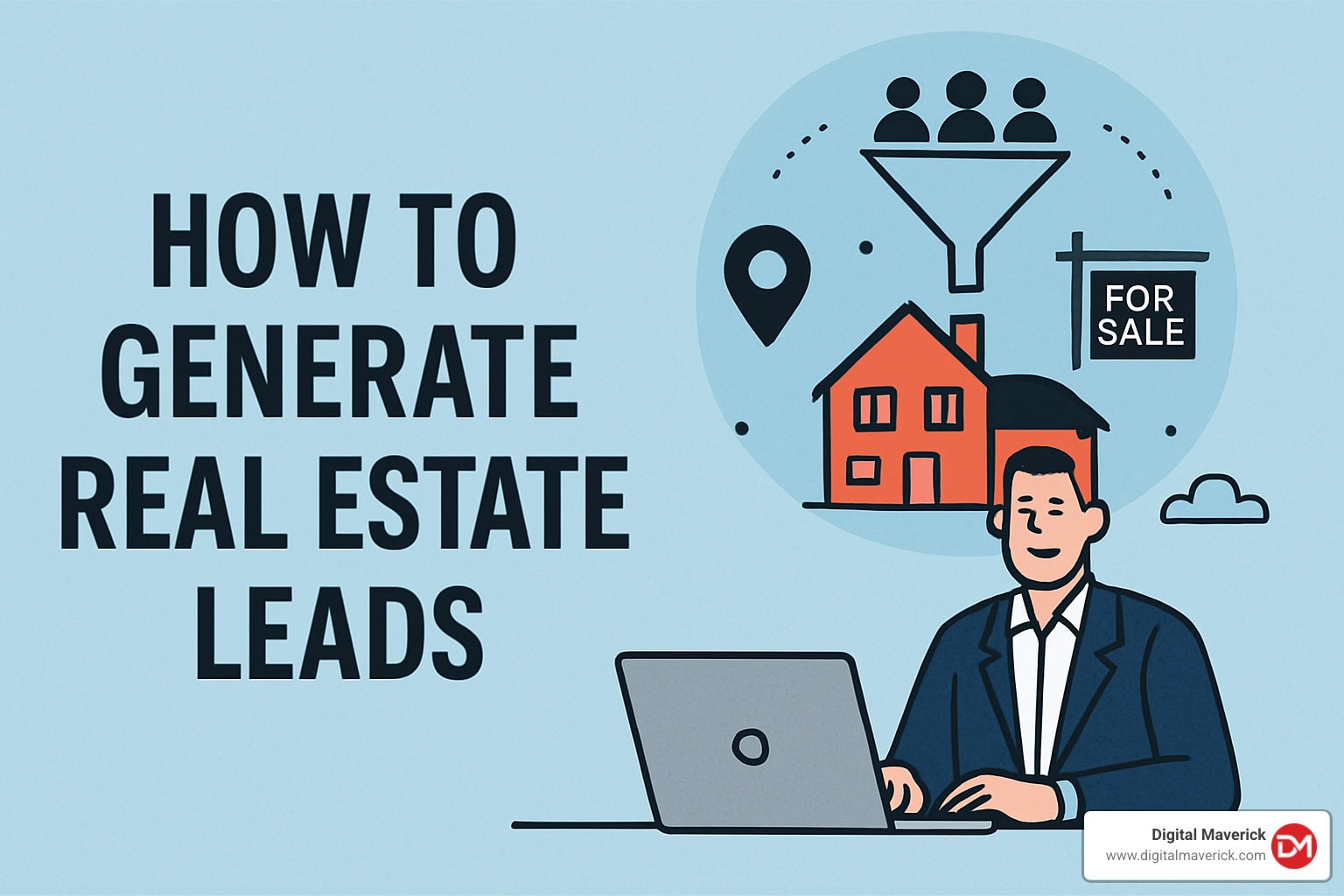
As Jon Cheplak wisely notes, “Lead generation is fundamentally about building your network and doing the work, not just finding ready buyers or sellers.” Focus on genuine relationship-building rather than transactional interactions. The most valuable leads often come from the connections you nurture over time.

For research on referrals and their impact, check out the NAR Home Buyers and Sellers Generational Trends Report, which provides valuable insights into how different generations find their real estate agents.
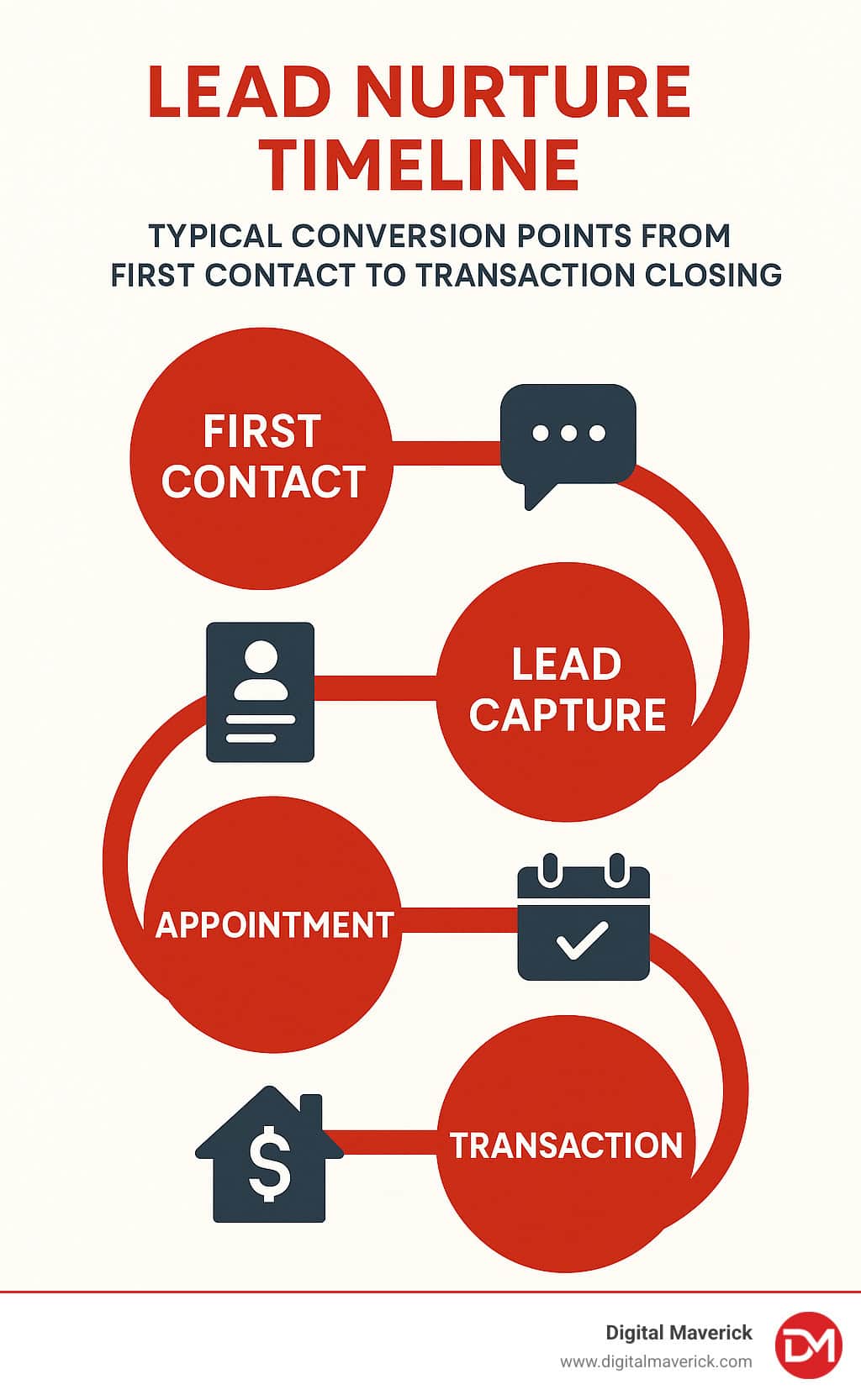
With consistent effort in these organic channels, you’ll build a sustainable pipeline of leads that doesn’t disappear when ad budgets get tight. The key is showing up consistently and providing genuine value to your community both online and offline.

Step 3: How to Generate Real Estate Leads with Paid Traffic & AI Automation

Ready to shift your lead generation into high gear? When you combine the power of paid advertising with smart automation, you create a lead-generating machine that works around the clock. This approach isn’t just about spending money—it’s about investing strategically to scale your business while maintaining personal connections.

Smart Facebook & Google Ad Funnels to Generate Real Estate Leads

If you need leads quickly, well-executed paid advertising can be your best friend. The numbers speak for themselves: properly optimized Facebook ads can generate an impressive average of 44 leads per ad at around $2.44 per lead. That’s a game-changer when you need to fill your pipeline fast.

The secret lies in creating targeted funnels that speak directly to specific audience needs. Home valuation ads work wonders with curious homeowners who want to know their property’s worth. Buyer guide promotions capture first-time and move-up buyers hungry for information. Just Listed/Just Sold campaigns showcase your success while generating neighborhood interest. And don’t forget retargeting campaigns that recapture website visitors who weren’t quite ready to commit the first time around.

“Before launching paid campaigns, ensure you have a solid follow-up system in place,” warns digital marketing expert Kurt Uhlir. “Without proper nurturing, paid leads will drain your budget with little return.”

Start small with a modest daily budget of $10-20 and scale based on what’s working. Target by zip code, demographics, and interests that match your ideal clients. The magic happens when you implement the Facebook pixel on your website for retargeting and create custom audiences that mirror your best clients. Regular A/B testing of your ad creative keeps performance fresh, while tracking cost-per-lead and cost-per-appointment metrics ensures you’re getting real value.

Automate Follow-Up Like a Pro

Here’s the hard truth: the fastest agent often wins the lead, not necessarily the best agent. Research shows contacting a lead within 5 minutes increases conversion rates by a staggering 100x compared to waiting just 30 minutes. That’s where automation becomes your secret weapon.

At Digital Maverick, we’ve transformed lead conversion rates for our clients with these powerful automation elements:

A 24/7 AI Assistant engages leads instantly—even at 2 AM when your competitors are sleeping. It qualifies prospects based on timeline and motivation, then schedules appointments with human agents when the time is right. Our Strategic ISA Hand-off process ensures qualified leads receive personalized attention from our Inside Sales Agent team until they’re ready to work with you.

Lead scoring automation helps you prioritize follow-up by tracking behaviors like website visits, email opens, and property views. This ensures your time goes to the leads most likely to convert. And our multi-channel nurture sequences keep you top-of-mind through email drip campaigns (20% average open rate), text message follow-up (98% open rate), strategic voicemail drops, and retargeting ads that reinforce your value proposition.

“Automation isn’t about removing the human element—it’s about ensuring consistent follow-up and freeing agents to focus on high-value activities,” explains Christopher, who implemented an AI-powered lead nurture system that increased conversions by 27%.

How to generate real estate leads is only half the battle—converting them is where the real magic happens. The right mix of paid traffic and automation creates a system that not only attracts prospects but nurtures them effectively until they’re ready to make a move. With Digital Maverick’s conversion services, you can transform your lead generation from a constant struggle into a predictable growth system.

Step 4: Blend In Traditional Tactics That Still Work

Digital marketing gets all the buzz these days, but let’s be honest—some traditional lead generation methods still pack a serious punch. The key is modernizing these classic approaches and weaving them into your overall strategy.

Door-to-Door & Direct Mail Mastery

Remember those colorful postcards that used to fill your mailbox? They’re making a comeback, and for good reason. The National Association of Realtors confirms that “direct mail campaigns, cold calling, and networking remain effective traditional methods for generating real estate leads, especially when targeting FSBOs and expired listings.”

Think of geographic farming as planting seeds that grow into listings. By consistently mailing to a specific neighborhood, you establish yourself as the local expert. As Tom Ferry puts it, you need to “inundate a target neighborhood with branding until you become the logical choice.” His recommendation? A minimum of 12 touches per year to stay top-of-mind.

The magic happens when you create a multi-touch direct mail sequence. Start with eye-catching oversized postcards that demand attention, follow up with personal letters that forge an emotional connection, deliver market updates that showcase your expertise, and occasionally surprise prospects with handwritten notes that stand out in our digital world.

Even door knocking—yes, actually walking up to someone’s front door—still works when done thoughtfully. The modern approach involves warming up prospects with direct mail before visiting, bringing neighborhood-specific market data on your tablet (goodbye paper flyers!), and following up with valuable digital content after your conversation.

professional direct mail postcard with QR code and home valuation offer - how to generate real estate leads

Want to bridge the gap between traditional and digital? Add QR codes to your printed materials that lead to personalized digital experiences. Homeowners can scan to get a custom home valuation, download a neighborhood market report, watch a video CMA specific to their street, or even schedule an appointment with you directly.

Event-Driven Lead Capture

There’s something powerful about meeting potential clients face-to-face, and events create the perfect opportunity to showcase your personality while collecting leads.

One of our clients has mastered what he calls the “mega open house”—changing standard showings into neighborhood events that attract far more than just potential buyers for that specific property. Invite the neighbors with personal invitations, partner with local coffee shops or bakeries for refreshments, create Instagram-worthy photo spots throughout the home, and use a digital sign-in process that smoothly captures contact information.

Educational seminars remain surprisingly effective in our digital age. JJ shares that “offering free HUD-certified homebuyer seminars in library meeting rooms” consistently fills rooms with 30+ potential buyers every month. People still crave in-person guidance for major life decisions like buying a home.

Community sponsorships let you strategically position your brand where your target audience already gathers. Support school fundraisers to connect with family-oriented buyers, sponsor luxury events to meet high-end property prospects, or partner with financial institutions on first-time homebuyer workshops.

Another agent, Ronnie, found an ingenious way to generate leads through creative contests, sharing his success with “giveaways at open houses, using a contest to build a lead roster.” His approach of offering two-night hotel stays generated hundreds of qualified leads at a fraction of traditional advertising costs.

For any event, always come prepared with digital sign-in systems that feed directly to your CRM, follow-up sequences ready to deploy immediately, team members assigned to relationship-building (not just property tours), and clear next steps for attendees who show interest.

How to generate real estate leads effectively in today’s market means blending the best of both worlds—digital efficiency with the irreplaceable human connection of traditional tactics. The agents who master this balance are the ones who thrive regardless of market conditions.

Step 5: Nurture, Convert, Repeat—Turning Leads into Clients

Generating leads is just the beginning of your journey—the real magic happens when you transform those contacts into loyal clients. According to ez Home Search research, most leads take more than 50 days to transact, which means patience and systematic nurturing are essential ingredients in your recipe for success.

Lead nurture timeline showing typical conversion points from first contact to transaction closing - how to generate real estate leads infographic

Stage-Based Nurture Playbooks

Think of your leads as relationships at different stages—each requiring a unique approach. Just as you wouldn’t propose marriage on a first date, you shouldn’t jump straight to closing with a new lead. Let’s explore how to nurture leads based on where they are in their journey:

For those cold leads (90+ days from transaction), focus on building a foundation of trust. These folks are just getting to know you, so share educational content like market updates and neighborhood guides without pushing for a commitment. A monthly check-in is perfect—enough to stay on their radar without overwhelming them.

“I was just thinking about you! I noticed some interesting market shifts in your area and thought you might find this update helpful…”

When leads warm up (30-90 days out), it’s time to get more specific. For these warm leads, start recommending properties that match their criteria and offer detailed buying or selling guides. Consider reaching out every other week and suggest neighborhood tours or virtual consultations to deepen the relationship.

As leads approach decision time (0-30 days), they need more hands-on attention. These hot leads benefit from in-person meetings or video calls, detailed market analysis, and introductions to your trusted network of lenders and service providers. At this stage, 2-3 touchpoints weekly keeps momentum building toward closing.

“The key to effective nurturing is adding value before asking for business,” explains Christopher Ellyn. “When you consistently educate and serve prospects, the sales conversation happens naturally.”

At Digital Maverick, we’ve seen how personalized nurture sequences can transform conversion rates. Our ISA team implements contact strategies that maintain the perfect balance—staying connected without becoming annoying. This thoughtful approach has helped our clients achieve conversion rates 3-4 times higher than industry averages.

Measure What Matters & Double Down

Remember what management guru Peter Drucker wisely noted: “What gets measured gets managed.” To optimize your how to generate real estate leads efforts, you need to track what’s actually working.

Start by monitoring your lead-to-appointment ratio—what percentage of leads agree to meet with you? Then track your appointment-to-client conversion to see how effectively you’re turning meetings into business relationships. Calculate your cost per acquisition to understand the true investment behind each new client.

Don’t forget to analyze which lead sources deliver your best results. Are your Facebook ads outperforming your direct mail campaigns? Or perhaps your community events are yielding the highest-quality prospects? These insights tell you where to focus your energy and resources.

Finally, measure your follow-up consistency. Even the best lead generation strategy falls apart without reliable follow-through.

“Double down on one or two lead sources rather than spreading efforts too thin,” advises Tom Ferry. This focused approach allows you to master specific channels rather than being mediocre at many.

At Digital Maverick, we believe in clarity through data. Our clients receive daily reporting, regular CRM audits, and accountability metrics built into every plan. This transparent approach ensures teams know exactly which activities are moving the needle—and which aren’t worth their time.

The beauty of a systematic approach to lead nurturing is that it creates a predictable pipeline. When you know how many leads enter your funnel and your typical conversion rates, you can forecast your business with remarkable accuracy. This predictability transforms real estate from a feast-or-famine profession into a stable, scalable business.

How to generate real estate leads isn’t just about quantity—it’s about creating quality relationships that last beyond the transaction. When you nurture leads with genuine care and strategic persistence, you don’t just create clients—you create advocates who will refer you for years to come.

Frequently Asked Questions about How to Generate Real Estate Leads

What’s the fastest way for new agents to get leads on a tight budget?

Breaking into real estate doesn’t require a massive marketing budget. If you’re just starting out with limited funds, focus on these high-impact strategies that won’t break the bank:

Your sphere of influence is your most valuable initial asset. Don’t be shy about letting friends, family, and former colleagues know about your new career. A simple announcement with a genuine request for support can generate your first referrals.

Hosting open houses for other agents in your brokerage creates win-win opportunities. You help busy colleagues while meeting potential buyers who haven’t yet found representation. I’ve seen new agents secure their first clients within weeks using this approach.

“Being a real estate agent isn’t easy (unlike what some ‘experts’ on TikTok want you to believe). A challenge you face every day is lead generation,” acknowledges industry veteran JJ Devore. He’s right—this business requires consistent effort, especially at the beginning.

Becoming hyper-local on social media costs nothing but time and creativity. Share neighborhood spotlights, local market updates, and community events to position yourself as the go-to resource for area information. One new agent I coached gained three listings in her first quarter simply by creating engaging content about her neighborhood’s hidden gems.

Building relationships with complementary businesses creates a natural referral network. Connect with mortgage brokers, home inspectors, and interior designers who serve the same clients but aren’t direct competitors. These partnerships often yield higher-quality leads than paid advertising.

Reinvest your early commission checks into more sophisticated lead generation as your business grows. The foundation you build with these budget-friendly approaches will serve you throughout your career.

Are paid leads better than free organic methods?

This question comes up in nearly every coaching session I conduct. The truth? Both approaches have their place in a well-rounded strategy, but they serve different purposes.

Paid leads can jump-start your pipeline when you need immediate activity. They’re scalable (more budget = more leads) and allow precise demographic targeting. However, they typically come with higher costs, varying quality, and require robust follow-up systems to convert effectively. Established agents with solid conversion processes and dedicated marketing budgets usually see the best return here.

“Paid leads can be expensive and aren’t guaranteed to be qualified,” cautions digital marketing expert Katie Lance. Her warning is spot-on—I’ve seen agents waste thousands on poorly qualified leads when they lacked proper nurturing systems.

Organic methods like referrals, content marketing, and community networking generally produce higher-quality leads with stronger trust factors. These approaches cost less per lead but require consistent effort over time before yielding significant results. New agents and those focused on building a sustainable referral business often thrive with this approach.

The ideal strategy? A balanced approach that leverages both methods while focusing on conversion systems. Start with organic methods as your foundation, then strategically add paid lead sources as your budget and follow-up capabilities expand. Even the highest-quality leads won’t matter if you don’t have systems to nurture and convert them effectively.

How can I use video to stand out in my market?

Video has transformed from a nice-to-have into an essential lead generation tool. Research shows listings with video generate a stunning 403% more inquiries than those without. Yet many agents still hesitate to press record.

The good news? You don’t need Hollywood production values to make an impact. Your smartphone and authentic personality are your most powerful assets.

Property tours remain the most obvious application, but don’t stop there. Create neighborhood guides that showcase local amenities, schools, and lifestyle—these videos serve you long after a specific listing sells. Regular market updates delivered via video demonstrate your expertise while being more digestible than written reports.

One of the most powerful yet underused video types? Client testimonials. Nothing builds trust like hearing directly from satisfied clients about their experience working with you. These social proof videos can be repurposed across multiple platforms for maximum impact.

“Create simple phone-shot videos on topics you’re passionate about, post to YouTube, and chop longer videos into short social clips for Instagram or TikTok,” recommends social media expert Katie Lance. This repurposing strategy maximizes your return on the time invested in creating content.

For videos that actually generate leads, include clear calls-to-action directing viewers to your website, consistent branding elements, and captions for the majority who watch without sound. Don’t forget to optimize titles and descriptions with relevant keywords to improve searchability.

The agents I see having the most success with video aren’t necessarily the most polished—they’re the most consistent. Start simple, post regularly, and watch your comfort level (and results) improve over time. Your authenticity will resonate far more than perfection ever could.

Conclusion

How to generate real estate leads consistently isn’t about finding a magical silver bullet—it’s about building a thoughtful, systematic approach that works day in and day out. Think of it as creating a sturdy house rather than chasing the latest trendy decor.

The truth is, lead generation success comes from doing the right things consistently over time. The most successful agents I’ve worked with don’t frantically jump from one shiny tactic to another. Instead, they methodically:

  1. Establish solid digital foundations that capture leads while they sleep
  2. Nurture organic channels that showcase their unique personality and expertise
  3. Carefully deploy paid strategies with clear ROI measurements
  4. Incorporate proven traditional methods that still deliver results
  5. Follow up systematically until prospects are ready to make a move

At Digital Maverick, we’ve helped hundreds of real estate teams transform their approach from random and reactive to strategic and systematic. What makes the difference? It’s the powerful combination of the right people, proper training, and well-designed systems working together to turn leads into meaningful conversations—and those conversations into closed deals.

Remember what Tom Ferry often says: “Implementation beats innovation.” This couldn’t be more true. An imperfectly executed consistent plan will always outperform a perfect plan that’s never fully implemented. Choose strategies that feel natural to your strengths and market, then commit to executing them with unwavering consistency.

Your market doesn’t need you to be perfect—it needs you to be present, helpful, and reliable. When you show up consistently with value, the results follow naturally.

Whether you’re struggling with lead waste, looking to build scalable growth systems, hoping to generate more quality leads, aiming to increase your GCI, or seeking better ROI from your existing investments, the five-step framework we’ve outlined provides a clear roadmap to sustainable success.

Ready to transform your real estate lead generation and conversion? Digital Maverick equips real estate teams and brokerages with scalable growth systems that drive consistent results. From our full-service ISAs and 24/7 AI assistant to personalized coaching and database management, we offer a comprehensive approach to increase agent productivity and drive revenue growth. More info about our growth systems

We partner with you to install the people, training, and systems needed to turn more of your leads into closed deals. Because at the end of the day, it’s not just about generating more leads—it’s about generating more business.